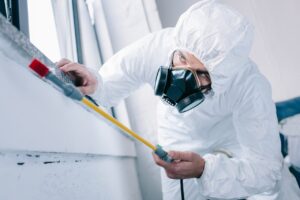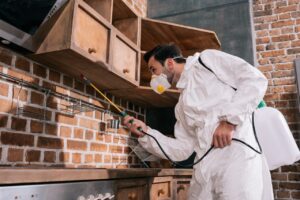
A vehicle that has been the site of a traumatic injury, unattended death, suicide, violent crime, drug use, or significant biological contamination is not simply a dirty car — it is an active biohazard scene contained within an enclosed space. Blood, bodily fluids, and other potentially infectious materials (OPIM) deposited on vehicle upholstery, carpet, headliners, door panels, seat cushion foam, HVAC systems, and beneath trim panels cannot be adequately addressed by standard auto detailing, car washes, or consumer cleaning products. Hepatitis B virus can survive in dried blood on vehicle surfaces for up to seven days. Fentanyl residue — lethal at approximately two micrograms per kilogram of body weight — can contaminate every surface of a vehicle’s interior from a single drug-use event. Without professional biohazard decontamination, a contaminated vehicle poses an ongoing and serious health risk to every person who enters it.
Zero Trace Biohazard provides professional, certified biohazard cleanup services for all types of private and emergency vehicles — including personal automobiles, trucks, vans, SUVs, RVs, motorcycles, ambulances and EMS transport vehicles, police and law enforcement vehicles, fire apparatus, rideshare and taxi vehicles, transport vans, commercial fleet vehicles, and prisoner transport units — 24 hours a day, 7 days a week, in all 50 states. Our technicians hold IICRC Trauma and Crime Scene Technician (TCST) certification, are trained under OSHA 29 CFR 1910.1030 (Bloodborne Pathogens) and OSHA 29 CFR 1910.120 (HAZWOPER), and use only EPA-registered hospital-grade disinfectants with validated pathogen-specific kill claims. We perform the complete scope of vehicle biohazard remediation — from initial assessment through full structural disassembly where required, EPA-registered disinfection, permanent molecular odor elimination, and final clearance documentation — with complete discretion and professionalism. Call (XXX) XXX-XXXX for an immediate response.
TL;DR — Key Facts About Private & Emergency Vehicle Cleanup
| Detail | Summary |
| Typical Cost Range | $500 – $7,500+ depending on contamination type, vehicle size, and scope of disassembly |
| Private Vehicle (Minor Contamination) | $500 – $1,500 |
| Private Vehicle (Moderate-Severe) | $1,500 – $5,000+ |
| Emergency / Fleet Vehicle (EMS, Police) | $1,500 – $7,500+ |
| Hourly Rate | $150 – $300 per technician |
| Key Pathogens | HBV (7-day surface survival), HCV, HIV, MRSA, C. diff, Norovirus, Influenza, fentanyl |
| Vehicle Types Served | Personal cars, trucks, vans, SUVs, RVs, ambulances, police vehicles, rideshare vehicles, fleet vans, prisoner transport |
| Certifications | OSHA 29 CFR 1910.1030, OSHA HAZWOPER, IICRC TCST, GBAC |
| EPA Disinfectants Used | List B (HBV/HCV), List K (C. diff), List G (Norovirus), List N (COVID-19) |
| Odor Elimination | Ozone generation, hydroxyl radical treatment, enzymatic treatment, thermal fogging |
| Insurance | Comprehensive auto insurance may cover; homeowners may apply; fleet/municipal policies often cover EMS/police |
| Timeline | 2–8 hours (minor-moderate) to 1–2 days (severe structural disassembly) |
| Service Area | All 50 states, 24/7 |
Quick Facts
| Category | Detail |
| Company | Zero Trace Biohazard |
| Phone | (XXX) XXX-XXXX |
| Service Hours | 24/7, including holidays |
| Service Area | Nationwide — all 50 states |
| Minor Contamination (small spill, single surface) | $500 – $1,500 |
| Moderate Contamination (multiple surfaces, odor) | $1,500 – $3,500 |
| Severe Contamination (death, trauma, full interior) | $3,500 – $5,000+ |
| Emergency / Fleet Vehicle | $1,500 – $7,500+ |
| Fentanyl / Drug Decontamination | Priced by scope and testing requirements |
| Hourly Rate | $150 – $300 per technician |
| Certifications | OSHA 29 CFR 1910.1030, OSHA HAZWOPER, IICRC TCST, GBAC |
| Disinfectants | EPA-registered hospital-grade (Lists B, K, G, N) |
| Structural Disassembly | Seats, carpet, headliner, door panels, trim removal where required |
| Odor Removal | Enzymatic treatment, ozone generation, hydroxyl radical treatment, thermal fogging |
| Documentation Provided | Clearance certificate, waste manifests, photo documentation, insurance paperwork |
| Insurance Coordination | Full support for auto, homeowners, fleet, and municipal policy claims |
| Timeline | 2–8 hours (minor-moderate) / 1–2 days (severe with structural disassembly) |
What Is Private & Emergency Vehicle Biohazard Cleanup?
Private and emergency vehicle biohazard cleanup is the professional assessment, containment, decontamination, and post-remediation verification of vehicles that have been contaminated with blood, bodily fluids, other potentially infectious materials (OPIM), decomposition residue, drug residue including fentanyl, or other biohazardous substances as the result of a traumatic injury, violent crime, unattended death, suicide, drug use event, or significant biological contamination episode. It is a specialized discipline within biohazard remediation that requires an understanding of vehicle construction, material composition, and the specific challenges posed by contamination in an enclosed space with complex, layered surfaces.
Unlike a property biohazard scene, a vehicle presents unique remediation challenges. Vehicle interiors are constructed of layered materials — fabric or leather upholstery over foam padding, carpet over sound deadening material, headliners over metal framework, door panels over cavities — that readily absorb biological fluids, allowing contamination to penetrate far deeper than the visible surface. Standard auto detailing — even professional-grade steam cleaning — removes visible surface contamination but does not penetrate to the foam, sound deadening, and substructure where biological fluids and odor-causing compounds have absorbed. Without full disassembly and treatment of all contaminated layers, surface cleaning creates a false sense of safety while leaving active pathogens and persistent odor sources in place.
Zero Trace Biohazard performs vehicle biohazard cleanup to a professional, documented standard — including full interior disassembly where the scope of contamination requires it, EPA-registered disinfection of all contaminated surfaces and substrates, permanent molecular odor elimination, and a signed clearance certificate confirming the vehicle has been remediated to a safe standard.
Vehicle Types We Service
Private Passenger Vehicles
Personal automobiles, trucks, SUVs, and minivans are the most commonly encountered vehicle type in biohazard cleanup work, encompassing scenarios including traumatic injury accidents, unattended death in a vehicle, suicide, assault and crime scenes, overdose events, and severe illness contamination. Zero Trace Biohazard services all makes and models of passenger vehicles with the same rigorous OSHA-compliant, IICRC-certified protocols applied in all our remediation work.
Recreational Vehicles (RVs) and Campers
Recreational vehicles present a larger and more complex cleanup scope than standard passenger vehicles due to their size, the presence of soft furnishings, sleeping areas, kitchen and bathroom facilities, and the potential for extended-duration contamination events including unattended death. Zero Trace Biohazard provides full-scope RV biohazard remediation addressing all affected areas, with the same structural disassembly capability applied in property remediation contexts.
Ambulances and EMS Transport Vehicles
Ambulances and EMS transport vehicles are required by CDC guidelines and OSHA regulations to maintain documented decontamination protocols following patient transport involving exposure to blood, OPIM, or potentially infectious patients. The CDC’s SOP for decontamination of EMS transport vehicles establishes specific requirements for pre-cleaning, disinfection with EPA-registered products, and documentation. Standard ambulance cleaning protocols are designed for routine after-transport decontamination; when significant blood or OPIM contamination occurs — including trauma, arterial bleeding, or difficult extrication events — professional biohazard remediation beyond routine cleaning is required to ensure full pathogen elimination and protect subsequent patients and crew. Zero Trace Biohazard provides documented, OSHA-compliant EMS vehicle decontamination services for ambulance fleet operators, municipal EMS agencies, and private transport companies.
Law Enforcement and Police Vehicles
Police patrol vehicles, detective units, prisoner transport vehicles, and tactical response vehicles regularly encounter scenes involving blood, OPIM, fentanyl and other drug residue, and in some cases, unattended death. Prisoner transport vehicles present particular biohazard risk due to the potential for blood, bodily fluid, and drug residue contamination from transported individuals. Law enforcement agencies have both an occupational safety obligation to protect officers from bloodborne pathogen exposure under OSHA 29 CFR 1910.1030 and an operational interest in returning vehicles to service as quickly as possible with documented clearance. Zero Trace Biohazard provides priority-response law enforcement vehicle decontamination with full OSHA compliance documentation.
Fire Apparatus and Rescue Vehicles
Fire apparatus — including pumper trucks, ladder trucks, and rescue vehicles — can be contaminated with blood and OPIM during patient care and rescue operations. Firefighter occupational exposure to bloodborne pathogens in vehicle environments is governed by OSHA’s Bloodborne Pathogens standard. Zero Trace Biohazard provides biohazard decontamination for fire apparatus with full documentation for department compliance records.
Rideshare, Taxi, and Transportation Network Vehicles
Rideshare vehicles (Uber, Lyft) and taxis are at elevated risk for passenger contamination events involving vomiting, bleeding, overdose, and in rare cases, death. When significant biohazard contamination occurs in a rideshare or taxi vehicle, standard car wash cleaning is not adequate. Rideshare platform policies may require documented professional biohazard decontamination before a vehicle can return to service following a significant contamination event. Zero Trace Biohazard provides rapid-response rideshare vehicle decontamination with the documentation drivers and fleet operators need to return to service.
Commercial Fleet Vehicles and Transport Vans
Commercial fleet vehicles — including delivery vans, company trucks, and transport vans — can be the site of medical emergencies, traumatic injuries, suicide, or drug use events among employees or transported passengers. Fleet operators have OSHA obligations regarding worker exposure to biohazardous materials and an operational interest in rapid, documented decontamination and vehicle return-to-service. Zero Trace Biohazard serves fleet operators of all sizes with rapid, OSHA-compliant vehicle decontamination services.
Motorcycles
Motorcycles involved in accidents with significant blood contamination require professional biohazard cleanup of frame, seat, saddlebags, and all contaminated surfaces. Zero Trace Biohazard provides motorcycle biohazard decontamination with the same rigorous protocols applied to larger vehicles.
Situations That Require Professional Vehicle Biohazard Cleanup
Traumatic Injury and Motor Vehicle Accidents
Vehicle accidents involving significant trauma — including arterial bleeding from serious injuries — can deposit large volumes of blood on all interior surfaces, penetrating deep into seat cushion foam, carpet backing, sound deadening material, and structural cavities. The volume and distribution of blood in a traumatic accident scene far exceeds what any standard detailing service can address. Professional disassembly, material-specific cleaning, EPA-registered disinfection, and odor elimination are required to restore the vehicle to a safe condition.
Unattended Death in a Vehicle
When a person dies in a vehicle and is not discovered for hours, days, or longer, decomposition begins and biological fluids accumulate in and around the body’s position. The resulting contamination — including putrefactive fluids, gases, and in extended cases, adipocere and decomposition residue — saturates every layer of the vehicle interior in the affected area. Decomposition fluids have a specific chemistry that requires enzymatic pre-treatment and EPA-registered disinfection at full contact time to eliminate, followed by permanent molecular odor elimination. The odor from a vehicle that has housed an unattended death is one of the most persistent encountered in biohazard cleanup work and cannot be permanently eliminated without professional molecular odor treatment.
Suicide in a Vehicle
Suicide by gunshot, cutting, or other method in a vehicle creates a complex biohazard scene combining high-volume blood and OPIM contamination with potential tissue and bone fragment material distributed throughout the vehicle interior, including headliner, glass, and structural surfaces. Professional disassembly and systematic remediation are required to address all affected materials and surfaces.
Violent Crime and Assault
Vehicles that are the scene of a violent crime — including assault, homicide, or stabbing — are subject to law enforcement processing prior to biohazard cleanup. Once law enforcement releases the vehicle, professional biohazard remediation is required to safely restore it. Zero Trace Biohazard coordinates with law enforcement regarding vehicle release and can respond immediately upon clearance.
Overdose and Drug Use Contamination
Vehicles used for drug injection — particularly heroin, fentanyl, and methamphetamine — present serious biohazard risks from discarded sharps contaminated with blood and bloodborne pathogens, as well as from fentanyl residue that can cause overdose through skin contact or inhalation. The Washington State Department of Health notes that stolen vehicles may contain fentanyl or methamphetamine residue requiring professional cleanup. Zero Trace Biohazard provides full-scope drug contamination remediation including sharps recovery, surface decontamination, and fentanyl-specific environmental testing where indicated.
Infectious Disease Contamination
Vehicles contaminated by a passenger or occupant with a confirmed infectious disease — including MRSA, tuberculosis, C. diff, Norovirus, or COVID-19 — require professional decontamination using EPA-registered products with pathogen-specific kill claims. This scenario is particularly relevant for ambulances and EMS transport vehicles, rideshare vehicles, and vehicles used to transport immunocompromised individuals. Zero Trace Biohazard selects and applies the correct EPA-registered disinfectant for the specific pathogen identified.
Severe Illness and Medical Emergency
Vehicles contaminated by significant vomiting, incontinence, or other biological material during a medical emergency — beyond what standard cleaning can address — require professional biohazard decontamination to eliminate pathogen risk and persistent odor. This scenario is common in rideshare, taxi, and EMS transport vehicles.
Health Risks of Contaminated Vehicles
The enclosed nature of a vehicle dramatically amplifies the health risk from biohazard contamination compared to an equivalent contamination event in a large open space. Pathogens remain viable on surfaces within an enclosed, temperature-variable environment; volatile compounds and odor-causing molecules concentrate in the confined interior; and subsequent occupants are at close, sustained physical proximity to all contaminated surfaces.
Bloodborne Pathogen Transmission
Hepatitis B virus (HBV) can survive in dried blood on vehicle surfaces — including upholstery, carpet, dashboard, and door panels — for up to seven days. Hepatitis C virus (HCV) is less environmentally stable but remains a transmission risk from blood-contaminated surfaces. HIV can survive in liquid blood in certain conditions for hours. The Hog Ring industry publication confirms that vehicles contaminated with blood expose workers and occupants “to real pathogens like hepatitis, HIV, MRSA, and a long list of bacteria that can survive on surfaces longer than you might think.” Any skin contact with contaminated surfaces — particularly through cuts, abrasions, or mucous membrane contact — creates potential bloodborne pathogen exposure.
Fentanyl Exposure Risk
Fentanyl is lethal at approximately two micrograms per kilogram of body weight and can cause serious physiological effects through skin contact and inhalation of contaminated dust particles. Vehicles used for fentanyl drug use or found to contain fentanyl residue present a serious acute toxicity risk to anyone who enters the vehicle without appropriate respiratory and skin protection. According to PuroClean’s guidance on fentanyl decontamination, “every suspect vehicle” should be treated as high-risk until cleared by environmental testing. Zero Trace Biohazard performs fentanyl-specific environmental sampling and decontamination using appropriate PPE and EPA-registered products.
MRSA and Drug-Resistant Organism Transmission
MRSA can survive on vehicle surfaces — including fabric upholstery and hard plastics — for weeks to months. Vehicles used repeatedly by individuals with MRSA or other drug-resistant organisms present ongoing transmission risk to all subsequent occupants. Standard cleaning does not eliminate MRSA from vehicle surfaces; only EPA-registered disinfectants with validated MRSA kill claims applied at the correct concentration and contact time are effective.
Decomposition Gas Exposure
Vehicles where an unattended death has occurred accumulate decomposition gases — including hydrogen sulfide (H₂S), ammonia, and methane — within the confined interior space. These gases can reach concentrations far above safe threshold limit values (OSHA’s H₂S TLV is 1 ppm) within the vehicle interior, creating acute inhalation toxicity risk for anyone who opens the vehicle without respiratory protection. Zero Trace Biohazard technicians deploy appropriate respiratory PPE prior to opening or entering any vehicle where unattended death contamination is present.
Psychological Impact on Vehicle Owners and Family Members
Beyond the direct health risks, the psychological burden on vehicle owners, family members, and colleagues who must manage or be present for a contaminated vehicle is significant. Zero Trace Biohazard provides completely discreet, compassionate service — including working with families after the death of a loved one in their vehicle and with law enforcement and emergency services agencies navigating difficult operational scenarios — without judgment and with full professionalism.
Why Standard Auto Detailing Cannot Address Vehicle Biohazard Contamination
Standard auto detailing — even professional-grade steam cleaning, enzyme shampoo, and ozone treatment as practiced by detailing services — is fundamentally inadequate for vehicle biohazard remediation for several critical reasons that are well understood in the professional restoration and biohazard remediation industry.
The first and most important reason is material penetration. Vehicle seat cushion foam readily absorbs biological fluids and can hold a significant volume of blood and OPIM deep within the cushion structure, far below the surface the detailer’s equipment contacts. Steam cleaning and shampoo extract material from the surface layer but do not penetrate to the core of the foam where the majority of absorbed fluid may reside. Without seat disassembly — removing upholstery and addressing the foam substrate directly — biohazard material remains in the vehicle.
The second reason is disinfectant efficacy. Standard detailing products — including general-purpose disinfectant sprays — do not carry EPA-registered kill claims against HBV, HCV, HIV, MRSA, C. diff, or Norovirus on vehicle surfaces. Applying an unregistered or improperly diluted product with insufficient contact time provides no documented pathogen kill, even if the surface appears visually clean. OSHA’s confirmation that its Bloodborne Pathogens standard “would be applicable to the cleanup work” involving blood and OPIM means that any professional service directing employees to address biohazard vehicle contamination must comply with 29 CFR 1910.1030 — a standard auto detailing operation is not equipped or trained to meet.
The third reason is waste disposal. Blood-saturated materials removed from a vehicle — upholstery, foam padding, carpet, paper towels, and used PPE — are regulated medical waste under OSHA’s Bloodborne Pathogens standard and most state RMW statutes and cannot be disposed of in standard dumpsters or trash cans. Auto detailers are not licensed for biohazard waste disposal and cannot legally manage this waste stream.
Finally, odor elimination in a biohazard vehicle context requires molecular-level treatment — thermal fogging, ozone generation, and hydroxyl radical treatment — not the consumer deodorizers or basic ozone cycles offered by most detailing services, which mask odor temporarily rather than eliminating it permanently.
Regulations and Certifications Governing Vehicle Biohazard Cleanup
OSHA 29 CFR 1910.1030 — Bloodborne Pathogens Standard
OSHA has specifically confirmed in a formal standard interpretation (2007-05-22) that the Bloodborne Pathogens standard applies to cleanup work involving blood and OPIM — including vehicle cleanup scenarios. This standard requires that workers performing vehicle biohazard cleanup be protected through a written Exposure Control Plan, appropriate PPE provision, Hepatitis B vaccination, post-exposure follow-up procedures, and compliant disposal of all OPIM in properly labeled containers. Zero Trace Biohazard maintains full OSHA 1910.1030 compliance in all vehicle cleanup operations.
OSHA 29 CFR 1910.120 — HAZWOPER
For vehicle biohazard cleanup scenarios involving hazardous drug residue — particularly fentanyl, methamphetamine, or other Schedule I/II controlled substances — OSHA’s HAZWOPER standard may apply where the contamination qualifies as a hazardous substance response. Zero Trace Biohazard technicians hold HAZWOPER 40-hour certification.
CDC Guidelines for EMS Vehicle Decontamination
The CDC has published a Standard Operating Procedure (SOP) for decontamination of EMS transport vehicles, establishing specific requirements for routine and post-exposure cleaning and disinfection of ambulances and patient transport vehicles. This CDC SOP includes guidance on EPA-registered disinfectant selection, contact time requirements, and documentation. Zero Trace Biohazard’s EMS vehicle decontamination services are conducted in full compliance with CDC EMS decontamination guidance.
FEMA and EMS.gov Minimum Guidance for First Responder Decontamination
FEMA and EMS.gov have published minimum recommended guidance on protection and decontamination for first responders, establishing baseline requirements for cleaning and decontaminating first responder vehicles and equipment following biohazard exposure events. Zero Trace Biohazard follows this guidance in all emergency vehicle decontamination work.
IICRC Trauma and Crime Scene Technician (TCST) Certification
The IICRC TCST certification covers the unique situations encountered when performing trauma and crime scene cleanup — including vehicle biohazard scenarios. TCST-certified technicians are trained in pathogen identification, PPE protocols, appropriate cleaning and disinfection methods, biohazard waste handling, and post-remediation verification. Zero Trace Biohazard technicians hold IICRC TCST certification.
GBAC (Global Biorisk Advisory Council) Certification
GBAC certification, the gold standard for biorisk management in the cleaning and restoration industry, covers outbreak prevention, response, and recovery protocols that apply directly to vehicle decontamination work involving infectious disease contamination. Zero Trace Biohazard holds GBAC certification and applies GBAC protocols in all vehicle infectious disease decontamination scenarios.
State Biohazard Remediation Licensing and Medical Waste Regulations
Many U.S. states require specific licensing for biohazard remediation contractors, including work performed in vehicles. All biohazardous materials removed from contaminated vehicles must be handled, packaged, and disposed of as regulated medical waste in compliance with RCRA and DOT regulations. Zero Trace Biohazard holds all applicable state biohazard remediation licenses and provides DOT-compliant waste disposal with full manifesting.
Our Vehicle Biohazard Cleanup Process — Step by Step
Step 1: Immediate Response and Initial Consultation
Zero Trace Biohazard responds 24/7 to vehicle biohazard cleanup requests. During the initial call, our team gathers critical information — the type and volume of contamination present, the vehicle type, the circumstances of the event, any known pathogen risks (including drug contamination), and the response timeline required. For law enforcement and emergency services vehicles, we coordinate directly with the responsible agency to minimize operational disruption. We dispatch a certified team immediately with all necessary equipment, PPE, and DOT-compliant waste containers.
Step 2: On-Site Assessment and Scope Determination
Upon arrival, our IICRC TCST-certified lead technician conducts a thorough on-site assessment of the vehicle: identifying all contaminated surfaces, mapping the depth and extent of biological fluid penetration, assessing which interior components require disassembly and replacement, determining pathogen-specific disinfectant requirements, documenting all findings with photographs, and providing a transparent, itemized estimate before any work begins. UV light inspection is used to identify biological material not visible to the naked eye.
Step 3: Full PPE Deployment
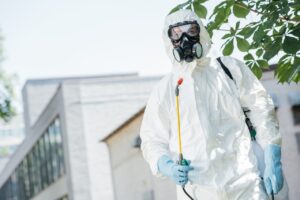
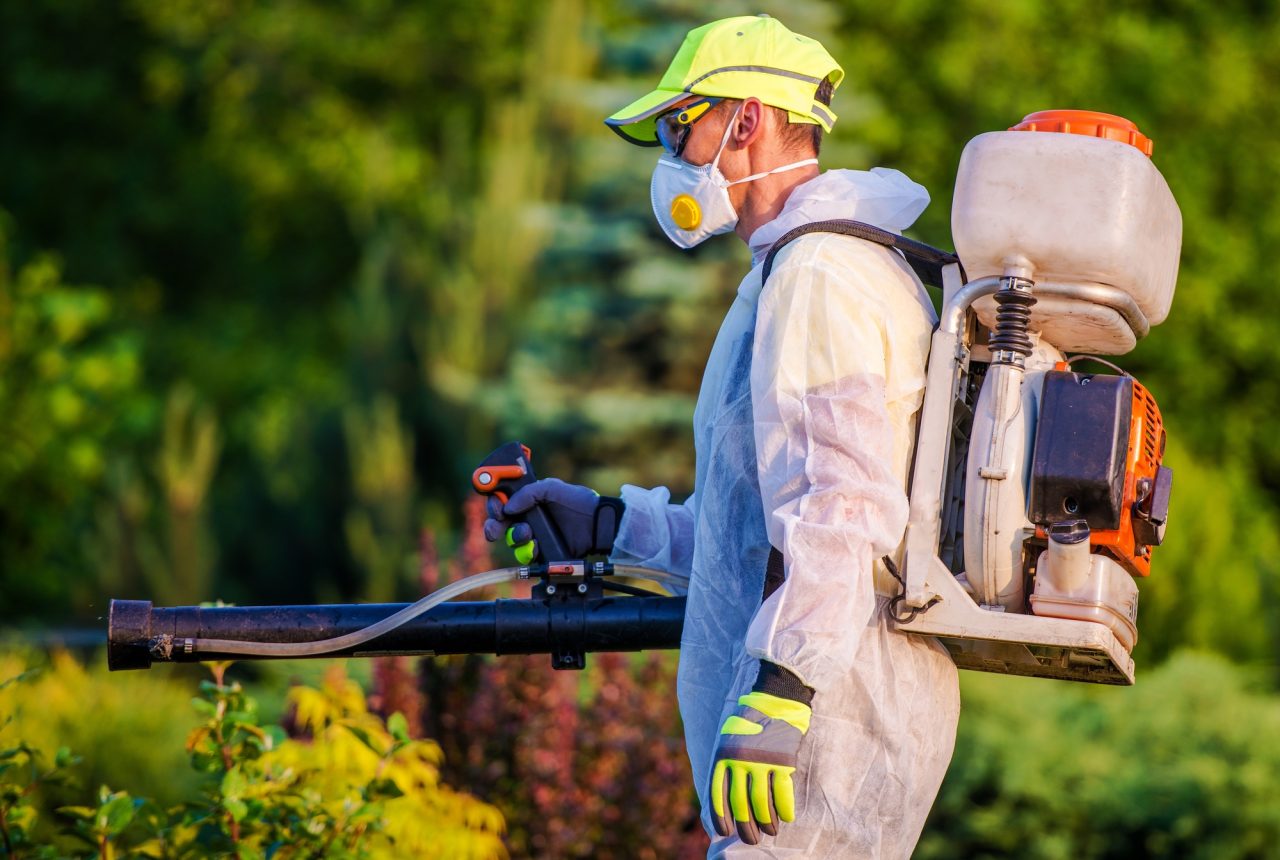
All technicians don appropriate OSHA-compliant PPE before entering the vehicle: Tyvek suits, double nitrile gloves (puncture-resistant outer gloves where sharps are present or suspected), N95 or full-face respirators (P100 or PAPR where fentanyl or decomposition gas exposure is present), boot covers, and face shields. PPE is donned and doffed following strict OSHA protocols to prevent secondary contamination.
Step 4: Vehicle Interior Preparation and Containment
The vehicle is positioned in a controlled work environment where possible. Adjacent clean areas are protected with polyethylene barriers. HEPA air scrubbers with activated carbon filters are deployed within the vehicle where airborne pathogen or VOC risk is present. All HVAC systems are isolated to prevent contamination distribution through the ventilation system.
Step 5: Structural Disassembly Where Required
For all but the most minor contamination events, professional vehicle biohazard cleanup requires partial or full interior disassembly to access all contaminated materials. Zero Trace Biohazard technicians remove seats (including separating upholstery from foam where required), carpet and carpet backing, door panels, kick panels, headliner sections, and trim pieces as dictated by the scope of contamination. All disassembled components are assessed for remediability versus replacement. Disassembly is documented photographically.
Step 6: Removal and Compliant Disposal of Contaminated Materials
All materials that are contaminated beyond the level addressable by surface disinfection — including seat foam saturated with blood, carpet backing, and other porous materials — are pre-wetted with EPA-registered disinfectant, removed, double-bagged in approved biohazard packaging, and staged for compliant disposal as regulated medical waste through licensed waste transporters. Where sharps are present, systematic UV-assisted recovery is performed prior to any handling of loose materials.
Step 7: EPA-Registered Multi-Pass Disinfection
Following removal of all contaminated material, all remaining surfaces — structural metal, plastic panels, glass, hard trim, and any porous materials being retained — are decontaminated using the appropriate EPA-registered hospital-grade disinfectant for the specific pathogen profile identified (EPA List B for HBV/HCV, List K for C. diff, List G for Norovirus, List N for COVID-19, MRSA kill-claim products for MRSA). Each application is made at the manufacturer-specified concentration and allowed to remain wet for the full required contact time before a subsequent pass. A minimum of three disinfection passes is performed on all surfaces.
Step 8: Permanent Molecular Odor Elimination
Odor elimination is a critical and technically demanding component of vehicle biohazard cleanup. Zero Trace Biohazard deploys a multi-method odor elimination approach tailored to the specific odor type and vehicle material profile. Enzymatic pre-treatment is applied to all surfaces where organic odor compounds are present, breaking down the biological substrate at the molecular level. Ozone generation within the sealed vehicle interior oxidizes and permanently destroys odor-causing VOCs throughout the entire enclosed environment, including within wall cavities, under carpeting, and within the HVAC system. Hydroxyl radical treatment is used where ozone application constraints apply. Thermal fogging is deployed for complex or highly penetrated odor scenarios. The vehicle is not cleared until odor has been permanently eliminated — not masked.
Step 9: HVAC System Decontamination
The vehicle’s HVAC system — including the air intake, evaporator, ducts, and vents — is decontaminated using EPA-registered antimicrobial treatment and HEPA-filtered equipment where biohazard contamination of the ventilation system is identified. HVAC decontamination is particularly critical in unattended death and decomposition scenarios, where decomposition gases and odor compounds penetrate deeply into the HVAC system and continue to release odor into the vehicle interior if not addressed.
Step 10: Final Inspection, Clearance Testing, and Documentation
A lead technician conducts a thorough final inspection of the entire vehicle interior. UV light inspection confirms no residual biological material is present on any surface. The responsible party is invited to review all treated areas. Zero Trace Biohazard provides a complete documentation package including a signed clearance certificate confirming the vehicle has been remediated to a safe standard, biohazard waste manifests, an itemized service report, and photographic before-and-after documentation — suitable for insurance claims, fleet maintenance records, law enforcement documentation, and legal proceedings.
Vehicle Biohazard Cleanup Cost Breakdown
Cost by Contamination Scope and Vehicle Type
| Scope | Estimated Cost |
| Minor contamination (small spill, single surface) | $500 – $1,500 |
| Moderate contamination (multiple surfaces, odor present) | $1,500 – $3,500 |
| Severe contamination (trauma, death, full interior) | $3,500 – $5,000+ |
| Decomposition / unattended death in vehicle | $3,500 – $7,500+ |
| Emergency / fleet vehicle (ambulance, police, fire) | $1,500 – $7,500+ |
| Fentanyl / drug decontamination with testing | Priced by scope and environmental testing requirements |
| RV / camper (full scope) | $2,500 – $10,000+ |
| Hourly rate | $150 – $300 per technician |
Factors That Affect the Final Cost
The final cost of vehicle biohazard cleanup is shaped by the type and volume of contamination (blood and OPIM, decomposition, drug residue), the size and type of the vehicle, the extent of interior disassembly required, the depth of penetration of biological fluids into structural materials, the specific pathogen profile and disinfectant requirements, the presence of fentanyl or drug contamination requiring environmental testing, the complexity of the odor elimination required, the need for HVAC decontamination, and the level of documentation required for insurance, fleet records, or legal purposes.
Insurance, Payment, and Responsibility
Comprehensive Auto Insurance
Comprehensive auto insurance typically covers damages from non-collision events — including biohazard contamination from a death, crime, or contamination event — where the policy covers losses from events other than driving accidents. AZ-Bio notes that “many homeowners, renters, and auto insurance policies” may cover biohazard cleanup costs. Coverage depends on the specific policy, and some comprehensive policies explicitly include or exclude biohazard remediation. Zero Trace Biohazard coordinates with auto insurance adjusters and provides complete documentation to support valid claims.
Homeowners and Renters Insurance
In scenarios where a vehicle death or contamination event is connected to a covered property incident, homeowners or renters insurance may extend coverage to the vehicle cleanup. Zero Trace Biohazard can help determine which insurance policy is most applicable to the specific scenario and provides documentation for all relevant claims.
Fleet and Municipal Insurance
For emergency service vehicles (ambulances, police cars, fire apparatus) and commercial fleet vehicles, municipal insurance, fleet insurance policies, and self-insurance programs typically cover biohazard decontamination as part of vehicle maintenance and occupational safety compliance. Zero Trace Biohazard works directly with fleet managers, risk officers, and municipal insurance administrators to provide the required documentation for coverage recovery.
Employer and Agency Responsibility
Under OSHA’s Bloodborne Pathogens standard, employers — including EMS agencies, law enforcement departments, fire departments, and commercial fleet operators — have a legal obligation to ensure that vehicles contaminated with blood and OPIM are professionally decontaminated before being returned to service with personnel. Failure to meet this obligation creates OSHA citation risk, civil liability exposure, and workers’ compensation claims. Zero Trace Biohazard provides the OSHA-compliant documentation that demonstrates employer compliance.
Out-of-Pocket and Private Pay
For private vehicle owners where insurance does not apply, Zero Trace Biohazard provides transparent, itemized estimates with no hidden fees and works to ensure that cost is not a barrier to safe, professional remediation.
DIY vs. Professional Vehicle Biohazard Cleanup
| Factor | DIY / Auto Detailing | Zero Trace Biohazard |
| Seat foam penetration | Not addressed — contamination remains | Full seat disassembly, foam assessed and treated/replaced |
| Bloodborne pathogen kill | No EPA-registered kill claims | EPA Lists B, K, G, N — validated kill claims, full contact time |
| Fentanyl detection and removal | Not assessed — acute exposure risk | Environmental testing, HAZWOPER-trained decontamination |
| Decomposition odor elimination | Masking agents only | Permanent molecular elimination (ozone + hydroxyl + thermal fog) |
| HVAC decontamination | Not addressed | Full HVAC treatment |
| Sharps recovery | Serious needlestick risk | UV-assisted systematic sweep, safe mechanical recovery |
| Biohazard waste disposal | Illegal in standard trash | RCRA/DOT-compliant manifested disposal |
| OSHA compliance | Not achieved | Full OSHA 29 CFR 1910.1030 compliance |
| Insurance documentation | None | Complete package — clearance cert, manifests, photos |
| Clearance certificate | Not available | Signed clearance certificate issued |
| Fleet / agency compliance records | Not available | Full OSHA and CDC compliance documentation |
| Legal / regulatory compliance | Not achieved | Full federal and state compliance |
Frequently Asked Questions About Private & Emergency Vehicle Cleanup
How much does vehicle biohazard cleanup cost?
Vehicle biohazard cleanup costs typically range from $500 for minor contamination events on a single surface to $7,500 or more for severe unattended death or traumatic injury scenarios requiring full interior disassembly. Moderate multi-surface contamination generally falls in the $1,500–$3,500 range. Emergency and fleet vehicles such as ambulances and police cars typically run $1,500–$7,500 depending on contamination scope. Zero Trace Biohazard provides free, no-obligation on-site assessments with transparent, itemized estimates.
Does insurance cover vehicle biohazard cleanup?
Comprehensive auto insurance may cover vehicle biohazard cleanup when the contamination results from a covered non-collision event such as a death, crime, or disease contamination event. Fleet and municipal insurance policies frequently cover EMS and law enforcement vehicle decontamination. Homeowners insurance may apply in certain scenarios. Zero Trace Biohazard coordinates with all insurance types and provides complete documentation to support valid claims.
Can I take my car to a regular auto detailer for biohazard cleanup?
No. Standard auto detailing cannot adequately address vehicle biohazard contamination for several critical reasons: detailers do not perform the structural disassembly required to access contaminated seat foam and subfloor materials; they do not use EPA-registered disinfectants with validated pathogen kill claims; they are not trained or equipped for OSHA-compliant PPE and waste disposal; and they cannot provide the legal compliance documentation required by OSHA, insurance carriers, and fleet operators.
How long do bloodborne pathogens survive in a contaminated vehicle?
Hepatitis B virus can survive in dried blood on vehicle surfaces for up to seven days. Hepatitis C virus is less stable but remains a risk on contaminated surfaces. MRSA can survive on hard and soft vehicle surfaces for weeks to months. These survival times mean that a vehicle contaminated with blood remains an active biohazard for days to weeks after the contamination event, and anyone entering the vehicle without PPE is at risk of exposure.
What happens to the seats and carpet that are removed?
All biohazard-contaminated materials removed from the vehicle — including seat foam, carpet backing, and other porous materials that cannot be adequately disinfected — are pre-wetted with EPA-registered disinfectant, placed in approved red biohazard bags, packaged in sealed biohazard containers, and disposed of as regulated medical waste through licensed waste transporters with full manifesting documentation. This is the only legal and safe method of disposal.
How is fentanyl contamination in a vehicle detected and removed?
Fentanyl contamination in a vehicle is detected through environmental surface swab testing by a certified laboratory, which identifies the presence and concentration of fentanyl and related compounds. Remediation involves full HAZWOPER-trained technician response in appropriate PPE (at minimum N95 with eye protection, ideally P100 PAPR for heavy contamination), systematic wipe-down of all surfaces with EPA-registered products, verification testing after decontamination, and clearance confirmation. Zero Trace Biohazard provides fentanyl-specific environmental testing coordination as part of our vehicle decontamination service.
How long does vehicle biohazard cleanup take?
Minor to moderate vehicle biohazard cleanup — including multi-surface blood contamination with odor — typically takes 2–8 hours. Severe contamination scenarios requiring full interior disassembly, extended structural disinfection, and multi-method odor elimination can require 8–16 hours or across two days. The timeline depends on the contamination type and volume, the extent of disassembly required, and the odor elimination methods needed.
Do you service ambulances and EMS vehicles?
Yes. Zero Trace Biohazard provides documented, CDC-guideline-compliant and OSHA-compliant biohazard decontamination for ambulances, BLS and ALS transport vehicles, and all EMS transport vehicle types for municipal, county, and private EMS agencies. We provide full OSHA and CDC compliance documentation for agency records and fleet management.
What certifications does Zero Trace Biohazard hold for vehicle cleanup?
Our certifications include IICRC Trauma and Crime Scene Technician (TCST), OSHA 29 CFR 1910.1030 (Bloodborne Pathogens), OSHA HAZWOPER 40-hour certification, and GBAC (Global Biorisk Advisory Council) certification. We hold all applicable state biohazard remediation licenses in every state where we operate.
Do you provide clearance documentation for fleet and agency records?
Yes. Zero Trace Biohazard provides a complete documentation package for every vehicle cleanup, including a signed clearance certificate, biohazard waste manifests, an itemized service report, and photographic before-and-after documentation — suitable for fleet maintenance records, agency OSHA compliance files, insurance claims, and legal proceedings.
What should I do immediately after discovering a biohazard-contaminated vehicle?
Do not enter or allow others to enter the vehicle without professional guidance. Do not attempt to clean or ventilate the vehicle yourself. Secure the vehicle from unauthorized access. Contact Zero Trace Biohazard immediately at (XXX) XXX-XXXX for a 24/7 response. If law enforcement involvement is required (crime scene, suspected crime), contact law enforcement first and call us when the vehicle is released for cleanup.
Can a vehicle be saved after an unattended death, or does it need to be totaled?
In many cases, a vehicle contaminated by an unattended death can be professionally remediated and returned to roadworthy condition, depending on the duration of the death, the extent of decomposition, and the depth of fluid penetration into structural components. Zero Trace Biohazard provides a detailed, honest assessment of remediability versus total loss at the time of inspection, with full photographic documentation to support insurance decisions. In cases where the contamination has penetrated to structural metal or electrical components beyond the ability to remediate, we provide documentation supporting a total loss determination.
Call Zero Trace Biohazard — 24/7 Private & Emergency Vehicle Cleanup Nationwide
A contaminated vehicle is an active biohazard that demands an immediate, professionally documented response. Whether it is a personal vehicle, a commercial fleet unit, or an emergency services vehicle, every hour of delay increases pathogen risk, deepens odor penetration, and extends the period during which the vehicle poses a hazard to anyone who enters it. Zero Trace Biohazard is available 24 hours a day, 7 days a week, in all 50 states.
📞 Call (XXX) XXX-XXXX now for a free, no-obligation on-site assessment.
- ✅ OSHA-Compliant (29 CFR 1910.1030 & HAZWOPER)
- ✅ IICRC TCST-Certified (Trauma & Crime Scene Technician)
- ✅ GBAC-Certified (Global Biorisk Advisory Council)
- ✅ EPA-Registered Disinfectants (Lists B, K, G, N)
- ✅ Full Structural Disassembly Capability
- ✅ Fentanyl and Drug Contamination Detection and Remediation
- ✅ CDC-Compliant EMS and Emergency Vehicle Decontamination
- ✅ Permanent Molecular Odor Elimination
- ✅ RCRA/DOT-Compliant Biohazard Waste Disposal
- ✅ Complete Insurance, Fleet, and Agency Documentation
- ✅ Signed Clearance Certificate Provided
- ✅ Discreet, Compassionate, and Professional Service