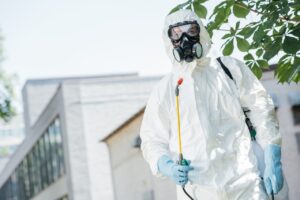
Chemical Hazard Cleanup Services — HAZWOPER-Certified, EPA/OSHA Compliant, 24/7 Nationwide
Chemical hazards — from meth lab residues and fentanyl contamination to industrial solvent spills, corrosive chemical releases, and volatile organic compounds (VOCs) — pose acute and chronic health risks that standard cleaning methods cannot address safely or legally. OSHA’s HAZWOPER standard (29 CFR 1910.120) requires that workers responding to hazardous chemical releases be specifically trained before any contact with contaminated materials, and EPA’s RCRA regulations (40 CFR Parts 262–263) mandate licensed handling, transport, and disposal of all chemical waste generated during cleanup. Zero Trace Biohazard provides fully HAZWOPER-certified chemical hazard cleanup for residential, commercial, and industrial properties across all 50 states — 24 hours a day, every day of the year. Call (XXX) XXX-XXXX immediately for emergency chemical hazard response or to schedule a free on-site assessment.
TL;DR
Chemical hazard cleanup costs range from $2,000 for a small localized spill to $150,000+ for large-scale drug lab or industrial chemical remediation, depending on the chemical type, contamination extent, property size, and structural penetration (EPA; Fixr 2025; Begin Again Decon). Meth lab cleanup typically runs $5,000–$100,000 (Liberty Enviro; PushLeads). Fentanyl decontamination costs are highly variable and governed by an emerging patchwork of state laws. OSHA HAZWOPER (29 CFR 1910.120) requires 40-hour initial training for cleanup workers and an 8-hour annual refresher. EPA RCRA (40 CFR Parts 261–263) governs waste classification, generator requirements, and licensed transporter mandates. Standard homeowners insurance typically excludes chemical contamination; pollution liability insurance is the appropriate coverage vehicle. Zero Trace Biohazard is HAZWOPER-certified, EPA RCRA-compliant, and dispatches nationwide with same-day emergency response.
- Cost Range: $2,000–$150,000+ depending on chemical type, volume, property size, and contamination depth (EPA; PushLeads; Fixr 2025)
- Meth Lab Cleanup: $5,000–$10,000 (light); $10,000–$25,000 (moderate); $25,000–$100,000+ (severe) (PushLeads; Liberty Enviro)
- Industrial/Spill Cleanup: $2,000–$50,000+ by volume, chemical type, and soil/structural penetration (Angi 2026; AM Response)
- Certifications: OSHA HAZWOPER 29 CFR 1910.120 (40-hour), OSHA BBP 29 CFR 1910.1030, EPA RCRA compliance, DOT hazardous materials transport
- Insurance: Standard homeowners/commercial general liability typically excludes chemical pollution; pollution liability insurance required
- Regulations: EPA RCRA (40 CFR Parts 261–263), CERCLA, OSHA HAZWOPER, EPA Voluntary Guidelines for Meth/Fentanyl Lab Cleanup, state-specific drug lab remediation laws
- Service Area: All 50 states, residential, commercial, and industrial, 24/7 same-day emergency dispatch
- Privacy: Unmarked vehicles available; all project details held in strict confidence
Quick Facts Table
| Detail | Info |
| Company | Zero Trace Biohazard |
| Phone | (XXX) XXX-XXXX |
| Service Area | All 50 states, residential, commercial, industrial |
| Availability | 24/7, 365 days, same-day emergency response |
| Small Spill / Localized | $2,000–$5,000 (Fixr 2025) |
| Meth Lab — Light | $5,000–$10,000 (Begin Again Decon) |
| Meth Lab — Moderate | $10,000–$25,000 (PushLeads) |
| Meth Lab — Severe | $25,000–$100,000+ (Liberty Enviro; EPA) |
| Fentanyl Decontamination | Variable; state-law dependent (EPA Voluntary Guidelines) |
| Industrial Spill | $2,000–$50,000+ by volume and chemical type |
| Hazardous Waste Disposal | $130–$370 per removal event + project cost (Angi 2026) |
| OSHA Standard | HAZWOPER 29 CFR 1910.120 |
| EPA Regulations | RCRA 40 CFR Parts 261–263; CERCLA |
| Insurance | Pollution liability insurance (standard CGL/homeowners excludes chemical) |
| Worker Training | 40-hour HAZWOPER initial; 8-hour annual refresher |
| Waste Transport | DOT-compliant manifested transport to licensed facilities |
What Is Chemical Hazard Cleanup and When Is It Required?
Chemical hazard cleanup — also called hazardous chemical remediation, chemical decontamination, or hazmat cleanup — is the professional assessment, containment, removal, neutralization, and licensed disposal of chemical substances that pose a risk to human health, property integrity, or the environment. It is legally and operationally distinct from general cleaning or even standard biohazard remediation because the chemical agents involved require specific technical knowledge, specialized PPE calibrated to the chemical hazard class, engineered containment systems, and regulatory compliance at the federal, state, and sometimes local levels.
OSHA explicitly requires under 29 CFR 1910.120 (HAZWOPER) that any worker who responds to a hazardous substance release or who performs cleanup operations at a site where hazardous substances are present must be trained to perform those duties without endangering themselves or others (OSHA). This means untrained individuals — including property owners, building managers, and general contractors — cannot legally or safely perform chemical hazard cleanup. The regulatory and health stakes are among the highest of any remediation service.
Zero Trace Biohazard responds to chemical hazard situations across a wide spectrum of severity and chemical type — from drug lab contamination in residential properties to industrial solvent spills in commercial facilities. Every engagement begins with a comprehensive chemical hazard assessment, proper identification of all chemical agents present, and a written remediation plan before any physical work begins.
Types of Chemical Hazards We Remediate
Methamphetamine Lab Contamination
Methamphetamine production generates a toxic cocktail of residual chemicals — including solvents such as acetone and toluene, corrosive acids and bases, and volatile organic compounds — that penetrate porous building materials including drywall, wood studs, carpet, HVAC ductwork, and concrete. Even properties used for meth consumption rather than production can accumulate dangerous methamphetamine residue levels on surfaces. The EPA’s Voluntary Guidelines for Methamphetamine and Fentanyl Laboratory Cleanup provide the nationally recognized framework for testing and remediation, though many states have enacted their own mandatory standards that are stricter (EPA; PushLeads).
Cleanup costs range from $5,000–$10,000 for light surface contamination to $25,000–$100,000+ for properties where production occurred extensively or where structural materials require demolition and replacement (Liberty Enviro; PushLeads; EPA). Initial testing costs $500–$2,000 and is required before remediation begins and after completion to confirm clearance.
Fentanyl and Synthetic Opioid Contamination
Fentanyl is lethal in microgram quantities and can be absorbed through skin contact or inhalation of contaminated dust — making it one of the most dangerous chemical hazards encountered in residential and commercial settings. Properties where fentanyl has been processed, stored, used, or where an overdose occurred may have surface contamination requiring professional decontamination. The EPA has issued voluntary guidelines for fentanyl lab cleanup, and as of 2025, multiple states have enacted or are enacting mandatory fentanyl decontamination standards (EPA Voluntary Guidelines; Legislative Analysis 2025 Fentanyl Cleanup Summary). Zero Trace Biohazard follows the most stringent applicable federal and state standards in every jurisdiction.
Industrial and Commercial Chemical Spills
Chemical spills in industrial, commercial, laboratory, and warehouse settings involve a wide range of hazard classes — acids and bases (corrosives), flammable and combustible liquids, oxidizers, toxic gases, and reactive chemicals. Each chemical class requires a specifically calibrated response: different PPE levels, different containment and neutralization approaches, and different waste disposal streams under EPA RCRA (40 CFR Parts 261–263). Zero Trace Biohazard’s HAZWOPER-certified technicians are trained across all hazard classes and carry the chemical-specific equipment — spill containment booms, acid neutralization agents, chemical-resistant suits rated to the specific hazard — needed to respond effectively.
Volatile Organic Compound (VOC) Contamination
VOCs — including benzene, toluene, formaldehyde, xylene, and hundreds of other compounds — are released by industrial processes, chemical storage incidents, manufacturing operations, and deteriorating building materials. Chronic indoor VOC exposure causes eye, nose, and throat irritation; headaches; nausea; liver and kidney damage; and central nervous system effects, with some VOCs classified as known or probable human carcinogens (EPA Indoor Air Quality; American Lung Association). VOC remediation requires air quality testing, identification of contamination sources, source removal or encapsulation, HEPA and activated-carbon air scrubbing, and post-remediation air clearance testing to confirm safe indoor air quality levels.
Corrosive Chemical Releases
Acids (sulfuric, hydrochloric, nitric) and bases (sodium hydroxide, ammonia) cause immediate tissue destruction on contact and can rapidly penetrate and corrode structural materials — concrete, steel, wood, and plumbing systems. Corrosive releases require immediate containment using chemical-resistant absorbents, neutralization to a safe pH range before disposal, and assessment of structural damage caused by the release. Improperly neutralized corrosive waste creates secondary hazards during transport and disposal.
Drug and Narcotic Residue Contamination
Beyond meth labs and fentanyl, properties used for drug activity — including crack cocaine production, heroin use, and general narcotics storage — can accumulate hazardous residues on surfaces. Contaminated properties may be uninhabitable and, in many states, must be disclosed to prospective buyers and renters. Zero Trace Biohazard provides professional assessment, remediation, and post-clearance documentation for all drug-related chemical contamination scenarios.
Hazardous Household and Commercial Chemical Disposal
Improperly stored or abandoned chemical inventories — including pesticides, herbicides, paint solvents, pool chemicals, laboratory reagents, and industrial cleaning compounds — require professional assessment, compatibility testing, packaging, and licensed disposal under EPA RCRA generator requirements. Zero Trace Biohazard handles hazardous chemical inventory disposal for residential estates, commercial property transitions, and industrial facility decommissioning.
Chemical Hazard Health Risks
Understanding the specific health risks associated with chemical hazard exposure is essential to appreciating why immediate professional response is required and why no delay is acceptable once chemical contamination is identified.
Acute Exposure Risks
Acute chemical exposure — a single high-dose incident — can cause chemical burns to skin and mucous membranes from corrosives; respiratory tract damage and pulmonary edema from toxic gas inhalation; central nervous system depression and loss of consciousness from solvent exposure; and, in the case of fentanyl, fatal respiratory depression from skin contact or inhalation of contaminated dust at microgram-level doses (OSHA; CDC NIOSH). These risks are present in seemingly “clean” post-incident environments where invisible residues remain on surfaces, in air, and absorbed into structural materials.
Chronic Exposure Risks
Ongoing low-level exposure to chemical hazards — particularly VOCs, methamphetamine residues, and heavy metals — produces chronic health effects that may not manifest for months or years. The EPA identifies VOC chronic exposure as a driver of respiratory disease, neurological damage, kidney and liver toxicity, and elevated cancer risk for several specific compounds including benzene and formaldehyde (EPA; PMC). Children, pregnant women, and immunocompromised individuals are at highest risk from chronic low-level chemical exposure in contaminated buildings.
Structural Contamination as an Ongoing Source
Chemical contamination absorbed into porous building materials — drywall, carpet, wood, insulation, and HVAC components — creates an ongoing source of off-gassing and re-exposure that persists long after the initial release event. Surface cleaning alone does not address structural contamination. Only professional assessment that tests below-surface contamination levels, followed by removal of contaminated materials and post-clearance air and surface testing, can confirm that a property is genuinely safe for re-occupancy (Aftermath; PDQ Fire Water Damage).
Regulatory Framework — What Laws Govern Chemical Hazard Cleanup
Chemical hazard cleanup is one of the most heavily regulated sectors in the remediation industry. Zero Trace Biohazard operates in full compliance with all applicable federal and state regulations on every engagement.
OSHA HAZWOPER — 29 CFR 1910.120
OSHA’s Hazardous Waste Operations and Emergency Response (HAZWOPER) standard is the primary federal regulation governing worker safety during chemical hazard cleanup operations. It requires that cleanup workers complete a 40-hour initial training course before performing hazardous waste operations, plus a minimum of three days of supervised field experience (OSHA). An 8-hour annual refresher is required to maintain certification. Supervisors require an additional 8 hours of specialized supervisor training. First responders operating at the operations level require a minimum 8-hour training course (OSHA HAZWOPER FAQ). Zero Trace Biohazard’s technicians are fully HAZWOPER-certified to the required level for every type of chemical response operation we undertake.
EPA RCRA — 40 CFR Parts 261–263
The Resource Conservation and Recovery Act (RCRA), implemented through 40 CFR Parts 261–263, governs the classification, generation, handling, transport, and disposal of hazardous waste produced during chemical cleanup. RCRA requires that hazardous waste be properly identified and classified (Part 261), that generators comply with accumulation time limits, labeling, manifesting, and training requirements (Part 262), and that transporters hold EPA identification numbers and comply with DOT manifest and packaging requirements (Part 263) (EPA RCRA Regulations). Chemical waste generated during cleanup cannot be disposed of in the regular waste stream under any circumstances — failure to comply creates significant civil and criminal liability for the generator (the property owner) and the cleanup contractor.
EPA CERCLA / Superfund
CERCLA (the Comprehensive Environmental Response, Compensation, and Liability Act) imposes strict liability on current and past property owners, operators, waste generators, and transporters for the cost of cleaning up hazardous substance releases — regardless of fault (Cornell Law; EPA). Property owners who fail to remediate chemical contamination on their property face potential CERCLA liability for cleanup costs that can reach tens of millions of dollars for large-scale contamination. Proper professional remediation with full documentation is the most important step a property owner can take to limit CERCLA exposure.
EPA Voluntary Guidelines for Meth and Fentanyl Lab Cleanup
The EPA’s Voluntary Guidelines for Methamphetamine and Fentanyl Laboratory Cleanup provide nationally recognized technical standards for testing, remediation, and post-clearance verification of drug lab properties. Many states have adopted these guidelines as the basis for mandatory state law. Zero Trace Biohazard follows these guidelines on every drug lab remediation engagement and documents compliance for property disclosure and resale purposes (EPA).
State Drug Lab Remediation Laws
Over 40 states have enacted state-specific methamphetamine or drug lab remediation statutes that impose mandatory testing, remediation, post-clearance certification, and disclosure requirements on property owners and landlords. Several states additionally require that contaminated properties be posted as uninhabitable until certified clean. Fentanyl-specific state laws are proliferating rapidly as of 2025 (Legislative Analysis, Fentanyl Cleanup Summary of State Laws, April 2025). Zero Trace Biohazard’s technicians are trained in the applicable state-specific requirements for every state in which we operate.
Chemical Hazard Cleanup Cost — Full Breakdown
Cost by Chemical Hazard Type
| Chemical Hazard Type | Estimated Cost Range | Notes |
| Small localized chemical spill | $2,000–$5,000 | Single room or defined area, single chemical agent |
| Meth lab — light surface contamination | $5,000–$10,000 | Surface cleaning, HVAC treatment, sealing (Begin Again Decon) |
| Meth lab — moderate contamination | $10,000–$25,000 | Multi-room, possible structural material removal (PushLeads) |
| Meth lab — severe / active production site | $25,000–$150,000+ | Structural demolition, full HVAC replacement, extensive testing (EPA; Liberty Enviro) |
| Fentanyl decontamination | Variable | State-law dependent; microgram-level surface testing required |
| VOC contamination — residential | $3,000–$15,000 | Source removal, HEPA/carbon air scrubbing, clearance testing |
| VOC contamination — commercial / industrial | $10,000–$50,000+ | Volume, air volume, and structural penetration dependent |
| Corrosive chemical spill | $2,000–$20,000 | Volume, pH severity, structural damage, neutralization scope |
| Drug/narcotic residue cleanup | $3,000–$25,000 | Property size and contamination depth dependent |
| Hazardous chemical inventory disposal | $500–$5,000+ | Per inventory volume; RCRA manifest and transport required |
Key Cost Drivers
The following variables most significantly affect the final cost of any chemical hazard cleanup engagement and should be disclosed at first contact for an accurate estimate: the specific chemical agent(s) involved (determines PPE class, disposal stream, and regulatory requirements); the volume of chemical released and area affected; the duration of contamination before discovery (structural penetration depth); property size and number of affected rooms; presence of HVAC contamination requiring duct cleaning or system replacement; requirement for structural demolition and material replacement; post-clearance testing requirements (air, surface wipe, soil); and applicable state-specific regulatory requirements including mandatory testing, posting, and certification.
Chemical Hazard Cleanup vs. DIY — Why Professional Response Is Non-Negotiable
Chemical hazard cleanup is the single remediation category where DIY is not just inadvisable — it is operationally impossible without HAZWOPER training and equipment, and potentially criminal under EPA RCRA’s illegal disposal provisions.
Comparison Table — DIY vs. Zero Trace Biohazard
| Factor | DIY Attempt | Zero Trace Biohazard |
| OSHA HAZWOPER compliance | Non-compliant; legally prohibited for hazardous sites | Fully compliant — 40-hour HAZWOPER certified |
| Chemical identification | No testing capability | Full chemical hazard assessment with testing |
| PPE adequacy | Consumer-grade; inadequate for chemical hazard classes | Chemical-specific Level A/B/C PPE as required |
| Neutralization of corrosives | High risk of secondary chemical reactions | Trained neutralization protocols by chemical class |
| Fentanyl exposure risk | Potentially fatal — microgram skin dose | Full containment; full PPE; no direct unprotected contact |
| Waste disposal | Illegal under EPA RCRA if chemical waste | Fully manifested; DOT-compliant; licensed facility disposal |
| CERCLA liability | Remains fully with property owner | Documented remediation limits owner CERCLA exposure |
| State drug lab law compliance | Non-compliant; property uninhabitable / undiscloseable | Full state-law compliance; post-clearance certification |
| Insurance claim support | None — likely voids pollution coverage | Documentation formatted for pollution liability claims |
| Structural contamination detection | No testing; contamination missed | Below-surface testing; structural assessment included |
The Zero Trace Chemical Hazard Cleanup Process (Step by Step)
Step 1 — Emergency Response and Hazard Identification
Zero Trace Biohazard responds to chemical hazard calls 24/7 with immediate dispatch. Upon arrival, our HAZWOPER-certified technicians conduct a comprehensive hazard assessment — identifying all chemical agents present using air monitoring equipment, surface wipe sampling, and laboratory analysis where required. No cleanup work begins until all chemical hazards are identified and the appropriate response plan, PPE level, and waste disposal stream are determined. Chemical hazard assessment is not a step that can be safely skipped or abbreviated.
Step 2 — Regulatory Notification and Remediation Planning
Depending on the chemical type and release volume, specific regulatory notifications may be required before cleanup begins. Under CERCLA Section 103, releases of hazardous substances above reportable quantities must be reported to the National Response Center (1-800-424-8802). State environmental agencies may require separate notification. Zero Trace Biohazard handles all required regulatory notifications on behalf of the property owner and prepares a written remediation plan documenting the scope, methodology, PPE requirements, and waste disposal approach before mobilization.
Step 3 — Site Containment and PPE Deployment
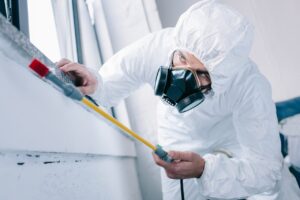
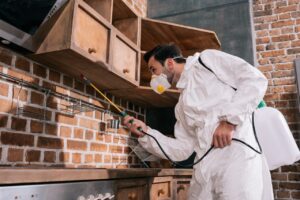
The chemical hazard work zone is established and all unauthorized persons are excluded. Technicians don chemical-specific PPE — Level A (fully encapsulated suit with SCBA), Level B (chemical-resistant suit with SCBA), or Level C (chemical-resistant suit with air-purifying respirator) depending on the identified chemical hazard class and airborne concentration levels. Containment measures appropriate to the chemical type are deployed — vapor barriers for VOC sources, chemical-resistant secondary containment for liquid spills, negative air pressure for drug lab environments.
Step 4 — Chemical Removal, Neutralization, and Structural Assessment
Chemical materials are removed or neutralized using techniques specific to each hazard class. Liquid spills are absorbed using chemical-compatible absorbents; corrosives are neutralized to safe pH ranges before packaging; drug lab residues are removed using EPA-guideline-compliant methods including wet washing and HEPA vacuuming of all surfaces. Following removal of surface contamination, structural materials are assessed for penetration — walls, subfloor, insulation, and HVAC components are tested, and contaminated structural materials requiring removal are identified and documented.
Step 5 — Structural Material Removal Where Required
Where chemical contamination has penetrated porous structural materials beyond the reach of surface decontamination — particularly in methamphetamine labs, VOC sources, and corrosive releases — those materials are carefully removed, documented, packaged in RCRA-compliant containers, and transported for licensed disposal. Structural removal is documented photographically and in writing for insurance claim and property disclosure purposes.
Step 6 — Decontamination, Air Treatment, and HVAC Remediation
All remaining surfaces undergo comprehensive decontamination using chemical-class-appropriate agents. Where VOCs or drug lab chemicals have contaminated the HVAC system, ductwork is cleaned or replaced and air handling units are decontaminated. HEPA air scrubbers with activated carbon filtration are deployed throughout the work zone and run to clearance to reduce airborne chemical concentrations. Activated carbon filtration is specifically required for VOC and drug lab scenarios where off-gassing from structural materials is an ongoing concern.
Step 7 — Post-Clearance Testing and Full Documentation
Post-remediation clearance testing — chemical-specific surface wipe testing, air quality analysis, or soil testing as applicable — is performed and results are compared against state and federal clearance standards. Only after passing clearance testing is the property released for re-occupancy. Zero Trace Biohazard delivers a complete documentation package: hazard assessment report, remediation plan, work log, structural materials removal log, RCRA waste disposal manifests, laboratory clearance test results, and a signed completion certificate. This package supports pollution liability insurance claims, CERCLA liability limitation, state drug lab certification, and future property sale or lease disclosure requirements.
Insurance and Financial Responsibility for Chemical Hazard Cleanup
Standard Homeowners and Commercial General Liability (CGL) Insurance
Standard homeowners insurance policies and commercial general liability (CGL) policies almost universally exclude coverage for chemical pollution events — including drug lab contamination, chemical spills, and VOC releases — under their pollution exclusion clauses (Protect Environmental Services; Bicklaw). Property owners relying on standard policies for chemical hazard cleanup coverage will typically find their claims denied.
Pollution Liability Insurance
The appropriate insurance vehicle for chemical hazard cleanup coverage is pollution legal liability (PLL) insurance, also called environmental liability insurance. PLL policies cover sudden and gradual pollution events, third-party bodily injury and property damage claims, and cleanup costs (Distinguished; Connell Curley). Commercial property owners, industrial operators, landlords, and developers in older building stock should strongly consider PLL coverage given the potential for legacy chemical contamination discoveries during renovation or sale.
CERCLA Liability and Cost Recovery
Under CERCLA, current property owners can face strict liability for cleanup costs even if they did not cause the contamination — simply owning the property creates potential liability (Cornell Law; EPA). Property owners who conduct prompt, documented professional remediation through licensed contractors such as Zero Trace Biohazard significantly strengthen their position under CERCLA’s innocent landowner and bona fide prospective purchaser defenses (EPA Superfund Landowner Liability Protections).
Property Owner and Landlord Responsibility
Property owners — including landlords — who discover chemical contamination on their property have a legal obligation to remediate it promptly and to disclose known hazards to prospective buyers and tenants in most U.S. jurisdictions. Failure to disclose known drug lab contamination specifically can result in criminal liability in states with mandatory disclosure laws. Zero Trace Biohazard provides the post-clearance certification documentation required by state drug lab laws for property resale and re-lease.
Is This Service Right for You?
Best For:
- Property owners who discover a drug lab — meth, fentanyl, or other drug production or heavy use in a residential or commercial property
- Landlords and property managers whose tenant was involved in drug activity or a chemical-related incident
- Industrial and commercial facility operators managing a chemical spill, VOC release, or corrosive chemical incident
- Estate executors and attorneys managing properties where chemical hazards have been discovered
- Real estate professionals and investors purchasing or managing pre-1990 industrial properties with potential legacy chemical contamination
- Insurance adjusters managing pollution liability claims requiring a certified, documented remediation contractor
- Any property owner facing a CERCLA notification or state environmental agency inquiry regarding chemical contamination
Not the Right Fit:
- General household cleaning, mold remediation, or standard biohazard removal not involving chemical agents (see dedicated service pages)
- Lead paint or asbestos abatement (see our Lead Paint Removal and Asbestos Remediation pages)
- Properties with no confirmed or suspected chemical hazard present
FAQ Section
How much does chemical hazard cleanup cost? Chemical hazard cleanup costs range from $2,000 for a small localized spill to $150,000+ for large-scale drug lab or industrial chemical remediation (EPA; PushLeads; Fixr 2025). Meth lab cleanup runs $5,000–$10,000 for light contamination and $25,000–$100,000+ for active production sites. VOC and corrosive spill remediation typically falls between $3,000 and $50,000 depending on volume and structural penetration. Zero Trace Biohazard provides a free on-site chemical hazard assessment — call (XXX) XXX-XXXX 24/7.
What regulations govern chemical hazard cleanup? Chemical hazard cleanup is governed by OSHA HAZWOPER (29 CFR 1910.120), which requires 40-hour certified training for all cleanup workers; EPA RCRA (40 CFR Parts 261–263), which governs hazardous waste classification, generator requirements, and licensed transporter mandates; CERCLA, which imposes strict liability on property owners for chemical contamination; and state-specific drug lab remediation laws in over 40 states (OSHA; EPA RCRA; Cornell Law). Zero Trace Biohazard operates in full compliance with all applicable federal and state regulations nationwide.
Can I clean up a chemical spill or drug lab myself? Attempting DIY cleanup of a chemical hazard is legally prohibited without HAZWOPER training under OSHA 29 CFR 1910.120, and disposal of chemical waste in the regular waste stream is a federal crime under EPA RCRA. Beyond legal exposure, untrained workers face acute and potentially fatal risks from fentanyl skin absorption, corrosive chemical burns, toxic gas inhalation, and VOC exposure. Zero Trace Biohazard’s HAZWOPER-certified technicians handle every aspect safely, legally, and with full documentation.
Does insurance cover chemical hazard cleanup? Standard homeowners and commercial general liability (CGL) policies typically exclude chemical pollution events under their pollution exclusion clauses. The appropriate coverage is pollution legal liability (PLL) insurance, which covers sudden and gradual pollution events, third-party claims, and cleanup costs (Distinguished; Protect Environmental Services). Zero Trace Biohazard’s documentation package is formatted to support PLL insurance claims. Call (XXX) XXX-XXXX and our team will begin insurance coordination immediately.
What is HAZWOPER certification and why does it matter? HAZWOPER stands for Hazardous Waste Operations and Emergency Response. OSHA’s HAZWOPER standard (29 CFR 1910.120) requires that workers performing hazardous waste cleanup or responding to chemical emergencies complete a 40-hour initial training course and three days of supervised field experience, with an 8-hour annual refresher (OSHA). A company that lacks HAZWOPER certification is not legally permitted to perform chemical hazard cleanup operations and cannot safely protect its workers or the property from secondary contamination during the remediation process. Zero Trace Biohazard technicians are fully HAZWOPER-certified.
What chemical hazards does Zero Trace Biohazard remediate? Zero Trace Biohazard remediates methamphetamine lab contamination, fentanyl and synthetic opioid contamination, volatile organic compounds (VOCs), corrosive acid and base releases, industrial and commercial chemical spills, drug and narcotic residue contamination, and hazardous chemical inventory disposal. Each chemical type is addressed using the specific containment, neutralization, and disposal protocols required by its hazard class, with full OSHA HAZWOPER and EPA RCRA compliance throughout.
How long does chemical hazard cleanup take? A small localized chemical spill can be remediated in a single day. Moderate drug lab or VOC contamination typically requires 2–5 days. Large-scale methamphetamine production sites or industrial spills with structural penetration can take 1–4 weeks, including post-clearance testing and documentation. Timeline is heavily dependent on the scope of structural contamination and the turnaround time for laboratory analysis of clearance samples.
What happens if chemical contamination is not professionally cleaned? Unaddressed chemical contamination creates ongoing acute and chronic health risks for all occupants through off-gassing, surface contact, and airborne exposure. Property owners face significant CERCLA liability, state regulatory enforcement actions, and civil liability for third-party bodily injury. In states with mandatory drug lab disclosure laws, a property with undisclosed known chemical contamination cannot be legally sold or leased. Persistent structural contamination also causes ongoing material degradation — corrosive chemicals continue to damage structural components long after the initial release.
What is included in Zero Trace Biohazard’s post-clearance documentation package? Zero Trace Biohazard’s documentation package includes: a chemical hazard assessment report, written remediation plan, detailed work log, structural materials removal log with photographic documentation, EPA RCRA waste disposal manifests, laboratory clearance test results (surface wipe, air quality, and soil as applicable), product data sheets for all EPA-registered agents used, and a signed completion certificate. This package supports pollution liability insurance claims, CERCLA liability limitation, state drug lab clearance certification, and future property sale or lease disclosure requirements. Call (XXX) XXX-XXXX to discuss your documentation needs.
Is chemical contamination from a drug lab dangerous after the drugs are removed? Yes — profoundly so. The chemical residues left behind by drug production — including solvents, precursor chemicals, and byproducts — are often more dangerous than the drug itself and persist on surfaces and in structural materials long after the drugs are removed. Methamphetamine residue on walls and surfaces creates ongoing inhalation and skin contact exposure for future occupants. Fentanyl residue is lethal in microgram quantities through skin absorption. Law enforcement removal of drugs does not constitute chemical remediation — the property requires professional testing and cleanup before re-occupancy (EPA Voluntary Guidelines; SceneCleanMN).
How does Zero Trace Biohazard handle chemical waste disposal? All chemical waste generated during cleanup is classified under EPA RCRA (40 CFR Part 261), packaged in appropriate DOT-compliant containers with required labels and markings, manifested under EPA RCRA Part 262 generator requirements, and transported by licensed hazardous waste transporters under EPA RCRA Part 263 to EPA-permitted treatment, storage, and disposal facilities (TSDFs). Zero Trace Biohazard holds the required generator and transporter documentation and includes all disposal manifests in the final project documentation package (EPA RCRA Regulations).
What should I do immediately if I discover a suspected drug lab or chemical hazard? Do not enter the property or the affected area. Do not touch any materials, containers, or surfaces. Evacuate all occupants immediately and call emergency services if any person has been exposed. Then call Zero Trace Biohazard at (XXX) XXX-XXXX — our HAZWOPER-certified team responds 24/7 with the equipment and training to safely assess and remediate the scene. If the situation involves a law enforcement matter, we coordinate directly with authorities and begin remediation only after the scene has been officially released.
Call to Action Block
Zero Trace Biohazard — Certified Chemical Hazard Cleanup, Nationwide, 24/7
Certifications: OSHA HAZWOPER 29 CFR 1910.120 Certified | EPA RCRA Compliant | DOT Hazardous Materials Transport | OSHA BBP 29 CFR 1910.1030 | EPA Voluntary Guidelines — Meth/Fentanyl Lab Cleanup
Chemical hazards are time-critical. Every hour of delay allows additional structural penetration, off-gassing, and health exposure. Our HAZWOPER-certified team is dispatched immediately — 24/7, 365 days, nationwide.
Call (XXX) XXX-XXXX now for emergency response or to schedule a free on-site chemical hazard assessment.
→ Request Emergency Response Now → Read Our Chemical Hazard FAQ → View All Environmental Services
Related Internal Links
- Biohazard Cleaning Services — https://www.zerotracebiohazard.com/biohazard-cleaning-services
- Hazardous Waste Removal — https://www.zerotracebiohazard.com/hazardous-waste-removal
- Asbestos Remediation Services — https://www.zerotracebiohazard.com/asbestos-remediation-services
- Lead Paint Removal Services — https://www.zerotracebiohazard.com/lead-paint-removal-services
- Crime Scene Cleanup Services — https://www.zerotracebiohazard.com/crime-scene-cleanup-services
- Contact Us — https://www.zerotracebiohazard.com/contact-us