Lead Paint Removal Services — EPA-Certified, OSHA-Compliant, Nationwide
Answer-First Opening Paragraph (with Phone CTA)
If your property was built before 1978, it very likely contains lead-based paint — the CDC confirms there is no safe blood lead level in children, and disturbing deteriorating lead paint without certified professionals puts every occupant at serious risk (CDC, 2024). Zero Trace Biohazard provides EPA RRP-certified lead paint removal, encapsulation, and abatement services for residential and commercial properties across all 50 states. Our certified technicians follow 40 CFR Part 745 work practices, contain and remove lead hazards safely, and deliver full post-clearance documentation. Call (XXX) XXX-XXXX 24/7 for a free on-site assessment.
TL;DR
Lead paint removal costs $6–$17 per sq ft or $3,000–$17,000 total for full projects (HomeGuide 2026; Angi 2026). Encapsulation is 25% less expensive than removal (Raider Painting). EPA RRP certification is legally required for all renovation firms disturbing lead paint in pre-1978 homes (EPA, 40 CFR Part 745). Zero Trace Biohazard is EPA RRP-certified, OSHA-compliant, and dispatches nationwide with same-day response. Inspection costs $300–$700 (Angi 2026). Standard projects complete in 1–3 days; whole-property abatement can take 1–3 weeks. Homeowners insurance typically excludes lead paint removal as a maintenance issue, but some state assistance programs exist.
TL;DR Bullet Block
- Cost Range: $6–$17 per sq ft; $3,000–$17,000 total for most residential projects (HomeGuide 2026)
- National Average: $3,499 for a typical residential job; $10,000–$30,000 for large-scale whole-property projects (Angi 2026; Fixr 2026)
- Encapsulation Savings: Encapsulation runs approximately 25% less than full removal (Raider Painting)
- Inspection Cost: $300–$700 residential; $500–$1,500 for larger or commercial properties (Angi 2026)
- Compliance: EPA RRP Rule (40 CFR Part 745); OSHA 29 CFR 1910.1025; HUD Lead Safe Housing Rule
- Timeline: 1–3 hours for inspection; 1–3 days for standard abatement; 1–3 weeks for whole-property projects (Angi; ManhattanLead)
- Insurance: Most homeowners policies exclude lead removal as a long-term maintenance issue; state grant programs may apply
- Service Area: All 50 states, residential and commercial, 24/7 same-day response
Quick Facts Table
| Detail | Info |
| Company | Zero Trace Biohazard |
| Phone | (XXX) XXX-XXXX |
| Service Area | All 50 states, residential & commercial |
| Availability | 24/7, 365 days, same-day response |
| Inspection Cost | $300–$700 residential; up to $1,500 commercial (Angi 2026) |
| Cost Per Sq Ft | $6–$17 per sq ft (HomeGuide 2026) |
| Typical Project Cost | $3,000–$17,000 (HomeGuide 2026) |
| National Average | $3,499 (Angi 2026) |
| Large/Whole-Property | $10,000–$30,000+ (Fixr 2026) |
| Encapsulation Savings | ~25% less than removal (Raider Painting) |
| Certification | EPA RRP (40 CFR Part 745), OSHA 29 CFR 1910.1025 |
| HUD Rule | HUD Lead Safe Housing Rule (24 CFR Part 35) |
| Timeline (Standard) | 1–3 days per room/area |
| Timeline (Whole-Property) | 1–3 weeks |
| Insurance Coverage | Typically excluded; state programs may help |
| Affected Buildings | Pre-1978 residential and commercial structures |
What Is Lead Paint and Why Is It Dangerous?
Lead-based paint was commonly used in homes, schools, and commercial buildings constructed before 1978, when the U.S. Consumer Product Safety Commission banned its residential use. The paint itself is not always immediately harmful when intact and undisturbed, but when it chips, peels, deteriorates, or is disturbed during renovation, it generates lead dust and paint chips that are highly toxic to both children and adults.
Health Risks for Children
The CDC has established that there is no safe blood lead level in children. Even low-level exposure damages the brain and nervous system, slows growth and development, causes learning and behavior problems, and impairs hearing and speech (CDC, 2024). Children under six are at the highest risk because they are more likely to ingest lead dust through normal hand-to-mouth behavior and their developing bodies absorb lead more readily than adults. The CDC uses a blood lead reference value of 3.5 micrograms per deciliter (µg/dL) to identify children with elevated exposure requiring intervention (CDC, 2023).
Health Risks for Adults
Adult exposure to lead causes high blood pressure, kidney damage, reproductive problems, and neurological effects including memory loss and mood disorders (WHO). Pregnant women face particular risk because lead crosses the placental barrier and can harm fetal brain development. Workers in renovation, remodeling, and painting are also at elevated occupational risk, which is why OSHA 29 CFR 1910.1025 mandates specific exposure limits and medical surveillance for lead-exposed workers.
EPA, OSHA & HUD Regulatory Requirements
Lead paint abatement and renovation work involving lead paint are governed by a layered set of federal regulations. Understanding these requirements is critical before any work begins on a pre-1978 property.
EPA Renovation, Repair and Painting (RRP) Rule — 40 CFR Part 745
The EPA RRP Rule requires that any firm disturbing more than 6 sq ft of lead paint indoors (or 20 sq ft outdoors) in a pre-1978 residential building or child-occupied facility must be EPA RRP-certified (EPA). The rule mandates that at least one certified renovator be on-site at all times, that specific lead-safe work practices be followed to contain dust and debris, and that post-renovation cleaning verification be completed. Firms must also provide the EPA’s “Renovate Right” pamphlet to property owners before work begins. Certification requires completion of an EPA-approved 8-hour initial training course (Keystone Window 2025).
OSHA Lead in Construction Standard — 29 CFR 1926.62
OSHA’s construction-industry lead standard sets a permissible exposure limit (PEL) of 50 micrograms per cubic meter of air (µg/m³) as an 8-hour time-weighted average, with an action level of 30 µg/m³ that triggers medical surveillance. Workers must use appropriate respiratory protection, protective clothing, and hygiene facilities. Employers must conduct air monitoring, maintain exposure records for 40 years, and provide medical monitoring for any worker exposed at or above the action level (OSHA, 29 CFR 1926.62).
HUD Lead Safe Housing Rule — 24 CFR Part 35
For federally assisted housing built before 1978, the HUD Lead Safe Housing Rule mandates lead hazard evaluation and control before occupancy. Property owners receiving federal assistance must conduct lead-based paint inspections or risk assessments and disclose all known lead hazards to tenants (HUD). Zero Trace Biohazard’s documentation packages are formatted to satisfy HUD disclosure and clearance requirements.
Lead Paint Abatement Methods
There are four EPA-recognized approaches to managing lead-based paint hazards. The right method depends on the condition of the painted surface, the scope of the project, and the property’s intended use. Zero Trace technicians evaluate all four options and recommend the safest, most cost-effective solution.
Method 1 — Paint Removal (Full Abatement)
Full removal eliminates the lead hazard permanently. Contractors use wet scraping, wet sanding, chemical stripping, heat guns (below 1,100°F to prevent fume generation), or power tools with HEPA attachments. This is the only method that completely eliminates the lead source and is required by HUD in certain federally assisted housing contexts. Cost typically runs $6–$17 per sq ft, making it the most expensive option but also the most permanent (HomeGuide 2026).
Method 2 — Encapsulation
Encapsulation involves applying a specially formulated encapsulant coating that bonds to and seals the lead paint, preventing dust generation. It is generally 25% less expensive than removal, safer for workers, and causes less property disruption (Raider Painting). However, encapsulation is a long-term management strategy rather than a permanent solution — the coating must be inspected periodically and re-applied if it deteriorates. It is not appropriate for surfaces subject to high friction or impact, such as window sills or door frames.
Method 3 — Enclosure
Enclosure places a rigid barrier — drywall, plywood paneling, or similar material — over the lead-painted surface, physically separating occupants from the hazard. Like encapsulation, it does not remove the lead but contains it. It is cost-effective for large flat surfaces like walls and ceilings but requires periodic inspection to ensure the barrier remains intact. Enclosure is generally not permitted in federally assisted housing without prior approval.
Method 4 — Component Replacement
Component replacement involves removing and replacing entire building components that contain lead paint — window frames, doors, baseboards, or trim — rather than treating the painted surface. It is considered a permanent abatement method and is particularly effective for windows and doors, which are high-friction surfaces that continuously generate lead dust. Replacement is costlier upfront but eliminates ongoing maintenance requirements associated with encapsulation or enclosure.
Lead Paint Removal Cost Breakdown
Costs vary significantly by method, surface type, property size, and geographic location. The figures below are drawn from national data sources current as of 2026.
Cost by Method
| Method | Cost Range | Notes |
| Full Removal (per sq ft) | $6–$17 | Avg. project $3,499; whole-property $10,000–$30,000+ (Angi 2026; Fixr 2026) |
| Encapsulation (per sq ft) | $4–$12 | ~25% less than removal; requires periodic re-inspection (Raider Painting) |
| Enclosure | $3–$8 per sq ft | Cost-effective for large flat wall/ceiling areas |
| Component Replacement | $300–$1,500+ per component | Windows, doors, baseboards; permanent solution |
| Lead Paint Inspection | $300–$700 residential | Up to $1,500 for larger/commercial (Angi 2026) |
| Lead Risk Assessment | $300–$700 | Evaluates hazard level and recommends action |
| Post-Clearance Dust Wipe Test | $250–$400 | Required for final clearance documentation |
Cost by Property Size
| Property Size | Estimated Total Cost |
| Single room | $500–$2,000 |
| Small home (under 1,000 sq ft) | $1,478–$5,520 (Angi 2026) |
| Average home (1,500–2,500 sq ft) | $3,000–$12,000 (HomeGuide 2026) |
| Large home (3,000+ sq ft) | $10,000–$30,000+ (Fixr 2026) |
| Commercial / multi-unit property | Custom quote; scope-dependent |
Key Cost Drivers
The following factors most significantly affect the total project cost: property size and number of affected surfaces; the abatement method selected (removal vs. encapsulation vs. enclosure); surface type (flat walls are less expensive than windows, doors, and trim); lead paint concentration and condition (intact vs. deteriorating); geographic location and local labor rates; accessibility of affected areas; and required regulatory notifications and post-clearance testing.
Lead Paint Inspection vs. Risk Assessment — What’s the Difference?
These two services are often confused but serve distinct purposes, and understanding the distinction is important before authorizing any abatement work.
A lead-based paint inspection determines whether lead-based paint is present anywhere in a building. A certified lead inspector tests all painted surfaces and provides a room-by-room report identifying all positive surfaces. This is a comprehensive survey of presence, not risk level (EPA).
A lead-based paint risk assessment is an on-site investigation that determines whether any lead hazards — from paint, dust, or soil — are currently present and posing a risk to occupants. A certified risk assessor collects paint chip, dust wipe, and soil samples, evaluates conditions, and recommends specific corrective actions. The risk assessment focuses on current hazard and exposure pathway, not just presence (EPA).
Zero Trace Biohazard’s certified professionals perform both inspections and risk assessments, and will recommend the appropriate service based on your property type, age, and condition.
The Zero Trace Lead Paint Abatement Process (Step by Step)
Step 1 — Free On-Site Assessment & Inspection
A certified Zero Trace technician visits the property to visually assess paint conditions and collect samples. Using XRF (X-ray fluorescence) analyzers and paint chip sampling sent to an accredited laboratory, we identify all lead-painted surfaces and generate a room-by-room report. Inspection typically takes 1–3 hours for a residential property (LeadFreeNYC).
Step 2 — Risk Assessment & Project Planning
Based on inspection findings, our certified risk assessor evaluates the hazard level of each affected surface and recommends the most appropriate abatement method — removal, encapsulation, enclosure, or component replacement. We prepare a full abatement plan and provide written cost estimates with itemized line items before any work begins.
Step 3 — Regulatory Notification & Disclosure
Zero Trace handles all required pre-work regulatory steps, including delivery of the EPA “Renovate Right” pamphlet to the property owner or occupant, firm certification documentation, and any state or local notifications required in your jurisdiction. This step is completed before mobilization.
Step 4 — Site Preparation & Containment
Our technicians establish a contained work zone using polyethylene sheeting, negative air pressure units with HEPA filtration, and critical barriers at doorways to prevent lead dust from migrating to clean areas. All HVAC registers in the work zone are sealed. Occupants — particularly children and pregnant women — must vacate the work area during abatement.
Step 5 — Abatement & Material Removal
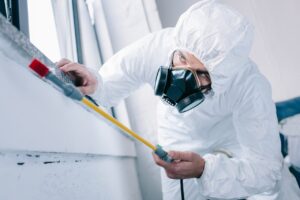
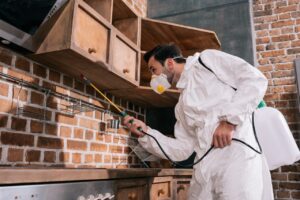
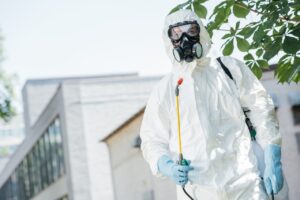
The selected abatement method is executed by EPA RRP-certified workers wearing full PPE — respirators rated for lead dust, disposable coveralls, and nitrile gloves. Wet methods are used throughout to suppress dust. All removed materials are collected in sealed, labeled waste containers compliant with DOT hazardous materials transport regulations.
Step 6 — Post-Abatement Cleaning
After abatement, the work area undergoes a minimum of three-step cleaning: HEPA vacuum, wet wipe, and a second HEPA vacuum. This sequence is required under the EPA RRP Rule and is designed to reduce lead dust loading to levels below the EPA clearance standards (40 µg/ft² for floors; 250 µg/ft² for window sills; 400 µg/ft² for exterior surfaces per HUD).
Step 7 — Clearance Testing & Full Documentation
A certified dust wipe clearance examination is performed by an independent certified risk assessor (or by our in-house assessors, depending on state requirements). Results are compared against EPA/HUD clearance standards. Only after passing clearance can occupants return. Zero Trace provides a full documentation package: inspection report, abatement report, waste disposal manifests, clearance test results, and EPA/HUD-compliant disclosures.
Abatement vs. Encapsulation — Comparison Table
| Factor | Full Removal (Abatement) | Encapsulation |
| Permanence | Permanent — eliminates lead source | Long-term — lead remains, covered |
| Relative Cost | Higher ($6–$17/sq ft) | ~25% less than removal |
| Worker Risk | Higher (dust generation) | Lower (no disturbance of paint) |
| Downtime | 1–3 days per area | Less downtime |
| Ongoing Maintenance | None after clearance | Periodic inspection required |
| Best For | High-friction surfaces, HUD housing, whole-property | Large flat surfaces, low-friction areas |
| Regulatory Status | Accepted by all agencies | Not always permitted in HUD-assisted housing |
Who Pays for Lead Paint Removal?
Homeowners Insurance
Most standard homeowners insurance policies do not cover lead paint removal because insurers classify lead hazards as long-term maintenance issues rather than sudden, accidental events (HiTech Environmental NYC). Some specialized environmental liability policies exist but are not standard. Property owners should contact their insurer directly and request a review of their policy’s environmental hazard language.
Landlord vs. Tenant Responsibility
In virtually all U.S. jurisdictions, lead paint abatement is the property owner’s — not the tenant’s — responsibility. Tenants are not liable for pre-existing lead hazards unless they caused direct damage to painted surfaces. Landlords who fail to disclose known lead hazards or who fail to remediate documented hazards can face significant civil liability and regulatory penalties (AllLaw; Quora). Property owners receiving federal housing assistance are subject to the HUD Lead Safe Housing Rule and must act.
State Grant and Assistance Programs
Several states and municipalities operate lead hazard reduction grant and loan programs that can offset abatement costs for qualifying low-income homeowners, landlords of low-income tenants, and child-occupied facilities. For example, Louisiana’s Department of Health offers no-cost lead abatement to qualifying homeowners and landlords (Louisiana Department of Health). Zero Trace Biohazard’s team can assist clients in identifying applicable assistance programs in their state.
Is This Service Right for You?
Best For:
- Pre-1978 homeowners — any home, apartment, or commercial building built before 1978 with deteriorating or disturbed paint
- Property owners selling or refinancing — lenders and buyers increasingly require lead clearance documentation
- Landlords with family or child tenants — HUD and many state laws require disclosure and remediation of known lead hazards
- Renovation and remodeling projects — any contractor disturbing 6+ sq ft of painted surface in a pre-1978 building must be EPA RRP-certified
- Property managers and schools — AHERA and local codes may mandate lead surveys before renovation
- Families with children under 6 or pregnant women — highest-risk populations per CDC; no safe blood lead level exists
Not the Right Fit:
- Properties built after 1978 (lead-based paint was federally banned for residential use)
- Situations where paint is fully intact, stable, and not subject to disturbance — monitoring in place of abatement may be appropriate
- General cleaning, mold remediation, or asbestos removal needs (see our related services)
FAQ Section
How much does lead paint removal cost? Lead paint removal costs $6–$17 per sq ft or $3,000–$17,000 total for most residential projects (HomeGuide 2026). The national average residential job runs approximately $3,499 (Angi 2026), while large-scale whole-property abatement can reach $10,000–$30,000+ (Fixr 2026). Encapsulation is approximately 25% less expensive than full removal. Zero Trace Biohazard provides free on-site assessments — call (XXX) XXX-XXXX for an accurate project-specific quote.
Is a lead paint inspection required before renovation? Yes. Under the EPA RRP Rule (40 CFR Part 745), any firm disturbing more than 6 sq ft of painted surface indoors — or 20 sq ft outdoors — in a pre-1978 residential or child-occupied building must use EPA RRP-certified contractors following lead-safe work practices (EPA). A lead paint inspection or risk assessment before renovation confirms the presence and scope of lead hazards and informs the abatement plan.
What is the difference between lead paint removal and encapsulation? Lead paint removal (full abatement) permanently eliminates the lead source through wet scraping, chemical stripping, or component replacement, and costs $6–$17 per sq ft. Encapsulation seals the lead paint with a bonding coating — it is approximately 25% less expensive and causes less property disruption, but the lead remains in place and the coating requires periodic re-inspection. High-friction surfaces such as windows and doors are generally not suitable for encapsulation.
How long does lead paint abatement take? A single-room or small-area project typically takes 1–3 days from start to clearance testing (Angi; TRC Restoration). Larger multi-room or whole-property projects can take 1–3 weeks, including time for post-abatement clearance dust wipe testing (ManhattanLead). Lead paint inspections alone take 1–3 hours for a standard residential property (LeadFreeNYC).
Does homeowners insurance cover lead paint removal? Most standard homeowners insurance policies do not cover lead paint removal, as insurers classify it as a long-term maintenance issue rather than a sudden, accidental loss (HiTech Environmental NYC). Specialized environmental liability policies may provide limited coverage. Several states offer grant or loan assistance programs for qualifying low-income homeowners. Zero Trace Biohazard can help identify applicable programs in your state — call (XXX) XXX-XXXX to discuss options.
Can I remove lead paint myself? DIY lead paint removal is strongly discouraged and may be illegal without EPA RRP certification in covered situations. Improper removal generates significant lead dust, creates serious health risks for residents and workers, and may violate EPA, OSHA, and state regulations. The EPA RRP Rule requires certified firms and certified renovators for all covered renovation work in pre-1978 residential and child-occupied buildings (EPA, 40 CFR Part 745). Zero Trace Biohazard’s technicians are fully EPA RRP-certified and OSHA-compliant nationwide.
What happens after lead paint removal — can occupants return immediately? Occupants cannot return until post-abatement clearance testing passes EPA/HUD dust wipe standards: 40 µg/ft² for floors, 250 µg/ft² for window sills, and 400 µg/ft² for exterior surfaces. Zero Trace Biohazard conducts or coordinates independent clearance testing and delivers a full documentation package — inspection report, abatement report, waste manifests, and clearance results — before re-occupancy is authorized.
Who is responsible for lead paint removal — the landlord or the tenant? In virtually all U.S. jurisdictions, the property owner (landlord) is responsible for lead paint abatement — not the tenant. Tenants are not liable for pre-existing hazards they did not create. Landlords who fail to disclose or remediate known lead hazards can face significant civil liability, regulatory penalties, and — in federally assisted housing — loss of HUD funding (AllLaw). Zero Trace Biohazard serves both residential landlords and commercial property owners nationwide.
How do I know if my home has lead paint? Any home, apartment, or commercial building built before 1978 should be presumed to contain lead-based paint until tested. Common indicators include chipping, peeling, or chalking paint, especially on trim, windows, and doors. A certified lead inspector using an XRF analyzer or paint chip laboratory analysis can confirm presence in 1–3 hours. Call (XXX) XXX-XXXX to schedule a Zero Trace certified lead inspection nationwide.
What certifications should a lead paint removal company have? A qualified lead paint abatement company must hold EPA RRP firm certification under 40 CFR Part 745, employ certified renovators who have completed an EPA-approved 8-hour training course (Keystone Window 2025), and comply with OSHA 29 CFR 1926.62 (construction lead standard). For abatement-specific work, EPA requires separate lead abatement contractor certification distinct from RRP renovator certification (EPA). Zero Trace Biohazard holds all required federal certifications and complies with all applicable state licensure requirements.
Is lead paint dangerous if it is not chipping or peeling? Intact, well-adhered lead-based paint that is not subject to disturbance, friction, or impact is generally considered a lower immediate risk. However, it must be managed and monitored, and any renovation or repair that disturbs it triggers EPA RRP compliance requirements. Deteriorating lead paint — chipping, peeling, or chalking — is an active hazard requiring immediate attention. Zero Trace recommends a professional assessment for any pre-1978 property before any renovation or sale.
How is lead paint waste disposed of? Lead paint waste — including paint chips, debris, and contaminated materials — is collected in sealed, labeled DOT-compliant waste containers and transported to EPA-approved disposal facilities by licensed waste transporters. Zero Trace Biohazard handles the entire chain of custody: collection, packaging, manifesting, transport, and certified disposal. A waste disposal manifest is included in the final project documentation package delivered to the property owner.
Call to Action Block
Zero Trace Biohazard — Certified Lead Paint Removal, Nationwide, 24/7
Certifications: EPA RRP Certified | OSHA 29 CFR 1926.62 Compliant | HUD Lead Safe Housing Rule Compliant
Call (XXX) XXX-XXXX now for a free on-site assessment. Available 24/7, 365 days a year.
→ Schedule a Free Assessment → Read Our Lead Paint FAQ → View All Environmental Services
Related Internal Links
- Asbestos Remediation Services — https://www.zerotracebiohazard.com/asbestos-remediation-services
- Biohazard Cleaning Services — https://www.zerotracebiohazard.com/biohazard-cleaning-services
- Mold Remediation Services — https://www.zerotracebiohazard.com/mold-remediation-services
- Hazardous Waste Removal — https://www.zerotracebiohazard.com/hazardous-waste-removal
- Environmental Services Overview — https://www.zerotracebiohazard.com/environmental-services
- Contact Us — https://www.zerotracebiohazard.com/contact-us