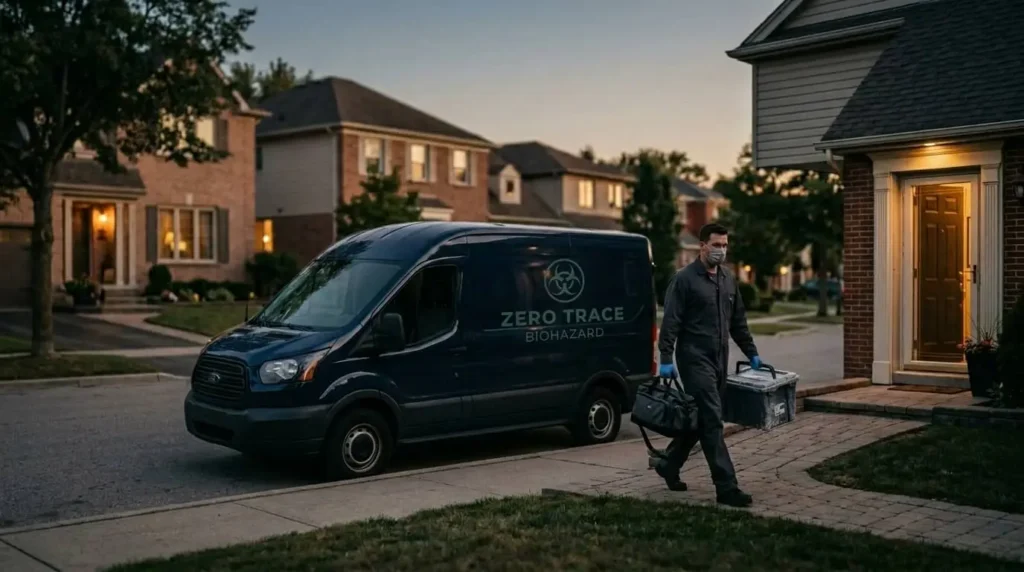
Sewage Cleanup Services — Certified Category 3 Biohazard Remediation, 24/7 Nationwide
A sewage backup is not a plumbing inconvenience — it is a Category 3 biohazard emergency. Raw sewage, also called “black water” under the IICRC S500 Standard for Professional Water Damage Restoration, contains more than 50 documented pathogens capable of causing severe illness, including E. coli, Hepatitis A, Salmonella, Leptospirosis, Norovirus, Cryptosporidium, and Giardia. A 2022 University of Maryland pilot study found dangerous bacteria in 34 of 40 homes that had experienced a sewage backup — in some cases more than six months after the incident — confirming that visible cleanup alone does not eliminate the pathogen risk. Every hour that sewage contamination sits untreated, it wicks deeper into porous materials, mold spores begin colonizing damp surfaces within 24–48 hours, and structural damage compounds.
Zero Trace Biohazard provides OSHA-compliant, IICRC-certified sewage cleanup and Category 3 biohazard remediation nationwide, 24 hours a day, 7 days a week. From emergency water extraction through structural drying, disinfection, odor elimination, and final clearance certification, we manage every phase of sewage remediation with the speed, documentation, and professional expertise your property — and your health — require. Call (XXX) XXX-XXXX now for immediate emergency response.
Get Immediate Help — Certified Category 3 Sewage Cleanup, IICRC-Compliant & Fast, 24/7 Nationwide
Mold starts in 24 hours. Our IICRC-certified team responds now — share your details immediately.
TL;DR — Key Facts at a Glance
Cost Range:
$7–$15+ per square foot, or $2,000–$15,000+ for most residential projects
National Average:
$2,000–$10,000 for standard residential sewage cleanup (HomeGuide 2025)
Minor Backup (1 Room):
$1,000–$3,000
Major Backup (Multi-Room/Basement):
$3,000–$10,000+
Severe / Structural Damage:
$10,000–$15,000+
Per Square Foot Rate:
$7–$15+ (Homewyse 2026: $13.68–$16.89/sq ft baseline)
IICRC Classification:
Category 3 — Black Water; highest contamination designation
Mold Risk:
Mold begins colonizing within 24–48 hours of sewage exposure; 48–72 hours for visible growth
Certifications:
IICRC WRT (Water Restoration Technician), IICRC ASD (Applied Structural Drying), OSHA 29 CFR 1910.1030, EPA-registered disinfectants
Insurance:
Standard homeowners policies typically exclude sewer backup; a Sewer Backup Endorsement (approx. $50–$250/yr) provides coverage of $5,000 to full replacement cost
Landlord Responsibility:
Landlords generally responsible for sewer-related habitability failures in rental properties
Act Immediately:
Every hour of delay increases structural damage, pathogen penetration, and mold risk
Service Area:
All 50 states, residential and commercial, 24/7/365
Timeline:
2–5 days (standard); 1–2+ weeks (severe structural damage)
Quick Facts
| Feature | Detail |
|---|---|
| Company | Zero Trace Biohazard |
| Phone | (XXX) XXX-XXXX |
| Service Area | All 50 states |
| Availability | 24/7, 365 Days a Year |
| Minor Backup (1 Room) | $1,000–$3,000 |
| Major Backup (Multi-Room) | $3,000–$10,000+ |
| Severe / Structural Damage | $10,000–$15,000+ |
| Cost Per Square Foot | $7–$15+ ($13.68–$16.89 baseline, Homewyse 2026) |
| National Average | $2,000–$10,000 |
| IICRC Water Classification | Category 3 — Black Water (Highest Contamination) |
| Mold Growth Risk | Begins within 24–48 hours of sewage exposure |
| Certifications | IICRC WRT; IICRC ASD; OSHA 29 CFR 1910.1030; GBAC |
| Disinfectant Standard | EPA-Registered; 99.99% Pathogen Kill Rate |
| Pathogens Present | E. coli, Hepatitis A, Salmonella, Leptospirosis, Norovirus, Cryptosporidium, Giardia, 50+ total |
| Standard Insurance | Typically Excludes Sewer Backup |
| Sewer Backup Endorsement | Optional Add-On; $50–$250/yr; $5,000–Full Replacement Value |
| Landlord Responsibility | Generally Yes Under Warranty of Habitability |
| Privacy | Unmarked Vehicles; Full Confidentiality |
| Odor Removal | Ozone, Hydroxyl Generators, Thermal Fogging |
| Timeline (Standard) | 2–5 Days |
| Timeline (Severe/Structural) | 1–2+ Weeks |
| Documentation | Full Clearance Certificate & Remediation Report |
What Is Sewage Cleanup?
Sewage cleanup — also called sewer backup remediation, black water cleanup, or Category 3 water damage restoration — is the emergency professional process of extracting raw sewage, removing all contaminated materials, disinfecting and decontaminating every affected surface, drying the structural assembly to prevent mold growth, eliminating biological odor, and certifying the property safe for re-occupancy following a sewage backup, sewer line failure, septic system overflow, or flooding event involving sewage-contaminated water.
The IICRC S500 Standard for Professional Water Damage Restoration classifies water intrusion events into three contamination categories. Category 1 is clean water from a sanitary source — a burst supply pipe or overflowing clean sink. Category 2 is gray water carrying biological or chemical contaminants — dishwasher overflow, washing machine discharge, or aquarium leaks — capable of causing discomfort or illness. Category 3 is black water: grossly contaminated water containing pathogenic agents, toxic substances, and biohazardous material — including raw sewage from backed-up sewer lines, septic system overflows, rising floodwater containing sewage, and toilet backflows. Sewage cleanup is always a Category 3 event, carrying the highest contamination designation in the IICRC classification system.
Category 3 contamination is a certified biohazard because raw sewage contains the biological output of human waste — a complex mixture of bacteria, viruses, parasites, and fungi that are capable of causing serious disease through ingestion, skin contact, mucous membrane exposure, and inhalation of aerosolized particles. Standard cleaning products, household bleach at consumer dilutions, and wet-dry vacuums cannot safely or effectively remediate Category 3 contamination. Professional equipment, EPA-registered hospital-grade disinfectants, IICRC-certified drying protocols, and licensed biohazardous waste disposal are required to achieve a clearance-certifiable outcome.
The compounding urgency of sewage cleanup is driven by mold. Once sewage water has saturated porous materials — carpet, drywall, sub-flooring, insulation, wood framing — mold spores present naturally in all indoor environments begin colonizing damp surfaces within 24–48 hours. Visible mold colonies typically appear within 48–72 hours. Every hour of delay between the sewage event and professional extraction meaningfully increases the scope, cost, and complexity of the remediation.
The IICRC Water Damage Categories — Why Sewage Is Always Category 3
Category 1 — Clean Water
Category 1 water originates from a sanitary source and presents no immediate health risk at the point of contact. Sources include broken supply lines, overflowing bathtubs or sinks without contaminants, and melting ice. Category 1 water can degrade to Category 2 or 3 if it contacts contaminated surfaces, sits for extended periods, or encounters sewage-contaminated materials during its path through the structure.
Category 2 — Gray Water
Category 2 water contains significant contamination capable of causing discomfort or sickness if ingested or contacted. Sources include dishwasher and washing machine overflow, sump pump failure, and aquarium leaks. Gray water requires professional remediation but carries a lower pathogen load than black water. Untreated Category 2 water degrades to Category 3 within 48–72 hours as bacterial populations multiply.
Category 3 — Black Water (Sewage)
Category 3 black water is the highest contamination classification in the IICRC system and covers all events involving raw sewage, toilet backflows, rising groundwater or floodwater that has contacted sewage infrastructure, and any water source that has passed through or mixed with sewage contamination. All sewage backup events are Category 3 by definition. Category 3 contamination requires the full biohazard remediation protocol — professional PPE, EPA-registered disinfectants at proper concentration, structural material removal where penetration has occurred, IICRC-certified structural drying, and post-remediation clearance testing. No porous material contacted by Category 3 water can be considered safe without certified professional remediation.
Health Risks of Sewage Exposure
Sewage contains more than 50 documented pathogens capable of causing serious human illness. Understanding the specific disease risks reinforces why immediate professional intervention is critical and why DIY cleanup attempts create compounded exposure hazards for property owners, their families, and their employees.
Bacterial Pathogens
Escherichia coli (E. coli) is among the most prevalent bacterial pathogens in raw sewage, capable of causing severe gastrointestinal illness, urinary tract infections, and — in vulnerable populations — potentially fatal hemolytic uremic syndrome (HUS). Salmonella causes gastroenteritis with fever, vomiting, and diarrhea, and can be fatal in immunocompromised individuals. Leptospira bacteria, transmitted through contact with sewage-contaminated water or soil, causes Leptospirosis — a potentially fatal disease affecting the kidneys, liver, brain, and lungs. Campylobacter is one of the most common causes of bacterial gastroenteritis in the United States and is a documented component of sewage contamination. Shigella causes dysentery. Additional bacterial hazards include Tetanus (Clostridium tetani) and antibiotic-resistant organisms including MRSA, all of which may be present in residential sewage backup events.
Viral Pathogens
Hepatitis A virus is transmitted through contact with fecally contaminated material — including sewage — causing acute liver inflammation that can result in jaundice, liver failure, and extended illness. There is no specific treatment; prevention relies on vaccination and avoiding exposure. Norovirus is highly contagious and can cause severe gastrointestinal illness from minimal exposure. Norovirus survives on surfaces for days to weeks and is resistant to many standard disinfectants, requiring EPA-registered products with specific kill claims. Rotavirus causes severe diarrheal illness, particularly dangerous in young children and elderly individuals. Additional viral pathogens including Adenovirus and Astrovirus are documented components of sewage contamination.
Parasitic Pathogens
Cryptosporidium parvum and Giardia lamblia are protozoan parasites that survive sewage treatment processes and can cause severe gastrointestinal illness through ingestion of contaminated water or from contact with contaminated surfaces. Both are resistant to standard chlorine-based disinfection at typical household concentrations, requiring specific EPA-registered products effective against protozoan cysts for surface decontamination.
Secondary Hazards — Mold and Toxic Gases
Beyond direct pathogen exposure, sewage cleanup events carry two critical secondary health risks. Mold growth initiated within 24–48 hours of sewage water contact generates airborne mold spore concentrations that trigger respiratory illness, allergic reactions, and — with prolonged exposure — chronic lung disease. Sewage itself releases toxic gases including hydrogen sulfide (H₂S) and methane in enclosed spaces; high concentrations of hydrogen sulfide cause loss of consciousness and death within minutes, requiring professional monitoring equipment before enclosed space entry.
Common Causes of Sewage Backups
Understanding the typical causes of sewage backup events helps property owners assess risk, evaluate preventive measures, and understand their insurance and liability positions.
Sewer Line Blockage
The most common cause of residential sewage backup is a blockage in the main sewer lateral — the line connecting the property to the municipal sewer main. Blockages are typically caused by accumulation of grease, wipes, paper products, tree root intrusion into aging clay or cast-iron sewer pipes, or collapsed pipe sections. A blocked lateral causes sewage to back up through the lowest drains in the structure — typically basement floor drains or ground-floor toilets.
Municipal Sewer System Overflow
During heavy rainfall events, municipal combined sewer systems (which carry both storm water and sanitary sewage in a single pipe) can become overwhelmed, causing sewage to back flow into connected residential lateral lines and into homes. These events — called combined sewer overflow (CSO) events — affect entire neighborhoods simultaneously and are the most common cause of large-scale sewage backup losses.
Septic System Failure
Properties served by private septic systems can experience sewage backup events when the septic tank reaches capacity, the drain field fails, distribution pipes become blocked, or the system freezes during extreme cold events. Septic backup events may affect larger areas of a property and involve both the sewage content of the tank and partially treated effluent.
Toilet Overflow and Fixture Failure
Toilet overflows, broken wax seals, cracked toilet bowls, and failure of drain connections beneath fixtures can cause localized sewage release within the living space. While these events are typically smaller in scope than a main line backup, the Category 3 contamination classification applies equally, and any materials contacted by toilet overflow require professional decontamination.
Flooding with Sewage Contamination
Floodwater that has contacted sanitary sewer infrastructure — rising groundwater that has entered sewer manholes, storm surges in coastal areas, or overland flooding that has picked up sewage overflow — is classified as Category 3 black water regardless of its visual appearance. Flooding events involving sewage contamination require the full sewage cleanup protocol across every affected area of the property.
Full Scope of Zero Trace Sewage Cleanup Services
Zero Trace Biohazard’s sewage cleanup service covers every component required to take a property from active sewage contamination through certified clearance and return to safe occupancy.
The service begins with immediate emergency response and on-site assessment. Upon arrival, a Zero Trace certified technician assesses the full extent of sewage contamination across all affected areas, identifies the contamination category, documents all affected materials, evaluates structural penetration depth in flooring, walls, and ceilings, and identifies any secondary hazards including mold growth, toxic gas risk, or electrical hazards from water intrusion. A written remediation plan and itemized scope of work are presented to the client, with insurance documentation initiated from day one.
Emergency sewage water extraction follows immediately. Industrial submersible pumps and truck-mounted extraction units remove all standing sewage water from the affected space as rapidly as possible. Reducing standing water contact time with porous materials is the single most effective step in limiting structural damage and mold risk. Every hour of standing water contact increases the depth of sewage penetration into sub-flooring, wall cavities, and structural framing.
Removal of contaminated porous materials is performed following water extraction. All porous materials that have been contacted by Category 3 black water and cannot be effectively decontaminated in place are removed — including carpeting, carpet padding, vinyl flooring, baseboards, drywall to the flood cut line, saturated insulation, and any contaminated contents. The IICRC S500 standard is unambiguous: porous materials contacted by Category 3 water must be removed, not treated in place. All removed materials are bagged, labeled as biohazardous waste, and manifested for licensed disposal.
Structural cleaning and EPA-registered disinfection is applied to all remaining hard and semi-hard surfaces — concrete, masonry, metal, tile, and any exposed structural framing — using EPA-registered, hospital-grade disinfectants with documented kill claims against the specific pathogens present in sewage contamination, including E. coli, Salmonella, Hepatitis A, Norovirus, and Cryptosporidium. A minimum of three application passes is performed to achieve the 99.99% pathogen kill rate required for Category 3 clearance.
IICRC-certified structural drying is deployed using industrial dehumidifiers, high-velocity air movers, and desiccant drying systems to achieve the target moisture content in all structural assemblies per IICRC S500 drying standards. Moisture readings are documented at every drying check using calibrated moisture meters and thermal imaging cameras to confirm full structural dryness before any reconstruction begins. This phase typically requires 3–5 days of continuous drying equipment operation.
Mold assessment and remediation, when mold growth has already established during the period between the sewage event and professional response, is incorporated into the remediation scope following IICRC S520 protocols — containment, negative-pressure HEPA air filtration, physical removal of mold-bearing materials, HEPA vacuuming, and application of EPA-registered fungicides. Post-remediation air quality testing confirms successful mold clearance.
Permanent molecular odor elimination is performed using industrial ozone generators, hydroxyl radical generators, and thermal fogging to permanently neutralize sewage odor compounds — including hydrogen sulfide, ammonia, methane derivatives, and biological volatile organic compounds — at the molecular level. Sewage odor that persists after visual cleanup indicates residual biological contamination in structural voids or porous materials; molecular odor treatment confirms and complements complete decontamination.
Post-remediation clearance testing and documentation concludes the project. Moisture readings confirm structural dryness across all assemblies. ATP surface testing confirms pathogen elimination. Air quality testing confirms mold clearance where applicable. A complete documentation package is prepared for the client — the remediation report, moisture log, waste manifests, disinfectant product data sheets, test results, and a signed clearance certificate confirming the property meets re-occupancy health and safety standards.
Sewage Cleanup Cost Breakdown
The cost of professional sewage cleanup is driven primarily by the volume of sewage released, the area and number of rooms affected, the depth of structural penetration, the scope of materials requiring removal, and whether mold remediation is required. The following ranges represent current pricing based on 2025–2026 industry data.
| Scope / Scenario | Typical Cost Range |
|---|---|
| Minor backup — single room, limited porous material contact | $1,000–$3,000 |
| Standard backup — 1–2 rooms, carpet/flooring removal required | $3,000–$7,000 |
| Major backup — basement or multi-room, structural drying required | $5,000–$10,000+ |
| Severe backup — drywall removal, sub-floor removal, mold remediation | $10,000–$15,000+ |
| Per square foot baseline | $7–$15+ ($13.68–$16.89 per Homewyse 2026) |
| Septic system overflow (whole property) | $5,000–$15,000+ |
| Flooding event with sewage contamination (whole property) | $10,000–$50,000+ |
| Subfloor replacement (if required) | $1,500–$5,000+ |
| Drywall removal and replacement (per room) | $500–$2,500+ |
| Mold remediation (if required) | $1,000–$5,000+ |
Key cost drivers
in sewage cleanup include the square footage of affected area, the number of floors impacted, depth of sewage penetration into structural materials, time elapsed between the event and professional response (every hour increases scope), whether the basement or sub-slab areas are involved, whether mold remediation is required, and the complexity of structural reconstruction following material removal.
Who Pays for Sewage Cleanup?
Understanding who bears financial responsibility for sewage cleanup — and what insurance coverages are available — is one of the most important questions property owners face in the immediate aftermath of a backup event.
Standard Homeowners Insurance — Typical Exclusion
Standard homeowners insurance policies typically exclude damage caused by sewer backup as a separately listed exclusion. The Insurance Information Institute confirms that most standard homeowners policies do not cover sewer backup damage unless a specific endorsement has been added to the policy. This is one of the most commonly misunderstood coverage gaps in residential insurance, and it leaves many homeowners surprised by the full out-of-pocket cost of sewage cleanup following a backup event.
Sewer Backup Endorsement — The Critical Add-On
A sewer backup endorsement (also called water backup and sump overflow coverage) is an optional add-on to a standard homeowners policy that specifically covers damage caused by sewer backup, drain backup, or sump pump failure. This endorsement is widely available from major insurers at a typical cost of $50–$250 per year, providing coverage limits ranging from $5,000 to the full replacement cost of the property depending on the coverage level selected (Hanover Insurance 2025, Bankrate 2025). Property owners who have not yet added this endorsement should do so immediately — before the next backup event occurs, as coverage cannot be added retroactively. Zero Trace Biohazard coordinates directly with insurance adjusters for policyholders who carry sewer backup endorsements, handles all documentation, and advocates for the full scope of covered remediation.
Municipal Liability
When a sewage backup is caused by a failure of the municipal sewer system — a blockage, overflow, or negligent maintenance of the public sewer main — the municipality may bear liability for resulting property damage. Filing a claim against a municipality requires documentation of the backup cause, evidence of municipal negligence, and compliance with strict notice deadlines that vary by jurisdiction. Zero Trace Biohazard provides the remediation documentation needed to support a municipal liability claim. Consult a property damage attorney for guidance on pursuing municipal liability.
Landlord Responsibility in Rental Properties
When a sewage backup occurs in a rental property, the landlord bears primary responsibility for remediating the unit to habitable conditions under the implied warranty of habitability. Sewage contamination makes a rental unit immediately uninhabitable, and landlords are generally obligated to begin professional remediation without delay. Tenants in uninhabitable units may have the right to terminate the lease, withhold rent, or pursue rent reduction until habitability is restored, depending on applicable state landlord-tenant law. Zero Trace Biohazard provides landlords with full documentation for insurance claims, municipal liability proceedings, and tenant relations.
Commercial Property Owners and OSHA
Commercial property owners face OSHA obligations when sewage contamination creates worker exposure risks. OSHA’s General Duty Clause (Section 5(a)(1)) requires employers to protect workers from recognized hazards, including Category 3 biological contamination. Failure to professionally remediate a known sewage contamination in a commercial workplace creates direct OSHA liability.
Out-of-Pocket Payment
For property owners without applicable insurance coverage, Zero Trace Biohazard provides transparent, itemized pricing before work begins. Call (XXX) XXX-XXXX to discuss your situation and payment options.
DIY vs. Professional Sewage Cleanup
| Factor | DIY Cleanup | Zero Trace Biohazard |
|---|---|---|
| IICRC Category 3 Protocol | Not applied; materials improperly treated in place | Full Category 3 protocol; porous materials removed |
| Pathogen Elimination | Household bleach: incomplete against all Cat 3 pathogens | EPA-registered disinfectants; 99.99% kill rate |
| Structural Drying | Cannot achieve calibrated dryness; mold inevitable | IICRC ASD-certified drying; moisture documented |
| Mold Prevention | Ineffective; 24–48 hr window routinely missed | Immediate extraction; targeted drying protocol |
| PPE | Typically inadequate; exposure risk | Full OSHA-compliant PPE suite |
| Waste Disposal | Typically non-compliant for biohazardous waste | Licensed biohazardous waste disposal; manifested |
| Odor Elimination | Temporary masking products | Permanent molecular elimination |
| Insurance Documentation | None; may invalidate claim | Full documentation package; insurer coordination |
| Clearance Certification | None | Written clearance certificate provided |
| Mold Identification | Hidden moisture and mold missed | Thermal imaging, moisture mapping, mold assessment |
| Municipal Liability Documentation | None | Full evidentiary documentation for legal proceedings |
| Legal Compliance | Risk of habitability and OSHA violations | Fully compliant, all 50 states |
Attempting to clean up a sewage backup without professional intervention creates multiple compounding hazards. Household bleach at standard dilutions does not effectively inactivate all pathogens present in Category 3 black water — particularly Cryptosporidium and Norovirus, which require specific EPA-registered products with documented kill claims. Wet-dry vacuums and consumer extraction equipment cannot achieve the water removal rates necessary to prevent structural damage and mold growth. And critically, without IICRC-certified structural drying using calibrated industrial dehumidifiers and air movers, moisture remains trapped in structural assemblies behind walls, beneath floors, and within framing — driving mold growth that may not become visible for days or weeks, at which point the remediation scope and cost has dramatically increased. A professional response in the first hours after a sewage backup consistently results in lower total remediation cost, faster return to occupancy, and a fully documented, insurable outcome.
The Zero Trace 9-Step Sewage Cleanup Process
01.
Immediate Emergency Response and Safety Assessment
Zero Trace responds to sewage cleanup calls 24/7. Upon arrival, a certified technician assesses the full scope of contamination across all affected areas, evaluates structural penetration depth, identifies secondary hazards including toxic gases (hydrogen sulfide monitoring in enclosed spaces), electrical hazards from water intrusion, and mold growth already established. Insurance documentation is initiated from the first moment on-site. The source of the backup is confirmed as resolved before cleanup begins — active sewage flow must be stopped by a licensed plumber before remediation can proceed.
02.
PPE Deployment and Containment
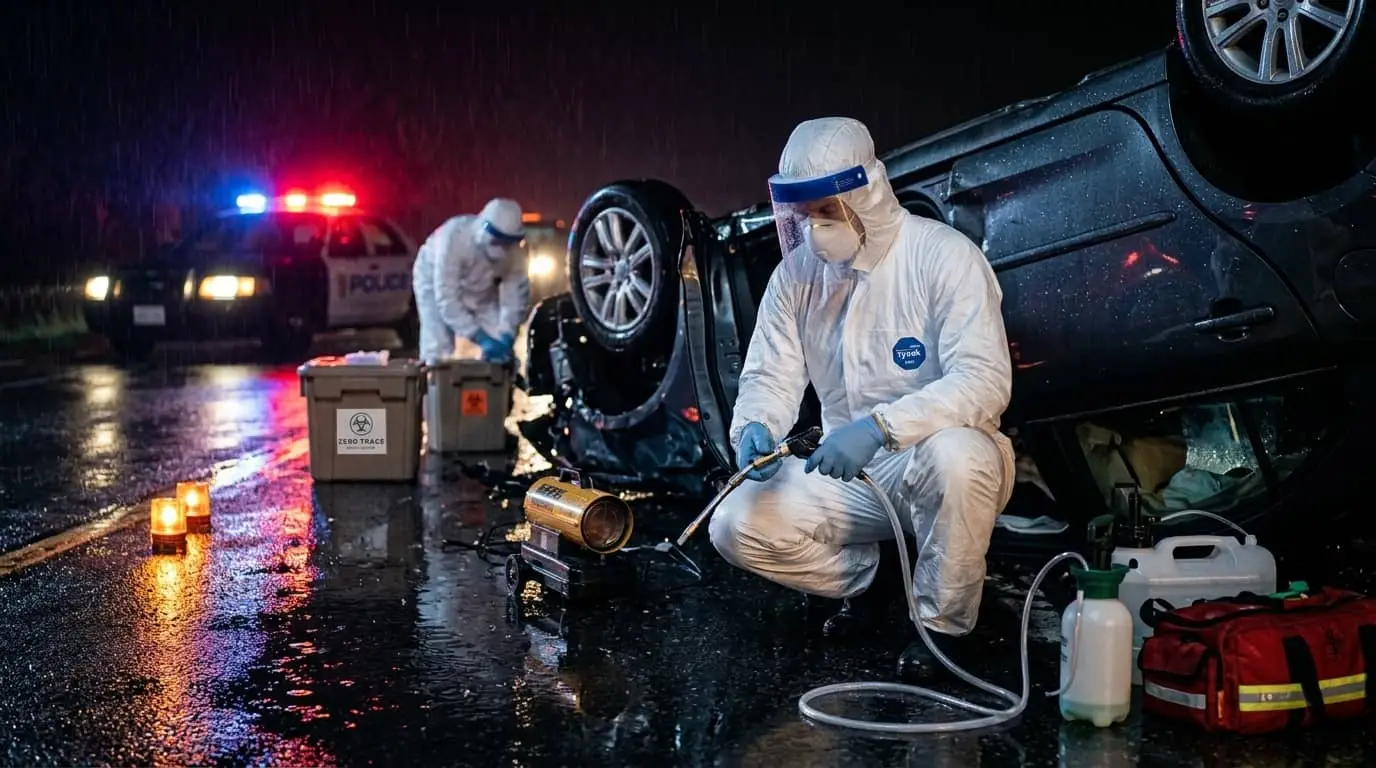
All technicians don full OSHA-compliant PPE before entering any sewage-contaminated space — including Tyvek protective suits, nitrile double-gloves, N95 or P100 respirators (P100 in enclosed spaces or where hydrogen sulfide risk is present), safety glasses or full face shields, and waterproof protective boot covers. Physical containment barriers are established to prevent cross-contamination of clean areas. Negative-pressure HEPA air filtration is deployed where airborne contamination risk exists.
03.
Emergency Sewage Water Extraction
Industrial submersible pumps and truck-mounted extraction units remove all standing sewage water from the affected space with maximum urgency. Extraction continues until no visible standing water remains. All extracted sewage water is handled and disposed of in compliance with applicable municipal and environmental regulations. Speed in this phase directly limits structural penetration depth and mold risk.
04.
Removal of Contaminated Porous Materials
All porous materials contacted by Category 3 black water that cannot be effectively decontaminated in place are carefully removed — including carpeting, carpet padding, vinyl flooring, baseboards, drywall to the flood cut line, saturated insulation, and any sewage-contaminated contents. All removed materials are double-bagged in heavy-duty disposal bags, labeled as biohazardous waste, and manifested for licensed disposal at approved facilities. No Category 3-contaminated porous material is retained or treated in place per IICRC S500 standards.
05.
Structural Cleaning and Three-Pass EPA-Registered Disinfection
All remaining structural surfaces — concrete, masonry, metal, tile, ceramic, and exposed wood framing — receive a thorough physical cleaning to remove gross contamination, followed by a minimum of three full application passes with EPA-registered, hospital-grade disinfectants with documented kill claims against Category 3 pathogens including E. coli, Salmonella, Hepatitis A, Norovirus, and Cryptosporidium. Each application is allowed to reach proper dwell time before the next pass. ATP surface testing is performed to verify pathogen elimination.
06.
IICRC-Certified Structural Drying
Industrial dehumidifiers, high-velocity air movers, and desiccant drying systems are deployed in a calculated, IICRC ASD-certified configuration to achieve target moisture content in all remaining structural assemblies. Moisture readings are documented at every drying check using calibrated pin and pinless moisture meters and thermal imaging cameras. Drying typically requires 3–5 days of continuous equipment operation. The drying phase is complete only when all structural assemblies reach dry standard moisture levels — not when surfaces simply feel dry to the touch.
07.
Mold Assessment and Remediation (If Required)
When mold growth has established during the period between the sewage event and professional response, a dedicated mold remediation phase is executed following IICRC S520 protocols. Containment barriers and negative-pressure HEPA air filtration prevent mold spore spread during removal. HEPA vacuuming, physical removal of all mold-bearing materials, and application of EPA-registered fungicides are performed in sequence. Post-remediation air quality sampling confirms successful mold clearance before the space is returned to service.
08.
Permanent Molecular Odor Elimination
Following structural drying and confirmation of mold clearance, permanent molecular odor elimination is performed using industrial ozone generators, hydroxyl radical generators, and thermal fogging targeted at sewage-specific odor compounds — hydrogen sulfide, ammonia, methane derivatives, and biological volatile organic compounds. These technologies permanently eliminate odor at the molecular level, providing lasting results that surface deodorizers cannot deliver. Persistence of sewage odor after visual cleanup is a reliable indicator of residual biological contamination; successful molecular treatment confirms complete decontamination.
09.
Final Inspection, Clearance Testing, and Documentation
A comprehensive post-remediation inspection is conducted, including final moisture mapping of all structural assemblies, ATP surface testing, and air quality sampling where mold remediation has been performed. Reconstruction planning begins once clearance is confirmed. A complete documentation package is prepared for the client — the full remediation report, drying log, moisture maps, waste manifests, disinfectant product data sheets, clearance test results, and a signed clearance certificate confirming the property meets re-occupancy health and safety standards. This package is structured to support insurance claims, municipal liability proceedings, landlord-tenant documentation, and property sale disclosures.
Is This Service Right for You?
Zero Trace Biohazard’s sewage cleanup service is the appropriate solution for the following property owners and situations: homeowners who have experienced any sewer backup, septic overflow, or toilet overflow involving raw sewage in their home; landlords and property managers whose rental property has experienced a sewage backup creating an uninhabitable condition; commercial property owners facing a sewage or drain backup in a workplace environment; property owners whose property has been flooded by water potentially contaminated with sewage; real estate buyers or sellers requiring documentation of sewage remediation for a transaction; and any property owner whose previous sewage cleanup attempt did not achieve clearance certification or left persistent odor.
This service does not include sewer line repair, replacement, or plumbing work. Zero Trace Biohazard focuses exclusively on the biohazard remediation, structural drying, and clearance certification phases. For sewer line repair, contact a licensed plumber or sewer contractor — and then call Zero Trace at (XXX) XXX-XXXX to begin the remediation phase as soon as the active sewage flow is controlled.
Frequently Asked Questions
How much does sewage cleanup cost?
Professional sewage cleanup costs $7–$15+ per square foot, or approximately $1,000–$3,000 for a minor single-room backup and $3,000–$10,000+ for a major multi-room or basement backup. Severe events involving drywall removal, sub-floor replacement, and mold remediation typically run $10,000–$15,000+. The Homewyse 2026 baseline cost is $13.68–$16.89 per square foot for standard sewage cleanup. Call (XXX) XXX-XXXX for a free on-site assessment and written estimate.
Is sewage backup covered by homeowners insurance?
Standard homeowners insurance typically excludes sewer backup as a separately listed exclusion. Coverage is available through a Sewer Backup Endorsement — an optional add-on costing approximately $50–$250 per year that provides $5,000 to full replacement value in coverage. Zero Trace Biohazard coordinates directly with insurance adjusters for policyholders who carry this endorsement, providing full remediation documentation. Call (XXX) XXX-XXXX to begin the insurance process.
How quickly does mold grow after a sewage backup?
Mold spores begin colonizing damp surfaces within 24–48 hours of sewage water contact, and visible mold colonies typically appear within 48–72 hours. This is why immediate professional response to a sewage backup is critical — every hour of delay after the event increases the likelihood of mold establishment, expanding the remediation scope and cost substantially. Call Zero Trace at (XXX) XXX-XXXX for 24/7 emergency response.
What is Category 3 black water and why is sewage classified this way?
Category 3 black water is the IICRC S500’s highest contamination classification, covering all water sources that are grossly contaminated with pathogenic agents — including raw sewage from backed-up sewer lines, septic overflow, toilet backflows, and floodwater that has contacted sewage infrastructure. All sewage events are Category 3 by definition. Category 3 contamination requires the complete biohazard remediation protocol — professional PPE, EPA-registered disinfectants, removal of all contacted porous materials, and certified structural drying. No porous material contacted by Category 3 water can be safely retained without professional remediation.
Can I clean up a sewage backup myself?
DIY sewage cleanup is strongly discouraged for Category 3 events. Household bleach at standard concentrations does not effectively inactivate all Category 3 pathogens, particularly Norovirus and Cryptosporidium. Consumer extraction equipment cannot achieve the water removal rates needed to prevent mold. Without IICRC-certified structural drying, moisture remains trapped in structural assemblies, driving hidden mold growth. DIY cleanup also produces no insurance documentation, no clearance certification, and no legal protection. Professional intervention consistently produces lower total cost, faster return to occupancy, and a fully documented outcome.
How long does sewage cleanup take?
A standard sewage cleanup project — water extraction, porous material removal, disinfection, and structural drying — typically takes 2–5 days, with 3–5 days of continuous drying equipment operation needed to achieve structural dryness. Severe events involving drywall removal, sub-floor replacement, and mold remediation take 1–2 weeks or more. A timeline estimate is provided during the on-site assessment before work begins.
Who is responsible for sewage cleanup in a rental property?
The landlord bears primary responsibility for sewage remediation in a rental property under the implied warranty of habitability. Sewage contamination creates an immediately uninhabitable condition, and landlords are generally obligated to begin professional remediation without delay at their own expense, provided the backup was not directly caused by the tenant’s own misuse of the plumbing system. Zero Trace Biohazard provides landlords with full documentation for insurance claims, municipal liability proceedings, and tenant relations.
What pathogens are found in raw sewage?
Raw sewage contains more than 50 documented pathogens, including E. coli, Salmonella, Leptospira, Campylobacter, Shigella, Hepatitis A virus, Norovirus, Rotavirus, Cryptosporidium parvum, and Giardia lamblia. A 2022 University of Maryland study found dangerous bacteria in 34 of 40 homes tested following sewage backup events — in some cases more than six months after the incident — confirming that visual cleanup alone does not eliminate the pathogen risk
Does sewage cleanup include mold remediation?
Yes, when mold growth has already established between the sewage event and professional response. Zero Trace Biohazard incorporates IICRC S520-compliant mold remediation into the sewage cleanup scope when mold is identified during assessment — including containment, negative-pressure HEPA air filtration, physical removal of mold-bearing materials, EPA-registered fungicide treatment, and post-remediation air quality testing. The mold clearance report is included in your final documentation package.
What happens to materials removed during sewage cleanup?
All porous materials removed during sewage cleanup — carpet, padding, drywall, insulation, flooring — are double-bagged, labeled as biohazardous waste, and manifested for transport to a licensed disposal facility in compliance with applicable municipal solid waste and biohazardous waste regulations. The waste manifest is included in your documentation package as proof of compliant disposal.
Can the municipality be held liable for a sewer backup caused by their system?
Potentially yes. When a sewage backup is caused by a failure of the municipal sewer system — a blockage, overflow, or negligent maintenance of the public sewer main — the municipality may bear liability for resulting property damage under applicable state tort and municipal liability laws. Filing a successful claim requires documentation of the backup cause, evidence of municipal negligence, and compliance with strict statutory notice deadlines. Zero Trace Biohazard provides the full evidentiary remediation documentation needed to support a municipal liability claim. Consult a property damage attorney for legal guidance.
Do you provide a clearance certificate after sewage cleanup?
Yes. Upon completing all remediation and drying phases and passing final clearance testing, Zero Trace Biohazard provides a complete documentation package including the full remediation report, drying log, moisture maps, waste manifests, disinfectant product data sheets, ATP surface test results, air quality sampling results (where applicable), and a signed clearance certificate confirming the property meets re-occupancy health and safety standards. This documentation is essential for insurance claims, municipal liability proceedings, landlord-tenant legal actions, and property sale disclosures.
Sewage Backup? Every Hour of Delay Increases Damage and Mold Risk.
Zero Trace Biohazard provides certified sewage cleanup and Category 3 biohazard remediation nationwide — 24 hours a day, 7 days a week, every day of the year.
Call (XXX) XXX-XXXX — 24/7 Emergency Response, Free On-Site Assessment
- IICRC WRT and ASD Certified — Category 3 Protocol
- Immediate Sewage Water Extraction
- All Contaminated Porous Materials Removed Per IICRC S500
- EPA-Registered Disinfectants — 99.99% Pathogen Kill Rate
- IICRC-Certified Structural Drying with Moisture Documentation
- Mold Remediation Included When Required (IICRC S520)
- Permanent Molecular Odor Elimination
- Insurance Coordination — Sewer Backup Endorsement Claims Managed
- Unmarked Vehicles — Full Discretion
- Complete Documentation and Clearance Certificate Provided