Infectious disease contamination is not a threat that standard cleaning products, janitorial staff, or DIY methods can safely address. Pathogens including MRSA, Clostridioides difficile (C. diff), Mycobacterium tuberculosis, Norovirus, hepatitis A and B, SARS-CoV-2 (COVID-19), and other communicable organisms can survive on hard and soft surfaces for hours, days, weeks, or in some cases months — long after a visible cleaning has taken place. Without EPA-registered disinfectants with validated kill claims, appropriate contact times, and the correct application methods, surface contamination persists and continues to pose serious transmission risk to all subsequent occupants of the space.
Zero Trace Biohazard provides professional, certified infectious disease cleanup and decontamination services 24 hours a day, 7 days a week, in all 50 states. Our technicians are trained and certified under OSHA 29 CFR 1910.1030 (Bloodborne Pathogens), OSHA 29 CFR 1910.120 (HAZWOPER), GBAC (Global Biorisk Advisory Council) standards, and IICRC protocols. We use only EPA-registered disinfectants with validated pathogen-specific kill claims — including EPA List K (C. diff spores), EPA List G (Norovirus), EPA List B (Hepatitis B and C), and EPA List N (SARS-CoV-2) — ensuring that every treated surface meets the highest documented standard for infectious disease elimination. We serve residential homes, commercial offices, schools, healthcare facilities, correctional institutions, gyms, hospitality properties, and transportation fleets. Call (XXX) XXX-XXXX for an immediate response.
TL;DR — Key Facts About Infectious Disease Cleanup
| Detail | Summary |
| Typical Cost Range | $500 – $25,000+ depending on pathogen type, square footage, and facility type |
| National Average | $1,500 – $5,000 for standard residential or small commercial decontamination |
| Hourly Rate | $150 – $300 per technician |
| Key Pathogens Addressed | MRSA, C. diff, Tuberculosis, Norovirus, Hepatitis A/B/C, COVID-19/SARS-CoV-2, Influenza, E. coli, Salmonella, Legionella, Hantavirus |
| Surface Survival (C. diff) | Months on dry surfaces |
| Surface Survival (MRSA) | Weeks to months on hard surfaces |
| Surface Survival (TB) | Months on dry surfaces |
| Surface Survival (Norovirus) | Up to 2+ weeks on hard surfaces |
| Certifications | OSHA 29 CFR 1910.1030, OSHA HAZWOPER, GBAC, IICRC TCST/HST |
| EPA Lists Used | List K (C. diff), List G (Norovirus), List B (HBV/HCV), List N (COVID-19), Tuberculocide list (TB) |
| Odor Elimination | Ozone generation, hydroxyl radical treatment, thermal fogging |
| Timeline | 2–6 hours (single room) to 1–3 days (large facility) |
| Insurance | Commercial policies often cover outbreak decontamination; homeowners policies vary |
| Service Area | All 50 states, residential and commercial, 24/7 |
Quick Facts
| Category | Detail |
| Company | Zero Trace Biohazard |
| Phone | (XXX) XXX-XXXX |
| Service Hours | 24/7, including holidays |
| Service Area | Nationwide — all 50 states |
| Single Room / Small Area | $500 – $2,000 |
| Multi-Room / Apartment / Office Suite | $2,000 – $6,000 |
| Whole Residential Property | $3,000 – $10,000 |
| Commercial / Large Facility | $5,000 – $25,000+ |
| Healthcare Facility / Institutional | $10,000 – $50,000+ (depending on scope) |
| Hourly Rate | $150 – $300 per technician |
| Certifications | OSHA 29 CFR 1910.1030, OSHA HAZWOPER, GBAC, IICRC TCST, IICRC HST |
| Disinfectants | EPA List K (C. diff), List G (Norovirus), List B (HBV/HCV), List N (COVID-19), EPA Tuberculocide List |
| Application Methods | Electrostatic spraying, ULV fogging, manual wipe-down with full contact time |
| Odor Removal | Ozone generation, hydroxyl radical treatment, thermal fogging |
| Waste Disposal | RCRA- and DOT-compliant biohazard waste manifests |
| Documentation Provided | Clearance certificate, waste manifests, photo documentation, insurance paperwork |
| Timeline | 2–6 hours (single room) / 1–2 days (whole property) / 1–3 days (large commercial) |
What Is Infectious Disease Cleanup?
Infectious disease cleanup — also referred to as infectious disease decontamination or communicable disease remediation — is a specialized biohazard service designed to eliminate pathogenic microorganisms from contaminated environments following a confirmed or suspected infectious disease exposure, outbreak, or occupancy by an individual with a communicable disease. It is fundamentally different from standard commercial cleaning or disinfection: it requires pathogen-specific EPA-registered disinfectants applied at precise concentrations and contact times, full personal protective equipment (PPE), containment protocols to prevent cross-contamination, and in many cases, the removal and compliant disposal of contaminated porous materials that cannot be surface-disinfected to a safe standard.
The scope of infectious disease cleanup is defined by the specific pathogen involved, the surfaces and materials contaminated, the size of the affected space, and whether the contamination has penetrated porous materials such as carpet, upholstery, drywall, or insulation. For highly resistant organisms such as C. diff — whose endospores can survive on surfaces for months and resist alcohol-based hand sanitizers and standard quaternary ammonium disinfectants — only EPA List K sporicidal products applied with full contact time provide documented efficacy. For Mycobacterium tuberculosis, only EPA-registered tuberculocidal disinfectants are effective, and in active-TB environments, respiratory protection (N95 or above) is required for all personnel.
Zero Trace Biohazard responds to infectious disease contamination events in homes, schools, offices, gyms, hospitality properties, healthcare facilities, correctional institutions, shelters, and transportation fleets, delivering complete pathogen elimination backed by clearance documentation.
Situations That Require Infectious Disease Cleanup
Confirmed MRSA, C. Diff, or Drug-Resistant Organism Contamination
When a resident, patient, or occupant is confirmed to carry or have been diagnosed with a drug-resistant organism — including methicillin-resistant Staphylococcus aureus (MRSA), Clostridioides difficile (C. diff), Carbapenem-resistant Enterobacteriaceae (CRE), or Vancomycin-resistant Enterococcus (VRE) — all areas they have occupied require thorough professional decontamination. MRSA can survive on hard surfaces for weeks to months. C. diff spores can persist on dry surfaces for months and survive routine cleaning with standard disinfectants. Standard janitorial service cannot achieve the kill claims required to make these environments safe for subsequent occupants.
Tuberculosis (TB) Exposure Incidents
Active tuberculosis (Mycobacterium tuberculosis) is transmitted primarily through airborne respiratory droplets, but can also persist on surfaces for months in certain conditions. When a confirmed active-TB case is identified in a residential, commercial, or institutional setting, professional decontamination of all occupied areas — including HVAC system cleaning and air exchange — is required. Zero Trace Biohazard uses EPA-registered tuberculocidal disinfectants and full respiratory PPE (minimum N95, often P100 half-face respirator) for all TB decontamination work.
Norovirus and Gastrointestinal Outbreak Cleanup
Norovirus is among the most contagious pathogens encountered in cleanup work — as few as 18 viral particles are sufficient to cause infection, and the virus can survive on hard surfaces for two or more weeks. Outbreaks in schools, restaurants, cruise ships, nursing homes, hospitals, and office buildings require immediate professional decontamination using EPA List G disinfectants with validated kill claims. Zero Trace Biohazard deploys electrostatic spraying and ULV fogging technology to ensure complete surface coverage in large facilities, including hard-to-reach areas that manual cleaning misses.
COVID-19 and Coronavirus Decontamination
While SARS-CoV-2 risk has evolved significantly since 2020, confirmed COVID-19 exposure events in high-occupancy or high-risk settings — including nursing homes, correctional facilities, shelters, schools, and commercial workplaces — continue to warrant professional decontamination using EPA List N disinfectants. Zero Trace Biohazard provides CDC-protocol-compliant COVID-19 decontamination with full documentation, suitable for regulatory and insurance purposes.
Influenza, RSV, and Seasonal Outbreak Response
High-transmission respiratory virus outbreaks — including influenza A and B, RSV (respiratory syncytial virus), and similar seasonal pathogens — in schools, daycares, nursing homes, corporate offices, and gyms may require professional decontamination, particularly following a severe outbreak event or where immunocompromised occupants are present. Zero Trace Biohazard provides rapid-response decontamination using EPA-registered products effective against enveloped viruses.
Hepatitis A Outbreak Cleanup
Hepatitis A virus is shed in feces and can contaminate surfaces in food preparation areas, restrooms, and any area occupied by an infected individual. It is highly stable on surfaces and in certain environmental conditions. Confirmed Hepatitis A exposure in a restaurant, food processing facility, school, or residential property requires professional decontamination with EPA-registered disinfectants with validated kill claims against Hepatitis A (EPA List C and related).
Legionella and Water System Decontamination
Legionella pneumophila — the bacterium responsible for Legionnaires’ disease — colonizes water systems including cooling towers, hot water heaters, decorative fountains, and HVAC condensate systems. Following a confirmed Legionella detection or Legionnaires’ disease cluster, Zero Trace Biohazard provides environmental decontamination of affected surface areas in coordination with licensed water treatment specialists. Full respiratory PPE and CDC-protocol compliance are maintained throughout.
Confirmed Infectious Disease Death or Unattended Death
When a property occupant dies from a confirmed or suspected infectious disease — including tuberculosis, hepatitis, or any other communicable condition — the scene requires full infectious disease decontamination in addition to standard biohazard cleanup protocols. Zero Trace Biohazard integrates both service scopes into a single remediation response.
Schools, Daycares, and Institutional Outbreak Response
School districts, daycare facilities, correctional institutions, homeless shelters, and group care facilities are among the highest-risk environments for infectious disease transmission due to shared surfaces, high occupancy density, and the presence of vulnerable populations. Zero Trace Biohazard provides outbreak-response decontamination for these institutional settings with minimal disruption to operations.
Pathogens and Their Surface Survival
Understanding pathogen survivability on surfaces is essential to understanding why standard cleaning is insufficient and why EPA-registered disinfectants with validated kill claims and full contact times are required. The following are among the most commonly encountered pathogens in infectious disease cleanup work.
Clostridioides Difficile (C. Diff)
C. diff forms endospores that are extraordinarily resistant to environmental conditions. Research published in PMC/NIH confirms that C. diff spores can survive on dry surfaces for months. Alcohol-based disinfectants — including the hand sanitizers and spray products most commonly stocked in commercial facilities — have no efficacy against C. diff spores. Only EPA List K sporicidal disinfectants, applied at the correct concentration with the manufacturer’s required contact time (often 4–10 minutes), provide documented sporicidal kill. Standard cleaning not only fails to eliminate C. diff but can aerosolize spores, spreading contamination further.
Methicillin-Resistant Staphylococcus Aureus (MRSA)
MRSA can survive on hard surfaces — including countertops, doorknobs, handrails, light switches, and medical equipment — for weeks to months. It is resistant to standard beta-lactam antibiotics and is responsible for serious skin, wound, bloodstream, and lung infections. MRSA decontamination requires EPA-registered disinfectants with documented kill claims against MRSA, full-surface application, and in contaminated soft goods (upholstery, bedding), removal and compliant disposal.
Mycobacterium Tuberculosis (TB)
Mycobacterium tuberculosis can persist on dry surfaces for months, depending on environmental conditions. While airborne transmission is the primary route of infection, surface contamination in sputum-exposed environments creates a secondary risk. TB decontamination requires EPA-registered tuberculocidal disinfectants and mandatory respiratory protection — minimum N95 — for all personnel. Zero Trace Biohazard maintains OSHA-compliant respiratory protection programs and provides mandatory TB decontamination documentation.
Norovirus
Norovirus is one of the most environmentally stable and contagious viruses encountered in professional decontamination work. It survives on hard surfaces for two weeks or more and is highly resistant to many standard disinfectants. Only EPA List G disinfectants with validated kill claims against Norovirus provide adequate protection. Even a small number of viral particles — as few as 18 — are sufficient to establish infection. Electrostatic spraying ensures complete surface coverage in large facilities.
Hepatitis A, B, and C
Hepatitis A can survive on surfaces for weeks and is transmitted through fecal-oral routes, making restroom and food preparation area decontamination following a confirmed exposure critical. Hepatitis B is among the most environmentally hardy bloodborne pathogens, surviving on surfaces at room temperature for seven or more days. Hepatitis C is less stable but remains a concern in environments with blood contamination. EPA List B (HBV/HCV) disinfectants are required.
SARS-CoV-2 (COVID-19)
SARS-CoV-2 is an enveloped virus with relatively limited surface survival compared to non-enveloped viruses, but confirmed exposure events in high-risk settings still warrant professional decontamination using EPA List N products. Zero Trace Biohazard provides CDC-protocol-compliant COVID-19 decontamination with full documentation.
Influenza, RSV, and Other Respiratory Viruses
Influenza viruses survive on hard surfaces for 24 hours or more and on porous surfaces for shorter periods. RSV can persist on hard surfaces for several hours. Both viruses can cause severe illness in vulnerable populations. EPA-registered products effective against enveloped viruses address these pathogens.
E. Coli, Salmonella, and Legionella
E. coli O157:H7 and Salmonella can survive on surfaces for days to weeks in favorable conditions. Legionella colonizes water systems and biofilm surfaces. All three require EPA-registered bactericidal disinfectants and, in the case of Legionella, environmental water system remediation coordinated with licensed specialists.
Why Standard Cleaning Cannot Address Infectious Disease Contamination
There is a critical and often misunderstood distinction between cleaning, sanitizing, and disinfecting — and an equally important distinction between consumer-grade disinfection and professional infectious disease decontamination. Standard cleaning removes visible dirt and reduces surface bioburden but does not kill pathogens. Sanitizing reduces microbial populations on surfaces to levels considered safe by public health standards for food contact surfaces — but does not necessarily achieve the kill claims required for dangerous pathogens. Professional infectious disease decontamination uses EPA-registered products with specific, validated kill claims against the target pathogen, applied at precise concentrations and dwell times by trained technicians in full PPE.
Consumer-grade spray disinfectants are ineffective against C. diff spores regardless of contact time because they are not EPA List K sporicidal products. Alcohol-based products — including most hand sanitizers — have zero efficacy against C. diff. Standard quaternary ammonium (“quat”) disinfectants, the most common class of commercial cleaning product, are not consistently effective against Norovirus, C. diff, TB, or Hepatitis A. Even products that claim broad-spectrum efficacy on their labels must be used at the correct concentration, applied to pre-cleaned surfaces, and allowed to remain wet on the surface for the full manufacturer-specified contact time — conditions rarely met in standard janitorial practice.
Furthermore, improper cleanup of infectious disease contamination — particularly where aerosolization risk exists (C. diff, TB, hantavirus) — can spread contamination from affected to unaffected areas, dramatically increasing the scope and cost of subsequent professional remediation. OSHA requires that workers with occupational exposure to bloodborne pathogens and other potentially infectious materials (OPIM) be protected through a written Exposure Control Plan, appropriate PPE, and proper waste disposal — legal requirements that apply to employers who direct cleaning staff to address biohazard conditions.
Regulations and Certifications Governing Infectious Disease Cleanup
OSHA 29 CFR 1910.1030 — Bloodborne Pathogens Standard
OSHA’s Bloodborne Pathogens standard requires employers to protect workers from occupational exposure to blood and other potentially infectious materials (OPIM). Where infectious disease cleanup involves blood, body fluids, or materials contaminated with bloodborne pathogens (Hepatitis B, Hepatitis C, HIV), this standard mandates a written Exposure Control Plan, PPE provision, Hepatitis B vaccination, post-exposure follow-up, and compliant disposal of all potentially infectious materials. Zero Trace Biohazard maintains full OSHA 1910.1030 compliance across all operations.
OSHA 29 CFR 1910.120 — HAZWOPER
For infectious disease cleanup involving large-scale hazardous substance releases or multi-site outbreak response, OSHA’s HAZWOPER standard (Hazardous Waste Operations and Emergency Response) may apply. Zero Trace Biohazard technicians hold 40-hour HAZWOPER certification as required by this standard.
OSHA Healthcare Infectious Disease Standards
OSHA’s Healthcare Infectious Diseases resource page identifies multiple standards directly applicable to infectious disease cleanup work, including the Bloodborne Pathogens standard, the Respiratory Protection standard (29 CFR 1910.134), and the Personal Protective Equipment standard (29 CFR 1910.132). For TB-exposure environments specifically, OSHA’s General Duty Clause and NIOSH guidelines require a minimum of N95 respiratory protection.
GBAC (Global Biorisk Advisory Council) Certification
GBAC, a division of ISSA (the worldwide cleaning industry association), provides the gold standard for outbreak prevention, response, and recovery certification in the cleaning and restoration industry. GBAC STAR Accreditation — described by GBAC as “the cleaning industry’s solution for strategizing, strengthening, and sustaining for outbreaks of infectious disease” — certifies that facilities and service providers have the protocols, procedures, and systems in place to manage infectious disease risks. Zero Trace Biohazard holds GBAC certification and operates in full accordance with GBAC protocols.
IICRC Certifications — TCST and HST
The Institute of Inspection Cleaning and Restoration Certification (IICRC) Trauma and Crime Scene Technician (TCST) and Health and Safety Technician (HST) certifications cover the handling of biohazardous materials, including infectious disease contamination. IICRC-certified technicians are trained in pathogen identification, containment, EPA-registered disinfectant selection, contact time requirements, and post-remediation verification.
Certified in Disease Intervention (CDI)
The Certified in Disease Intervention (CDI) certification, developed by the National Board of Public Health Examiners in partnership with the cleaning industry, represents an emerging credential specifically focused on disease intervention and decontamination. Cleanfax industry reporting identifies CDI as marking “a major shift” in the profession — from cleaning to disease intervention.
EPA-Registered Disinfectant Requirements
The EPA maintains specific lists of registered disinfectants with validated kill claims against priority pathogens: List K (C. diff spores), List G (Norovirus), List B (Hepatitis B and C), List N (SARS-CoV-2), and the Tuberculocide list (Mycobacterium tuberculosis). Zero Trace Biohazard uses only EPA-registered products from the appropriate list for each pathogen type encountered, and all products are applied at manufacturer-specified concentrations with full required contact times documented.
RCRA and DOT Biohazard Waste Regulations
All biohazardous waste generated during infectious disease cleanup — including contaminated PPE, wipes, materials, and sharps — must be packaged, labeled, and transported in compliance with the Resource Conservation and Recovery Act (RCRA) and U.S. Department of Transportation (DOT) regulations. Zero Trace Biohazard provides complete waste manifests for every job.
Our Infectious Disease Cleanup Process — Step by Step
Step 1: Emergency Response and Initial Consultation
Zero Trace Biohazard responds 24/7 to infectious disease decontamination requests. Upon first contact, our response team gathers critical information about the pathogen involved (if known), the nature and duration of the exposure event, the size and type of the affected facility, and any occupancy or re-entry timeline requirements. We dispatch a certified team immediately and provide an estimated arrival time.
Step 2: On-Site Assessment and Scope Determination
Upon arrival, our lead technician conducts a full on-site assessment to identify all affected surfaces, materials, and spaces; determine pathogen-specific disinfectant requirements; assess the need for structural material removal (where contaminated porous materials cannot be adequately surface-treated); document all findings with photographs; and prepare a transparent, itemized cost estimate.
Step 3: Containment and Ventilation Control
We establish containment zones using 6-mil polyethylene barriers to isolate the contaminated area from unaffected spaces. Portable HEPA air scrubbers are deployed to filter airborne particulates and pathogens within the containment zone. HVAC systems are isolated and sealed to prevent spread of contamination through the air handling system. For TB or other airborne pathogen environments, negative air pressure is maintained within the containment zone throughout the remediation process.
Step 4: Full PPE Deployment
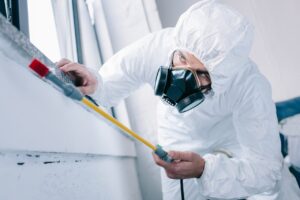
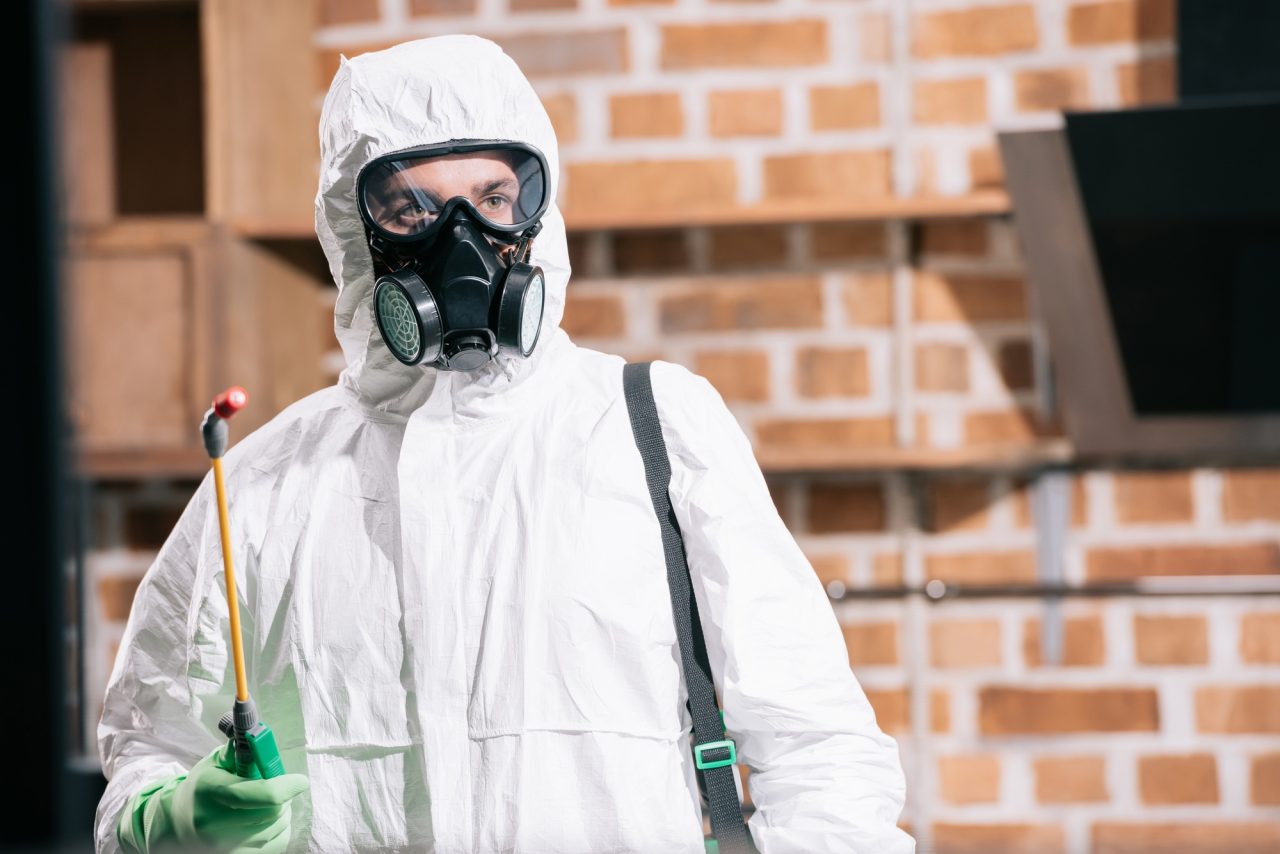
All technicians enter the contaminated environment in appropriate PPE selected for the specific pathogen profile: Tyvek suits, double nitrile gloves, full-face respirators (N95 minimum; P100 PAPR where TB or other airborne pathogens are present), boot covers, and face shields. PPE is donned and doffed following OSHA protocols in designated clean and dirty zones to prevent cross-contamination.
Step 5: Removal of Contaminated Porous Materials
Where porous materials — including carpet, upholstered furniture, bedding, mattresses, drywall, or insulation — have been contaminated beyond the level addressable by surface disinfection (determined by pathogen type and duration of exposure), these materials are carefully removed, double-bagged in approved biohazard packaging, and staged for compliant disposal. This step is particularly critical in C. diff, TB, and Norovirus environments.
Step 6: Pathogen-Specific Multi-Pass Disinfection
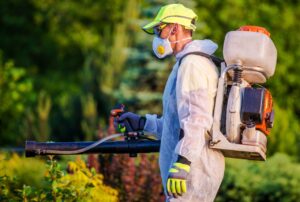
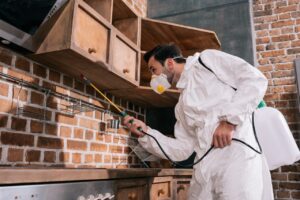
Following physical cleaning of all surfaces to remove organic matter (which can neutralize disinfectants and prevent pathogen kill), we perform a multi-pass disinfection protocol using the appropriate EPA-registered product for the specific pathogen identified. Each application is made at the manufacturer-specified concentration, allowed to remain on the surface for the full required contact time, and the process is repeated to ensure complete surface coverage. For large facilities, electrostatic spraying and ULV fogging technology are deployed to achieve 360-degree surface coverage — including vertical surfaces, underside of furniture, and hard-to-reach areas that manual application cannot reliably address.
Step 7: HVAC and Air Handling System Decontamination
Where the HVAC system has been identified as a potential contamination vector — particularly for airborne pathogens such as TB, Legionella, and influenza — we perform HVAC duct decontamination and air handling system treatment using appropriate EPA-registered products and HEPA-filtered equipment. HVAC decontamination is documented as part of the clearance package.
Step 8: Odor Neutralization
Where illness, biological contamination, or extended occupancy by an infected individual has created persistent odors, Zero Trace Biohazard deploys ozone generation, hydroxyl radical treatment, and thermal fogging to permanently eliminate odor molecules at the molecular level — not merely mask them with fragrance products.
Step 9: Final Inspection, ATP Testing, and Clearance Documentation
A lead technician conducts a thorough final inspection of all treated areas. Where requested or required, we perform ATP (adenosine triphosphate) surface testing — a validated, quantitative method for measuring surface cleanliness and verifying pathogen elimination — and provide the results as part of the clearance documentation package. The documentation package includes a signed clearance certificate, biohazard waste manifests, an itemized service report, photographic before-and-after documentation, and all EPA-registered product application records — suitable for insurance claims, regulatory submissions, public health reporting, and property management records.
Infectious Disease Cleanup Cost Breakdown
Cost by Scope and Facility Type
| Scope | Estimated Cost |
| Single room / small area (residential) | $500 – $2,000 |
| Multi-room / apartment / office suite | $2,000 – $6,000 |
| Whole residential property | $3,000 – $10,000 |
| Commercial office / retail (small-medium) | $5,000 – $15,000 |
| School / daycare / institutional facility | $5,000 – $25,000+ |
| Healthcare facility (clinic, nursing home) | $10,000 – $50,000+ |
| Large commercial / industrial facility | $15,000 – $50,000+ |
| Hourly rate | $150 – $300 per technician |
Factors That Affect the Final Cost
Several variables determine the final cost of an infectious disease cleanup: the specific pathogen involved and the disinfectant protocol it requires; the square footage of the affected area; the facility type (residential, commercial, healthcare, institutional); whether porous materials must be removed and replaced; the application method required (manual wipe-down, electrostatic spray, ULV fogging); the volume of biohazard waste requiring compliant disposal; HVAC decontamination scope; whether ATP clearance testing is required; and the urgency and travel requirements of the response.
Insurance, Payment, and Responsibility
Homeowners Insurance
Homeowners insurance may cover infectious disease decontamination costs when the event is sudden, unexpected, and results from a covered peril. Policies vary widely — some specifically exclude communicable disease events, while others treat biohazard decontamination as a covered additional living expense or property damage claim. Zero Trace Biohazard works directly with insurance adjusters and provides the complete documentation package required to support a valid insurance claim.
Commercial Property and Business Insurance
Commercial property and business interruption policies more commonly cover infectious disease decontamination costs, particularly for confirmed outbreak events in commercial, institutional, or healthcare settings. Business interruption riders may cover the cost of temporary closure during decontamination. Zero Trace Biohazard coordinates directly with commercial insurance carriers and provides all required documentation.
Employer and Facility Operator Responsibility
Under OSHA’s General Duty Clause and the Bloodborne Pathogens standard, employers who know or reasonably should know that their workplace presents an infectious disease hazard have a legal obligation to protect workers. Failure to commission professional decontamination following a confirmed infectious disease exposure in the workplace can expose employers to OSHA citations, civil liability, and workers’ compensation claims. Zero Trace Biohazard provides the documentation needed to demonstrate regulatory compliance.
Landlord Responsibility
Landlords have a legal duty to maintain rental properties in a habitable condition under state landlord-tenant law. When a tenant with a confirmed infectious disease has contaminated a rental unit, the landlord is generally responsible for commissioning professional decontamination before the unit can be legally re-rented. Zero Trace Biohazard provides full documentation for insurance submissions and landlord records.
Out-of-Pocket and Financing
For cases where insurance does not apply, Zero Trace Biohazard provides transparent, itemized estimates with no hidden fees. We are committed to ensuring that cost is never a barrier to protecting the health and safety of a property’s occupants.
DIY vs. Professional Infectious Disease Cleanup
| Factor | DIY | Zero Trace Biohazard |
| C. diff spore elimination | Consumer products — zero efficacy | EPA List K sporicides with full contact time |
| Norovirus inactivation | Standard quats often ineffective | EPA List G disinfectants |
| TB surface decontamination | Consumer products ineffective | EPA Tuberculocide list products, N95/P100 PPE |
| COVID-19 decontamination | Inconsistent product selection | EPA List N products, CDC protocol |
| Electrostatic / ULV coverage | Not available | Full facility electrostatic and ULV deployment |
| ATP clearance testing | Not available | Quantitative surface testing and documentation |
| HVAC decontamination | Not addressed | Full HVAC treatment where indicated |
| Porous material removal | Not addressed | Full structural access and compliant disposal |
| Biohazard waste disposal | Illegal in standard trash | RCRA/DOT-compliant manifested disposal |
| PPE and respiratory protection | None — serious exposure risk | OSHA-compliant full PPE, respiratory protection program |
| Cross-contamination risk | Very high | Mitigated by containment and HEPA air scrubbing |
| Legal / regulatory compliance | Not achieved | Full OSHA, EPA, and state compliance |
| Documentation for insurance | None | Complete package provided |
| Clearance certificate | Not available | Signed clearance certificate issued |
Frequently Asked Questions About Infectious Disease Cleanup
How much does infectious disease cleanup cost?
Infectious disease cleanup typically costs between $500 and $50,000+, depending on the pathogen involved, the size and type of the affected space, and whether porous materials need removal. Most residential single-room decontaminations fall in the $500–$2,000 range. Whole-property residential jobs typically run $3,000–$10,000. Large commercial or institutional facilities can range from $10,000 to $50,000 or more. Zero Trace Biohazard provides free on-site assessments with no obligation.
What pathogens does Zero Trace Biohazard address?
We address all commonly encountered infectious disease pathogens including MRSA, C. diff, Mycobacterium tuberculosis (TB), Norovirus, Hepatitis A, Hepatitis B, Hepatitis C, SARS-CoV-2 (COVID-19), Influenza A and B, RSV, E. coli, Salmonella, Legionella, Hantavirus, and others. Each pathogen requires a specific EPA-registered disinfectant with a validated kill claim — we select and apply the correct product for every confirmed exposure.
Can C. diff be cleaned up with standard disinfectants?
No. C. diff forms endospores that are completely resistant to alcohol-based disinfectants and most standard quaternary ammonium (“quat”) products. Only EPA List K sporicidal disinfectants, applied at the correct concentration with the full required contact time, provide documented efficacy against C. diff spores. Using the wrong product gives a false sense of security while leaving active spores on surfaces. This is one of the most important reasons professional decontamination is critical for C. diff contamination.
Is COVID-19 decontamination still necessary?
For high-risk or high-occupancy settings — including nursing homes, correctional facilities, schools, shelters, and commercial workplaces with vulnerable occupants — professional COVID-19 decontamination using EPA List N products remains appropriate following confirmed exposure events. Zero Trace Biohazard provides CDC-protocol-compliant decontamination with full documentation for insurance and regulatory purposes.
How long does infectious disease cleanup take?
A single-room residential decontamination typically takes 2–6 hours. A multi-room home or office suite generally takes 1–2 days. Large commercial or institutional facilities can require 2–3 days or more, depending on scope. Timeline depends on the pathogen, square footage, required disinfection passes, contact time requirements, porous material removal, and HVAC decontamination scope.
Does insurance cover infectious disease cleanup?
Coverage depends on your specific policy. Commercial property and business insurance policies frequently cover confirmed outbreak decontamination. Standard homeowners policies vary — some cover biohazard decontamination as a sudden, unexpected covered peril, while others exclude communicable disease events. Zero Trace Biohazard provides complete documentation to support all valid insurance claims.
Who is responsible for infectious disease cleanup in a rental property?
Landlords are generally legally responsible for commissioning professional decontamination when a tenant with a confirmed infectious disease has contaminated a rental unit, under state habitability laws. Where the contamination results from the tenant’s own actions or negligence, landlords may have recourse through the security deposit or civil proceedings. Zero Trace Biohazard provides full documentation for landlord records and insurance submissions.
What is ATP testing and do you provide it?
ATP (adenosine triphosphate) testing is a validated, quantitative method for measuring surface cleanliness and verifying the effectiveness of decontamination. ATP is present in all living cells — a low ATP reading after decontamination confirms that microbial material has been successfully removed. Zero Trace Biohazard offers ATP testing as part of our post-remediation verification process and includes the results in the clearance documentation package.
Can infectious disease contamination spread through HVAC systems?
Yes. Airborne pathogens — including Mycobacterium tuberculosis, Legionella, and certain respiratory viruses — can travel through HVAC ductwork and air handling systems, potentially spreading contamination from affected to unaffected areas of a building. Zero Trace Biohazard performs HVAC decontamination as part of the remediation scope wherever airborne pathogen contamination is identified.
What certifications does Zero Trace Biohazard hold for infectious disease work?
Our technicians are certified under OSHA 29 CFR 1910.1030 (Bloodborne Pathogens), OSHA 29 CFR 1910.120 (HAZWOPER 40-hour), GBAC (Global Biorisk Advisory Council), and IICRC TCST and HST. We hold all applicable state biohazard remediation licenses in every state where we operate.
Do you provide documentation suitable for public health reporting?
Yes. Zero Trace Biohazard provides a complete documentation package following every job, including a signed clearance certificate, biohazard waste manifests, itemized service report, EPA-registered product application records, ATP testing results (where applicable), and photographic before-and-after documentation. This package is suitable for insurance claims, public health authority reporting, OSHA compliance records, regulatory inspections, and property management documentation.
What is the difference between cleaning, sanitizing, and disinfecting?
Cleaning removes visible dirt and organic matter but does not kill pathogens. Sanitizing reduces microbial populations to levels considered safe for food-contact surfaces but does not achieve the kill claims required for dangerous pathogens like C. diff or TB. Disinfecting — when performed with an EPA-registered product with a validated kill claim against the specific target pathogen, at the correct concentration and with full contact time — is the only approach that reliably eliminates dangerous infectious disease contamination. Professional infectious disease decontamination combines all three steps in sequence, using pathogen-specific EPA-registered products.
Call Zero Trace Biohazard — 24/7 Infectious Disease Cleanup Nationwide
Infectious disease contamination demands an immediate, precise, and fully documented professional response. Every hour of delay allows pathogens to remain active on surfaces, increasing the risk of transmission to new occupants. Zero Trace Biohazard is available 24 hours a day, 7 days a week, in all 50 states — for residential, commercial, institutional, and healthcare decontamination.
📞 Call (XXX) XXX-XXXX now for a free, no-obligation on-site assessment.
- ✅ OSHA-Compliant (29 CFR 1910.1030 & HAZWOPER)
- ✅ GBAC-Certified (Global Biorisk Advisory Council)
- ✅ IICRC-Certified (TCST and HST)
- ✅ EPA-Registered Disinfectants (Lists K, G, B, N, and Tuberculocide)
- ✅ Electrostatic Spraying and ULV Fogging Technology
- ✅ ATP Surface Testing and Clearance Verification
- ✅ HVAC Decontamination Available
- ✅ Biohazard Waste Manifests and Clearance Certificate Provided
- ✅ Insurance Coordination Available
- ✅ Discreet, Compassionate, and Non-Judgmental Service