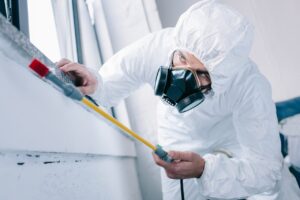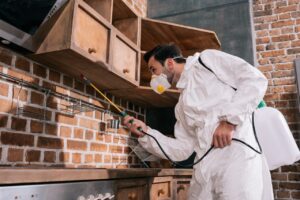
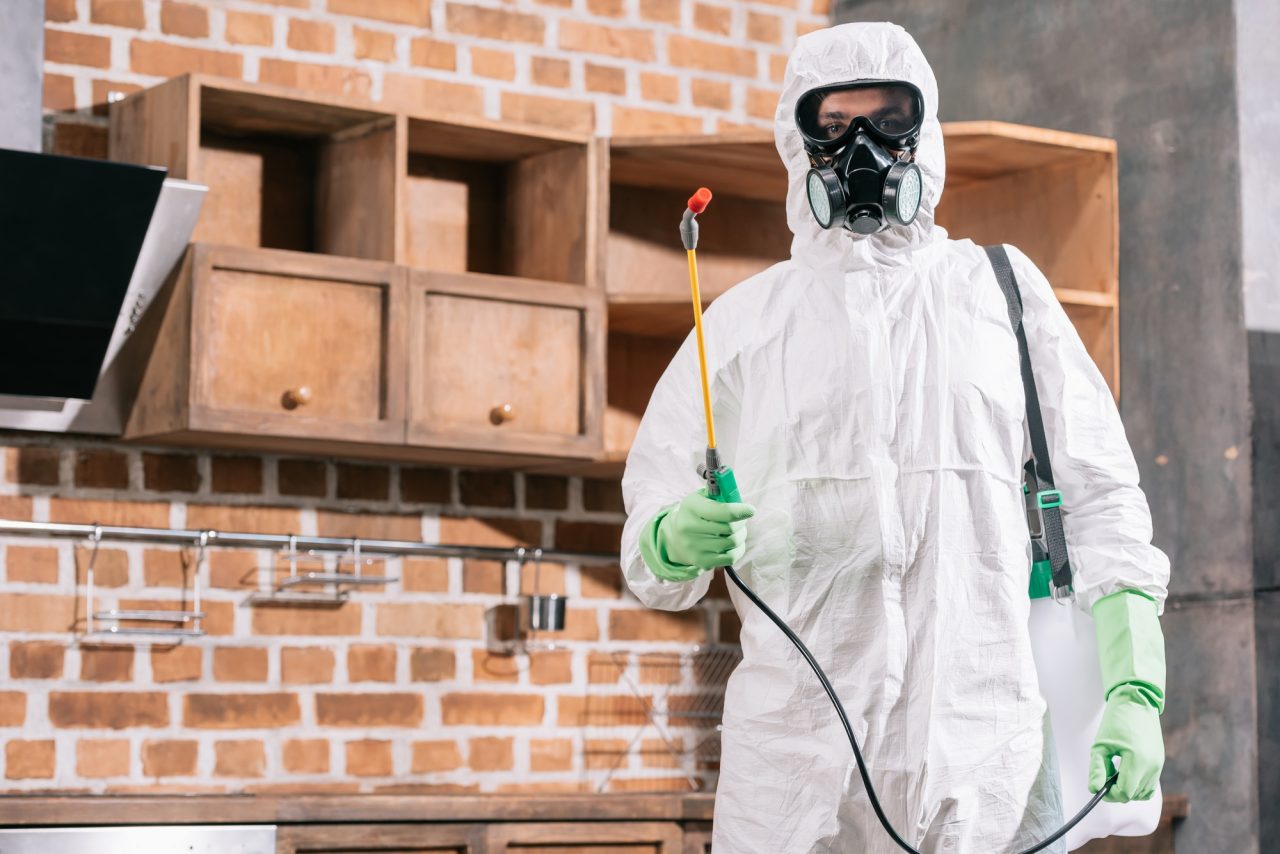
When a person passes away and is not discovered for days, weeks, or longer, the resulting decomposition creates one of the most complex and hazardous biohazard environments a property can contain. Decomposition fluids penetrate porous structural materials — carpet, subfloor, drywall, wall cavities, insulation — releasing bloodborne pathogens, toxic bacterial gases, and persistent odor that cannot be addressed by standard cleaning and will not resolve on their own without professional intervention. Zero Trace Biohazard provides fully certified decomp cleanup services for residential homes, apartments, commercial properties, and multi-unit buildings across all 50 states, 24 hours a day, every day of the year. Our OSHA-compliant, IICRC TCST-certified technicians assess the full three-dimensional extent of contamination — including below-surface structural penetration and HVAC systems — and remediate completely, from biological removal through permanent odor elimination and post-clearance documentation. Call (XXX) XXX-XXXX now for immediate, confidential response.
TL;DR
Decomp cleanup costs range from $2,500 for an early-stage scene discovered within 48 hours to $25,000+ for whole-property remediation of an advanced decomposition scene discovered weeks or months after death (AM Response; PushLeads; Space City Sanitizers). Moderate decomposition discovered after several days to a week typically runs $3,500–$5,000; advanced decomposition discovered weeks or longer runs $5,000–$7,000+ before structural remediation is factored (PushLeads). Whole-property advanced decomp remediation requiring subfloor replacement, drywall removal, and HVAC decontamination can reach $15,000–$50,000+ (AM Response). Time between death and discovery is the single largest cost driver — every additional day of decomposition deepens fluid penetration into structural materials and increases remediation scope. Most homeowners insurance policies cover decomp cleanup when the death constitutes a sudden, unexpected covered event. State crime victim compensation programs through OVC/NACVCB may apply when the death involves a crime. Zero Trace Biohazard coordinates insurance claims and is OSHA 29 CFR 1910.1030-compliant and IICRC TCST-certified nationwide.
- Cost Range: $2,500–$25,000+; whole-property advanced decomp $15,000–$50,000+ (AM Response; PushLeads 2025)
- Primary Cost Driver: Days undiscovered — each additional day of decomposition increases structural penetration depth and remediation scope
- Decomposition Stages: Fresh (0–72 hrs), Bloat (3–10 days), Active Decay (10–25 days), Advanced Decay / Skeletonization (weeks–months) — each stage increases cleanup complexity
- Structural Scope: Carpet, padding, subfloor, drywall, wall cavities, insulation, HVAC — all potentially affected in extended decomp scenes
- Certifications: OSHA 29 CFR 1910.1030, IICRC TCST (ANSI/IICRC S540), GBAC Biohazard, EPA-registered disinfectants
- Insurance: Homeowners and renters policies typically cover decomp cleanup for sudden, unexpected deaths; Zero Trace coordinates all claims
- Victim Compensation: Available in all 50 states through OVC/NACVCB when the death resulted from a crime
- Privacy: Unmarked vehicles always available; complete confidentiality maintained on every engagement
Quick Facts Table
| Detail | Info |
| Company | Zero Trace Biohazard |
| Phone | (XXX) XXX-XXXX |
| Service Area | All 50 states, residential & commercial |
| Availability | 24/7, 365 days, same-day response |
| Early Stage (0–48 hrs) | $2,500–$4,000 (Space City Sanitizers) |
| Moderate Decomp (days–1 week) | $3,500–$5,000 (PushLeads 2025) |
| Advanced Decomp (weeks+) | $5,000–$7,000+ before structural scope (PushLeads 2025) |
| Whole-Property Remediation | $15,000–$50,000+ (AM Response) |
| Hourly Rate | $200–$300/hour (Fixr 2025) |
| Certifications | OSHA 29 CFR 1910.1030, IICRC TCST, GBAC |
| Standard | ANSI/IICRC S540 Trauma and Crime Scene Cleanup |
| Disinfectant | EPA-registered, 99.99% pathogen kill rate |
| Insurance | Homeowners/renters — covered for sudden events |
| Victim Compensation | OVC/NACVCB programs — all 50 states |
| Timeline | 1–3 days (standard); 1–4+ weeks (advanced structural) |
| Privacy | Unmarked vehicles; full confidentiality |
What Is Decomp Cleanup and Why Is It Among the Most Complex Biohazard Remediations?
Decomp cleanup — short for decomposition cleanup — is the professional remediation of a property following the death and biological decomposition of a human being who was not discovered immediately after death. It is universally recognized as one of the most technically demanding and physically complex categories of biohazard remediation, for reasons that are rooted directly in the biology of what happens to a human body and its surrounding environment over time.
Unlike a fresh trauma scene where biological contamination is largely surface-level and contained to the area of the incident, decomposition is an active, ongoing process that generates escalating biological damage with every passing hour. Decomposition fluids — a mixture of blood, cellular breakdown products, and bacterial metabolic byproducts — are produced in increasing volume as decomposition advances, and these fluids migrate by gravity and capillary action into every porous material they contact. Carpet and padding absorb fluid within hours. Subfloor materials — hardwood, plywood, OSB — become saturated within days. Drywall absorbs fluid through its paper facing within the first week. Wall cavities, insulation, concrete, and HVAC systems can all be reached in advanced stages (PDQ Fire Water Damage; PuroClean; SceneCleanMN). Each layer of structural penetration adds complexity, cost, and remediation time.
Zero Trace Biohazard’s decomp cleanup protocol begins with a comprehensive three-dimensional contamination assessment before any physical work starts — because the visible surface contamination at a decomp scene is rarely the full picture, and remediation that addresses only what is visible will inevitably leave concealed contamination behind.
The Five Stages of Human Decomposition and Their Direct Impact on Cleanup
Understanding decomposition stages is essential to understanding why cleanup scope, cost, and complexity escalate so dramatically with time. Every decomposition scene is assessed against this framework at Zero Trace Biohazard’s initial site evaluation.
Stage 1 — Fresh Stage (Hours 0–72 After Death)
In the first 24–72 hours after death, the body enters autolysis — the self-digestion of cells by their own enzymes (Trauma Services; Aftermath Services; Florida Emergency Cleaning). External signs of decomposition are minimal. Odor is typically faint and may go unnoticed in a ventilated space. Biological contamination at this stage is largely surface-level, limited to the immediate area of death, and involves blood and bodily fluid release rather than active decomposition fluid migration. Cleanup at Stage 1 falls at the lower end of the cost range — typically $2,500–$4,000 — and generally does not require structural material removal unless the death involved trauma (Space City Sanitizers; PushLeads).
Stage 2 — Bloat Stage (Days 3–10)
Beginning around days 3–5, the body bloats as anaerobic bacteria produce gases including hydrogen sulfide, methane, ammonia, and carbon dioxide within body cavities (Trauma Services; Australian Museum). Fluids purge from body orifices as internal pressure builds. The distinctive, intensely pungent odor of decomposition becomes detectable and begins to penetrate porous surfaces. Fluid migration into carpet, padding, and the top layer of subfloor materials begins in earnest. The HVAC system in the property becomes a contamination pathway as decomposition gases are drawn through return air registers and circulated through the building (SceneCleanMN). Cleanup at this stage requires structural penetration testing and typically runs $3,500–$5,000 (PushLeads).
Stage 3 — Active Decay (Days 10–25)
Active decay is the period of greatest mass loss and biological activity. Soft tissues liquefy and large volumes of decomposition fluid are produced, migrating rapidly and deeply into all porous structural materials within reach. Subfloor penetration is common and often extends through multiple layers — through carpet and padding, through subfloor sheathing, into floor joists, and in some cases to the ceiling of the floor below in multi-story structures. Drywall contamination, wall cavity penetration, and furniture saturation are standard findings. Insect activity — blow flies and their larvae — can spread biological contamination significantly beyond the primary death location (Trauma Services; Florida Emergency Cleaning). Cleanup at this stage routinely requires structural material removal and runs $5,000–$7,000+ before structural demolition scope is added (PushLeads).
Stage 4 — Advanced Decay (Weeks 4+)
In advanced decomposition scenes — deaths undiscovered for a month or longer — decomposition fluid penetration reaches its maximum depth and extent. Concrete substructures can absorb fluid to a measurable depth, requiring chemical treatment or surface removal. HVAC contamination is likely, requiring duct cleaning or system decontamination. Adjacent rooms and, in multi-unit buildings, units on adjacent floors may show detectable biological contamination via HVAC distribution and structural pathways. Mold colonization of fluid-saturated structural materials begins, adding a secondary remediation requirement. Projects at this severity level routinely reach $15,000–$50,000+ for whole-property remediation (AM Response).
Stage 5 — Skeletonization (Months to Years)
In extreme cases of extended non-discovery — months to years — skeletonization occurs and the fluid-producing phases of decomposition have largely concluded, but the structural damage, chemical contamination, and odor-producing compounds absorbed into all surrounding materials during the active phases remain. These scenes require the full advanced-decomp structural remediation protocol and may involve levels of structural demolition and reconstruction approaching a full property renovation.
Health Risks at a Decomp Scene
A decomp scene is not simply unpleasant — it is a confirmed, multi-pathway biological hazard environment that is operationally unsafe for any person without full OSHA 29 CFR 1910.1030-compliant PPE and training.
Bloodborne Pathogens
Decomposition fluids contain blood and OPIM carrying Hepatitis B, Hepatitis C, and HIV — all governed by OSHA’s Bloodborne Pathogen Standard (29 CFR 1910.1030). HBV can survive on environmental surfaces for up to seven days (CDC). HCV can persist for up to six weeks under certain conditions (CDC). Even in advanced decomp scenes where the body has been removed, the fluids absorbed into structural materials remain actively infectious. Contact through skin breaks, mucous membranes, or eyes creates documented infection risk (OSHA; Bio Recovery).
Airborne Bacterial and Chemical Hazards
Decomposition produces a complex mixture of volatile compounds — hydrogen sulfide, putrescine, cadaverine, ammonia, and numerous other gases — that are toxic at elevated concentrations and cause respiratory irritation, headache, nausea, and central nervous system effects at lower concentrations. Bacterial spores released during active decay become airborne and can cause respiratory infection. Without HEPA air filtration and negative air pressure containment, these compounds spread throughout the building via HVAC and air currents (PuroClean; SceneCleanMN; PDQ Fire Water Damage).
Mold Growth — A Secondary Hazard That Compounds Over Time
The moisture content of decomposition fluids creates ideal conditions for mold growth on all organic structural materials — wood subfloor, drywall paper, insulation, and wall studs. Mold colonization typically begins within 24–48 hours of fluid contact with porous materials in warm conditions. In advanced decomp scenes, mold growth may be extensive and represents a separate, ongoing health hazard for future occupants independent of the original decomposition contamination (Bio Recovery; CallBiotec). Zero Trace Biohazard’s decomp cleanup scope includes mold assessment as a standard element of every scene evaluation, and our remediation protocol addresses mold growth where present as part of the overall project scope.
Insect Activity and Secondary Spread
Blow flies, flesh flies, and their larvae are drawn to decomposing remains within hours and can spread biological contamination — including viable bacteria and pathogenic organisms — significantly beyond the primary death location through movement and contact with other surfaces. In extended-discovery cases, insect activity may have carried contamination into adjacent rooms, wall voids, and HVAC ductwork before the scene was discovered. Zero Trace Biohazard’s contamination mapping protocol specifically accounts for insect-spread secondary contamination in the initial scene assessment.
What Decomp Cleanup Includes — Full Scope of Services
Zero Trace Biohazard’s decomp cleanup is a complete, end-to-end remediation service. No element of the process is treated as an optional add-on — every step required to genuinely restore the property to safe, habitable condition is included as standard.
Comprehensive Three-Dimensional Scene Assessment
Before any physical work begins, our certified technicians conduct a full contamination assessment that maps all visible contamination, tests structural materials for below-surface fluid penetration, evaluates all adjacent rooms and surfaces for secondary spread, assesses the HVAC system for biological contamination, and documents all findings in photographs and a written report. This assessment generates the complete project scope, itemized cost estimate, and insurance documentation package — and ensures that the remediation plan addresses the full extent of contamination rather than only what is visible at the surface.
Complete Site Containment and Negative Air Pressure
The primary and all confirmed secondary contamination zones are fully contained using polyethylene sheeting and critical barriers. Negative air pressure HEPA units are established within the containment zone, creating airflow from the clean area of the property into the work zone — ensuring that no biological particles migrate from the contaminated zone into occupied portions of the building during work. All HVAC registers within and adjacent to the work zone are sealed before work begins.
Removal of All Biological Material and Contaminated Soft Goods
All biological material remaining at the scene is removed using wet methods to suppress aerosol generation throughout. Contaminated soft goods — carpet, carpet padding, mattresses, bedding, upholstered furniture, clothing — are bagged in certified biohazard containers and removed from the property. Personal property items are cataloged — salvageable items that can be safely decontaminated are treated and returned; items that cannot be safely remediated are documented, photographed, and disposed of with the explicit consent of the property owner or next of kin.
Structural Material Removal — The Critical Step in Advanced Decomp
In any scene beyond Stage 1, structural penetration testing is performed and contaminated structural materials are removed wherever penetration is confirmed. This includes carpet and padding, subfloor sheathing and joists where saturated, drywall, wall cavity insulation, baseboards, and ceiling materials where fluid has migrated to the floor above. All removed materials are documented in a written and photographic removal log, packaged in RCRA-compliant biohazard containers, and transported to licensed medical waste disposal facilities. Structural removal is documented to the same standard as the removal of any biohazardous material — every item, every photograph, every manifest included in the final project documentation package.
HVAC Assessment and Decontamination
Decomposition gases and biological particles that enter the HVAC system are distributed throughout the entire building — not just the primary contamination zone. Zero Trace Biohazard assesses the HVAC system for biological contamination as a standard component of every decomp scene evaluation. When HVAC contamination is confirmed, ductwork cleaning, air handler decontamination, and filter replacement are performed before the HVAC system is returned to operation. Operating a contaminated HVAC system after a decomp scene without professional assessment and decontamination spreads biological contamination throughout every room served by that system (SceneCleanMN; PDQ Fire Water Damage).
Three-Pass Hospital-Grade Disinfection
All surfaces in the contained work zone undergo Zero Trace’s three-pass decontamination protocol: initial application of an EPA-registered hospital-grade disinfectant, mechanical scrubbing to physically disrupt biofilm and surface contamination, and a final disinfectant application confirming a 99.99% kill rate against all bloodborne pathogens, bacterial spores, and mold organisms present. All EPA-registered products used are documented by name and EPA registration number in the project file.
Permanent Molecular Odor Elimination
Decomposition odor is not eliminated by cleaning alone. The specific volatile organic compounds responsible for decomposition odor — hydrogen sulfide, putrescine, cadaverine, skatole, and ammonia — are absorbed into structural materials and off-gas continuously until those materials are either removed or treated at the molecular level. Zero Trace Biohazard deploys ozone treatment (in unoccupied spaces), hydroxyl generators, and thermal fogging with EPA-registered deodorizing agents after all contaminated materials have been physically removed. This sequencing is non-negotiable — odor treatment applied before source removal produces only temporary masking, not permanent resolution. In documented cases, decomposition odor has resurfaced three years after an event where surface cleaning was performed without addressing subfloor contamination (SceneCleanMN). Zero Trace’s protocol ensures this outcome is structurally impossible.
Post-Clearance Inspection and Complete Documentation
Every Zero Trace decomp cleanup engagement concludes with a post-clearance inspection confirming complete decontamination and permanent odor resolution. The full documentation package delivered to the property owner includes: contamination assessment report, project scope and work log, personal property catalog with disposition notes, structural materials removal log with photographs, waste disposal manifests, EPA-registered disinfectant product data sheets, mold assessment findings where applicable, HVAC decontamination records where applicable, and a signed completion certificate. This package is specifically formatted to support homeowners insurance claims, state crime victim compensation applications, landlord habitability compliance, property disclosure requirements, and future property sale documentation.
Decomp Cleanup Cost — Full Breakdown
Cost by Decomposition Stage and Structural Scope
| Scenario | Estimated Cost Range | Source |
| Stage 1 — Early, 0–48 hours, contained | $2,500–$4,000 | Space City Sanitizers; ESS Remodel |
| Stage 2 — Bloat, 3–10 days | $3,500–$5,000 | PushLeads 2025 |
| Stage 3 — Active decay, 10–25 days | $5,000–$7,000+ before structural scope | PushLeads 2025 |
| Stage 3–4 — Structural removal required | $7,000–$15,000 | AM Response; Swivl Tech |
| Stage 4 — Advanced decomp, weeks–months | $15,000–$25,000+ | AM Response |
| Whole-property remediation — maximum scope | $15,000–$50,000+ | AM Response |
| Hourly rate (extended or complex) | $200–$300/hour | Fixr 2025 |
Key Cost Drivers — What Escalates the Total
Time undiscovered is the single most powerful cost driver in decomp cleanup — it determines the decomposition stage reached, the depth of structural penetration, and the likelihood of HVAC and secondary room contamination. Every additional day of decomposition in warm conditions increases fluid volume, penetration depth, mold colonization extent, and remediation complexity. Additional cost drivers include: ambient temperature at the property (decomposition proceeds faster in warmer conditions, meaning summer scenes discovered after one week may present the same severity as winter scenes discovered after two weeks); property size and number of rooms reached by secondary contamination; HVAC system configuration and whether the system was operating during the decomposition period; presence of mold colonization requiring additional remediation; and whether structural demolition and reconstruction are required.
Why Decomp Cleanup Costs More Than Standard Crime Scene Cleanup
The structural penetration dimension of decomp cleanup is what separates it financially from standard trauma or crime scene cleanup. A fresh blood scene is largely surface-level — carpet removal, disinfection, and odor treatment can address it in hours. A decomp scene at Stage 3 or beyond requires testing multiple layers of structural materials, removing saturated subfloor sheathing and joists, replacing drywall and insulation, assessing the HVAC system, and treating for mold — each of which adds labor, materials, disposal costs, and project duration that compound rapidly in advanced cases. The cost difference between a Stage 1 and a Stage 4 decomp scene at the same property can easily be 10 times or more.
Who Pays for Decomp Cleanup?
Homeowners and Renters Insurance
Most standard homeowners and renters insurance policies cover decomp cleanup when the underlying death constitutes a sudden, unexpected covered event under the policy — even if the body was not discovered immediately (InsuredBetter; TRC Restoration). The delay in discovery does not generally change the insurance coverage determination, which is based on the nature of the death event rather than the time of discovery. Coverage applies to structural remediation of the building; personal property replacement falls under the personal property component of the policy, subject to limits and depreciation. Zero Trace Biohazard works directly with insurance carriers, documents all work in insurer-accepted format, and can submit the claim on the policyholder’s behalf.
Landlord Responsibility in Rental Properties
When a decomp scene occurs in a rental unit, the property owner is legally responsible for ensuring the unit is safely remediated and returned to habitable condition under the implied warranty of habitability applicable in virtually all U.S. jurisdictions (BioSoCal; JustAnswer; Reddit legal advice). The tenant’s estate may bear some liability under lease provisions, but the landlord cannot defer remediation or re-rent the unit while awaiting estate cooperation. Decomp scenes in rental units have a particularly urgent remediation timeline because the odor migrates to adjacent units through HVAC systems, wall penetrations, and corridor air — creating liability exposure to neighboring tenants and potential regulatory scrutiny from housing authorities. Zero Trace Biohazard provides landlords and property managers with the certified remediation and post-clearance documentation required for habitability compliance, insurance claims, and tenant notification requirements.
State Crime Victim Compensation Programs
All 50 states operate crime victim compensation programs through OVC and NACVCB. Where the underlying death resulted from a crime — homicide, for example — and the body went undiscovered for a period before the scene was identified, victim compensation programs may cover decomp cleanup costs in addition to the standard crime scene cleanup costs (OVC; NCSC). Zero Trace Biohazard assists clients in identifying and applying for applicable state programs and provides the documentation required for the application.
Out-of-Pocket and Estate Payment
When insurance and victim compensation programs do not fully cover costs, the property owner or the deceased’s estate bears direct responsibility. Zero Trace Biohazard provides itemized invoices formatted for estate accounting and legal proceedings and can discuss payment arrangements on a case-by-case basis.
DIY Decomp Cleanup — Why It Is Never Safe or Effective
Of all biohazard scene types, advanced decomposition scenes present the greatest risk to untrained individuals and the least chance of effective DIY remediation. The contamination is invisible to the naked eye below the surface, the airborne hazards are immediately dangerous in confined spaces, and the disposal requirements are governed by strict federal and state medical waste regulations.
Comparison Table — DIY vs. Zero Trace Biohazard
| Factor | DIY Attempt | Zero Trace Biohazard |
| Structural contamination detection | No testing — hidden penetration missed | Full 3D assessment with professional testing instruments |
| Airborne decomp gas exposure | Immediate toxic hazard — H₂S, ammonia in confined space | Sealed containment; HEPA filtration; full respirator PPE |
| Bloodborne pathogen protection | No OSHA-compliant PPE | Full Level B PPE — OSHA 29 CFR 1910.1030 compliant |
| Pathogen kill rate | Household products inadequate | 99.99% — EPA-registered hospital-grade disinfectants |
| Mold assessment | None | Standard component of every decomp scene assessment |
| HVAC contamination detection | None | Assessed on every decomp engagement as standard |
| Odor elimination | Temporary masking — returns within weeks or months | Permanent molecular elimination after source removal |
| Biohazardous waste disposal | Illegal in virtually all U.S. states | Licensed containers, manifested transport, licensed facility |
| Insurance claim support | None — may void coverage | Full documentation, direct insurer coordination |
| Post-clearance verification | None | ATP testing and signed clearance certificate |
Decomp Cleanup for Property Owners, Landlords, and Estate Professionals
Zero Trace Biohazard regularly serves a range of professional clients beyond immediate family members, and we structure our communications and documentation to meet the specific needs of each.
Property Owners and Landlords
We provide landlords and property managers with same-day response, a full remediation documentation package for insurance claims and tenant notification requirements, HVAC assessment included in the project scope, and post-clearance certification formatted for state habitability compliance. We understand that a decomp scene in a rental unit creates cascading obligations — to the deceased’s family, to neighboring tenants who may be affected by odor, and to housing authorities — and our documentation is designed to address all of them comprehensively.
Estate Executors and Attorneys
Decomp scenes are a recurring challenge in estate administration when a person lived alone and was not discovered promptly. Zero Trace Biohazard provides estate executors and attorneys with itemized invoices formatted for estate accounting, a complete project documentation package suitable for probate court records, and coordination with the property owner’s insurer on behalf of the estate. We can be engaged directly by an estate attorney without requiring a family member to be present or involved in the process.
Real Estate Professionals and Investors
Properties where advanced decomp has occurred require professional remediation and post-clearance certification before they can be sold, leased, or refinanced in most markets. Disclosure requirements vary by state — some states require disclosure of deaths on the property; others do not — but the presence of documented professional remediation with post-clearance certification is the most significant factor in restoring market confidence in a property’s habitability. Zero Trace Biohazard provides the documentation specifically required by real estate professionals to support property disclosure compliance and buyer confidence.
Is This Service Right for You?
Best For:
- Families who have discovered a loved one who passed away and was not found immediately, who need compassionate, professional management of the scene without any family member having to enter or manage the process
- Property owners and landlords whose tenant passed away undiscovered and who need OSHA-compliant remediation, insurance coordination, and post-clearance documentation before re-occupancy
- Property managers of multi-unit buildings where odor or contamination from one unit is affecting neighboring units via HVAC or structural pathways
- Estate executors and attorneys managing a property where a decomp event occurred and who need remediation and documentation for estate closure
- Real estate professionals and investors purchasing or managing a property with a prior decomp event who need post-clearance certification for disclosure and resale
- Insurance adjusters managing decomp-related property damage claims requiring a certified remediation partner with insurer-accepted documentation
Not the Right Fit:
- Standard trauma or crime scenes where the body was discovered promptly and decomposition has not occurred — these are better served by our Crime Scene Cleanup or Trauma Cleanup services
- General cleaning, mold-only remediation, or environmental services without associated decomposition contamination (see dedicated service pages)
FAQ Section
How much does decomp cleanup cost? Decomp cleanup costs range from $2,500 for an early-stage scene (body discovered within 48 hours) to $50,000+ for whole-property remediation of an advanced decomposition scene discovered weeks or months after death (AM Response; PushLeads 2025; Space City Sanitizers). Moderate decomp discovered after several days to a week typically runs $3,500–$5,000; advanced decay discovered weeks or longer runs $5,000–$7,000+ before structural material removal is factored. Call Zero Trace Biohazard at (XXX) XXX-XXXX for a free on-site assessment and itemized estimate.
What is the single biggest factor that increases decomp cleanup cost? Time undiscovered is the single most powerful cost driver in decomp cleanup. Every additional day of decomposition deepens fluid penetration into structural materials — carpet, subfloor, drywall, wall cavities, and insulation — and increases the probability of HVAC contamination, mold colonization, and secondary room spread. The difference in cost between a scene discovered within 48 hours and one discovered after four weeks at the same property can easily be tenfold or more. Zero Trace Biohazard assesses the decomposition stage and structural scope at first visit to provide an accurate estimate before any work is authorized.
Does homeowners insurance cover decomp cleanup? Most standard homeowners and renters insurance policies cover decomp cleanup when the underlying death constitutes a sudden, unexpected covered event — even when the body was not discovered immediately after death (InsuredBetter; TRC Restoration). Coverage applies to structural remediation of the building and is subject to the policy deductible and applicable limits. Zero Trace Biohazard works directly with insurance carriers, documents all work in insurer-accepted format, and can submit the claim on the policyholder’s behalf. Call (XXX) XXX-XXXX for immediate insurance coordination.
Do police or the coroner clean the scene after removing the body? No. Law enforcement and coroner or medical examiner personnel are responsible for the investigation and removal of the deceased — once the scene is released back to the property owner, all biological contamination remains in place and cleanup is the legal responsibility of the property owner (NCSC; Trauma Services). Zero Trace Biohazard can begin mobilization the moment the scene is released by authorities, 24/7, nationwide.
How long does decomp cleanup take? An early-stage scene (body discovered within 48 hours, no structural penetration) typically takes 4–8 hours. A moderate decomp scene with some structural involvement takes 1–3 days. An advanced decomp scene requiring significant structural material removal, HVAC decontamination, and intensive odor treatment can take 1–4 weeks or longer, depending on the property size and extent of contamination. Zero Trace Biohazard provides a specific timeline estimate following the initial scene assessment before any work begins.
Can decomp odor be permanently eliminated? Yes — but only when professional molecular odor elimination follows complete source removal. Zero Trace Biohazard deploys ozone treatment, hydroxyl generators, and thermal fogging after all contaminated materials have been physically removed from the property. This sequencing is critical — odor treatment applied before source removal produces only temporary masking. Decomposition odor has been documented to return three years after a scene where surface cleaning was performed without addressing subfloor contamination (SceneCleanMN). Zero Trace’s protocol ensures permanent resolution by eliminating the source before treating the odor.
Can a decomp scene contaminate the HVAC system? Yes. Decomposition produces gases and biological particles that are drawn into the HVAC return air system and distributed throughout the entire building. In documented cases, HVAC contamination has spread decomp odor and biological particles to every room served by the system — including adjacent units in multi-unit buildings (SceneCleanMN; PDQ Fire Water Damage). Zero Trace Biohazard assesses the HVAC system for biological contamination on every decomp engagement as a standard protocol, and decontaminates or replaces affected components before the system is returned to operation.
Who is responsible for decomp cleanup in a rental property? The property owner — not the tenant’s family — is legally responsible for ensuring the rental unit is safely remediated and returned to habitable condition under the implied warranty of habitability applicable in virtually all U.S. jurisdictions (BioSoCal; JustAnswer). The tenant’s estate may bear some liability under lease provisions, but the landlord cannot defer remediation or re-rent the unit while awaiting estate cooperation. Zero Trace Biohazard serves property owners and landlords nationwide and provides all required compliance documentation — call (XXX) XXX-XXXX for property owner guidance.
Does decomp cleanup include mold remediation? Zero Trace Biohazard includes mold assessment as a standard element of every decomp scene evaluation. When mold colonization is confirmed on fluid-saturated structural materials, mold remediation is included in the project scope and performed as part of the overall decomp cleanup engagement. Mold growth on biological fluid-soaked materials is a secondary hazard that is virtually guaranteed in warm conditions where decomp fluid contact with organic structural materials has persisted for more than 24–48 hours.
Can a decomp scene be cleaned without structural material removal? In Stage 1 scenes (body discovered within 48 hours, no structural penetration confirmed by testing), structural material removal may not be required. In all scenes at Stage 2 or beyond, structural penetration testing is a standard protocol — and in most cases, contamination testing confirms fluid penetration into subfloor or drywall requiring material removal. Surface-only cleaning of a decomp scene with structural penetration will not eliminate biological contamination or odor — it will leave both in place and they will manifest in the months following the cleanup. Zero Trace Biohazard’s assessment protocol identifies what is actually needed before any work is authorized.
What certifications should a decomp cleanup company have? A qualified decomp cleanup company must employ IICRC Trauma and Crime Scene Technician (TCST)-certified workers trained to the ANSI/IICRC S540 standard, maintain full OSHA 29 CFR 1910.1030 compliance for all workers, hold licensed biohazardous waste transportation credentials, use only EPA-registered hospital-grade disinfectants, and maintain all applicable state licenses (IICRC; OSHA; PushLeads). Zero Trace Biohazard holds all required federal and state certifications and licenses nationwide.
What documentation does Zero Trace Biohazard provide after decomp cleanup? Zero Trace Biohazard delivers a complete post-remediation documentation package including: contamination assessment report with photographic evidence, project scope and full work log, personal property catalog with disposition notes, structural materials removal log with photographs, waste disposal manifests, mold assessment findings where applicable, HVAC decontamination records where applicable, EPA-registered disinfectant product data sheets, and a signed completion certificate. This package supports insurance claims, victim compensation applications, landlord habitability compliance, and property disclosure requirements. Call (XXX) XXX-XXXX to discuss your specific documentation needs.
Call to Action Block
Zero Trace Biohazard — Certified Decomp Cleanup, Nationwide, 24/7
Certifications: OSHA 29 CFR 1910.1030 Compliant | IICRC TCST Certified (ANSI/IICRC S540) | GBAC Biohazard Certified | EPA-Registered Disinfectants | Licensed Biohazardous Waste Disposal
Decomp scenes are time-critical — every additional hour increases structural penetration, odor depth, and remediation cost. Our OSHA-certified team mobilizes immediately, 24/7, 365 days a year, nationwide. Unmarked vehicles available. Complete confidentiality on every engagement.
Call (XXX) XXX-XXXX now for immediate response or to schedule a free on-site assessment.
→ Request Immediate Response → Read Our Full Decomp Cleanup FAQ → View All Biohazard and Trauma Services
Related Internal Links
- Unattended Death Cleanup Services — https://www.zerotracebiohazard.com/unattended-death-cleanup-services
- Biohazard Cleaning Services — https://www.zerotracebiohazard.com/biohazard-cleaning-services
- Crime Scene Cleanup Services — https://www.zerotracebiohazard.com/crime-scene-cleanup-services
- Trauma Cleanup Services — https://www.zerotracebiohazard.com/trauma-cleanup-services
- Hoarding Cleanup Services — https://www.zerotracebiohazard.com/hoarding-cleanup-services
- Contact Us — https://www.zerotracebiohazard.com/contact-us