Blood and bodily fluids — including vomit, urine, feces, and other potentially infectious materials (OPIM) — are classified as biohazardous waste under OSHA’s Bloodborne Pathogens Standard (29 CFR 1910.1030). Whether the result of a traumatic accident, violent crime, unattended death, self-harm incident, or medical emergency, blood and fluid contamination poses serious transmission risks for Hepatitis B (HBV), Hepatitis C (HCV), and HIV. Standard household cleaning products cannot neutralize these pathogens, and improper cleanup may increase exposure risk, cause cross-contamination, and create legal liability. Zero Trace Biohazard provides OSHA-compliant, IICRC-TCST-certified blood and bodily fluid cleanup nationwide, 24 hours a day, 7 days a week, with full discretion and compassionate care. Call (XXX) XXX-XXXX for confidential, immediate assistance.
TL;DR — Key Facts at a Glance:
- Cost Range: $300–$10,000+ depending on volume, contamination type, surface porosity, and structural penetration
- National Average: $1,500–$5,000 for most residential jobs (Fixr 2025, PuroClean 2025)
- Hourly Rate: $150–$300/hr for smaller or isolated spills
- Cost Drivers: Scene size, fluid volume, surface type (porous vs. non-porous), structural penetration (sub-floor, drywall), number of rooms, elapsed time since incident
- Certifications: OSHA 29 CFR 1910.1030, IICRC TCST, IICRC S540, GBAC, EPA-registered disinfectants
- Insurance: Homeowners and renters policies often cover blood/bodily fluid cleanup under “sudden and unexpected event” provisions; Zero Trace coordinates claims directly
- Victim Compensation: Available in all 50 states via OVC/NACVCB for qualifying crime-related incidents
- Service Area: All 50 states, residential and commercial, 24/7/365
- Privacy: Unmarked vehicles, discreet service, full confidentiality
- Pathogen Kill Rate: 99.99% using EPA-registered, hospital-grade disinfectants
- Timeline: 1–4 hours (isolated spill/single surface); 4–8 hours (single room); 1–3 days (multi-room or structural penetration)
Quick Facts Table:
| Feature | Detail |
| Company | Zero Trace Biohazard |
| Phone | (XXX) XXX-XXXX |
| Service Area | All 50 States |
| Availability | 24/7, 365 Days a Year |
| Small/Isolated Spill | $300–$1,500 |
| Moderate Contamination (1 Room) | $1,500–$3,500 |
| Extensive Contamination (Multi-Room) | $3,500–$7,000+ |
| Structural Penetration (Sub-floor/Drywall) | $5,000–$10,000+ |
| Hourly Rate | $150–$300/hr |
| National Average | $1,500–$5,000 (Fixr 2025) |
| Certifications | OSHA 29 CFR 1910.1030; IICRC TCST; IICRC S540; GBAC |
| Disinfectant Standard | EPA-Registered; 99.99% Pathogen Kill Rate |
| HBV Surface Survival | Up to 7 days |
| HCV Surface Survival | Up to 6 weeks |
| Insurance Coverage | Homeowners/Renters Policies Often Apply |
| Victim Compensation | Available via OVC/NACVCB (all 50 states) |
| Privacy | Unmarked Vehicles; Full Confidentiality |
| Odor Removal | Ozone, Hydroxyl Generators, Thermal Fogging |
| Timeline (Isolated Spill) | 1–4 Hours |
| Timeline (Single Room) | 4–8 Hours |
| Timeline (Multi-Room/Structural) | 1–3 Days |
| Documentation | Full Clearance Certificate & Remediation Report |
What Is Blood & Bodily Fluid Cleanup?
Blood and bodily fluid cleanup — also called biohazard remediation, bloodborne pathogen cleanup, or fluid decontamination — is the professional process of safely removing, disinfecting, and certifying an area contaminated with human blood, vomit, urine, feces, cerebrospinal fluid, semen, vaginal secretions, synovial fluid, or any other potentially infectious material (OPIM) as defined by OSHA’s Bloodborne Pathogens Standard.
This service is categorically different from routine cleaning because blood and bodily fluids carry pathogens invisible to the naked eye that survive on surfaces long after the visible contamination has dried. Hepatitis B virus (HBV) can survive on dry surfaces for up to 7 days, Hepatitis C virus (HCV) for up to 6 weeks under the right conditions, and HIV can survive outside the body for hours to days depending on temperature and volume. None of these are neutralized by standard bleach concentrations or household disinfectants alone — correct dwell time, concentration, and application technique using EPA-registered hospital-grade products are required to achieve the 99.99% kill rate necessary to certify an area safe for re-occupancy.
Blood and bodily fluid cleanup is triggered by a wide variety of incidents. These include traumatic accidents (vehicle collisions, workplace injuries, falls), violent crimes (shootings, stabbings, assaults), suicides or suicide attempts, unattended or undiscovered deaths, self-harm incidents, medical emergencies in the home, drug overdoses, and any scene where a significant volume of blood or OPIM is present. Regardless of the triggering incident, the biological hazard is consistent: contaminated surfaces, porous materials, and structural components must be treated by trained, equipped, and certified professionals.
Why Standard Cleaning Is Not Enough:
The common assumption that bleach and paper towels are sufficient for blood cleanup is one of the most dangerous misconceptions property owners encounter. OSHA’s interpretation of the Bloodborne Pathogens Standard (29 CFR 1910.1030) explicitly states that workers performing cleanup of blood and body fluids that have been exposed to air — even for 24 hours or more — are subject to the full requirements of the standard, including exposure control plans, appropriate PPE, and proper training. Household bleach at common dilutions does not achieve full pathogen inactivation on porous surfaces, does not penetrate sub-surface contamination, and does not permanently eliminate biological odor.
Beyond the biological risk, DIY cleanup creates significant legal exposure. In states such as California, practitioners who handle trauma scene waste must hold a Trauma Scene Waste Management Practitioners permit issued by the California Department of Public Health (CDPH). Attempting cleanup without proper licensing, waste manifesting, and licensed disposal can result in regulatory fines and civil liability — particularly in landlord-tenant situations where the property must be certified safe for re-occupancy.
Finally, there is a profound psychological dimension to blood cleanup that is often overlooked. Attempting to clean up blood from the scene of a traumatic event — particularly involving a loved one — can result in acute traumatic stress and lasting psychological harm. Professional cleanup companies remove this burden entirely, allowing families to grieve without exposure to the physical remnants of the incident.
Types of Blood & Bodily Fluid Cleanup Scenes We Handle:
Zero Trace Biohazard responds to every category of blood and bodily fluid contamination, including the following scene types.
Traumatic Accident Scenes
Cover incidents such as vehicle-related injuries, workplace accidents, construction site injuries, and fall incidents where significant blood loss has occurred in a home, vehicle, or commercial space. These scenes range from isolated spills to multi-surface, multi-room contamination requiring structural assessment.
Crime Scene Blood Cleanup
Addresses any scene where violence has resulted in blood or OPIM contamination — including homicides, shootings, stabbings, and assaults. Law enforcement does not perform cleanup; property owners bear responsibility once the scene is released by police, typically with 24–48 hours.
Suicide and Self-Harm Scenes
Involve blood and bodily fluids resulting from suicide attempts or completed suicides, including gunshot, sharp-force, and other trauma mechanisms. Method affects the three-dimensional distribution of contamination, requiring thorough assessment of walls, ceilings, sub-floors, and adjacent spaces.
Unattended Death and Decomposition
Addressed in depth on the Unattended Death Cleanup and Decomp Cleanup pages — generates a complex mixture of blood, decomposition fluid (purge fluid), and OPIM that penetrates deeply into porous materials. These scenes represent the most extensive blood and fluid cleanup category with the highest structural remediation likelihood.
Medical Emergency Cleanup
Covers post-emergency or post-surgery blood and fluid contamination in homes, assisted-living facilities, and commercial medical settings where significant amounts of blood or bodily fluid have been deposited on floors, furniture, fixtures, or walls.
Hoarding Cleanup with Biohazard Components
Often involves fecal matter, urine saturation, vomit, and blood within accumulated materials, requiring both hoarding-specific protocols and bloodborne pathogen decontamination.
Industrial and Commercial Spills
Include blood or OPIM released in workplace environments — manufacturing facilities, warehouses, food-processing plants, and commercial kitchens — requiring OSHA-compliant cleanup to allow operations to resume.
Health Risks of Unaddressed Blood & Bodily Fluid Contamination:
Blood and potentially infectious materials carry a broad spectrum of pathogens, many of which remain viable on surfaces and fabrics long after the visible contamination has dried. Understanding these risks underscores the necessity of professional remediation.
Hepatitis B virus (HBV) is the most durable bloodborne pathogen in environmental conditions, surviving on surfaces for up to 7 days at room temperature. A single exposure via mucous membrane contact or a break in skin can result in infection; HBV is 50–100 times more infectious than HIV per exposure event. Hepatitis C virus (HCV) is less robust but survives on surfaces for up to 6 weeks under certain conditions, with no vaccine currently available. HIV can survive outside the body for several hours to days depending on environmental conditions, volume, and surface type, though it is the least durable of the three. Additional pathogens that may be present in blood and OPIM include MRSA and other antibiotic-resistant bacteria, Clostridioides difficile (C. diff), Norovirus in fecal contamination, and various other communicable diseases.
Porous materials — including carpet, padding, wood sub-flooring, drywall, grout, upholstery, and mattresses — absorb blood and fluid at depth, allowing pathogens to remain viable beneath the surface even when the surface appears clean. This sub-surface contamination is entirely undetectable by visual inspection and represents a persistent exposure risk for anyone who occupies or contacts the space without professional remediation having been completed.
Biological odor compounds, particularly from decomposition-related fluid or older dried blood, can also trigger respiratory irritation and psychological distress without representing an active infection risk, but their persistence confirms that remediation is incomplete.
Regulatory Framework:
The professional blood and bodily fluid cleanup industry is governed by a layered framework of federal and state regulations.
OSHA 29 CFR 1910.1030
(Bloodborne Pathogens Standard) is the primary federal regulation governing occupational exposure to blood and OPIM. It requires covered employers to maintain a written Exposure Control Plan, provide appropriate PPE, implement universal precautions, conduct post-exposure evaluation, and ensure proper training and medical surveillance for workers. OSHA’s published interpretations explicitly extend this standard to cleanup crews performing blood and body fluid remediation.
IICRC S540 Standard
The industry consensus standard for trauma and crime scene cleanup, covering scope assessment, containment, removal, disinfection, odor control, and final clearance testing. The companion IICRC TCST (Trauma and Crime Scene Technician) certification demonstrates that technicians have been trained and tested against this standard.
EPA-Registered Disinfectants
Are required by OSHA for bloodborne pathogen cleanup. Products must carry EPA registration and list HBV and HCV on their kill-claim label. Hospital-grade disinfectants with a minimum 99.99% kill rate and appropriate dwell time are required to certify compliance.
RCRA and DOT Regulations
Govern the packaging, labeling, manifesting, and transport of biohazardous waste to licensed treatment, storage, and disposal facilities (TSDFs). Improper disposal of blood-soaked materials in standard municipal waste is a violation of federal and state medical waste regulations.
State-Specific Licensing
Adds additional requirements in many states. California requires a CDPH Trauma Scene Waste Management Practitioners permit. Florida, Texas, and other states maintain specific licensing and registration requirements for biohazard remediation companies. Zero Trace Biohazard maintains all applicable state licenses across its 50-state service area.
Full Scope of Blood & Bodily Fluid Cleanup Services:
Zero Trace Biohazard’s blood and bodily fluid cleanup service is comprehensive, covering every aspect of remediation from initial assessment through final clearance certification.
The scope begins with an immediate response and on-site assessment in which a certified technician evaluates the full three-dimensional extent of contamination — visible and suspected sub-surface — across all affected surfaces, materials, and structural components. This assessment determines what can be cleaned in place versus what requires removal and replacement, and it informs the written remediation plan presented to the client and insurer.
Containment and PPE deployment
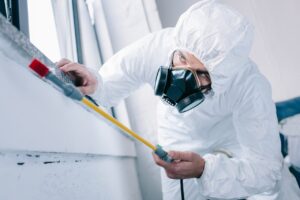
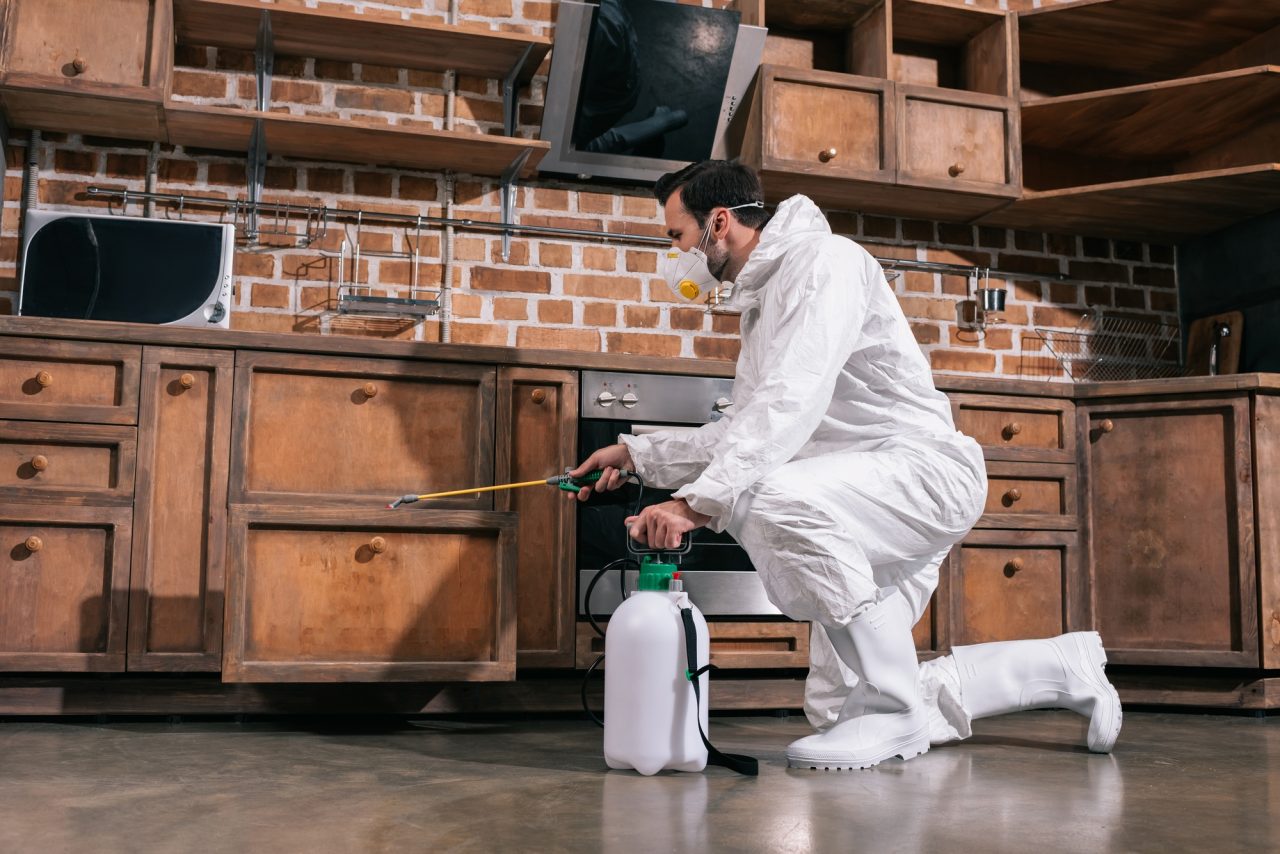
Follows, establishing negative-pressure isolation of the affected space to prevent cross-contamination of unaffected areas. All technicians wear full Level B or C PPE appropriate to the hazard level, including Tyvek suits, nitrile gloves, respirators, and face shields in compliance with OSHA PPE requirements.
Removal of biohazardous materials
Covers all blood-saturated or OPIM-contaminated items that cannot be effectively decontaminated in place — including carpeting, padding, upholstered furniture, mattresses, bedding, and clothing. All removed materials are packaged in certified red biohazard bags and manifested for transport to a licensed TSDF.
Structural material removal
When necessary, involves cutting and removing contaminated sub-flooring, drywall, baseboard, or insulation to eliminate sub-surface contamination. This step is determined by the depth of fluid penetration assessed during initial evaluation and is essential for achieving full decontamination of porous building materials.
Three-pass hospital-grade disinfection
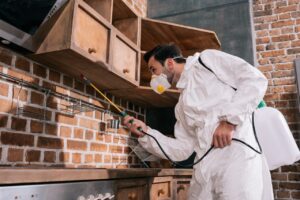
Applied to all remaining hard surfaces using EPA-registered disinfectants at proper concentration and dwell time. A minimum of three application passes ensures complete coverage and confirms the 99.99% pathogen kill rate required by OSHA. ATP testing may be used to confirm surface cleanliness.
Permanent molecular odor elimination
Uses industrial ozone generation, hydroxyl radical generators, and thermal fogging — deployed sequentially as required — to neutralize biological odor compounds at the molecular level. Unlike surface deodorizers that mask odor temporarily, these technologies break down the organic compounds responsible for persistent biological smell, providing permanent elimination rather than temporary masking.
Final inspection, clearance testing, and documentation
Concludes the process. The technician conducts a comprehensive post-remediation inspection, and clearance testing (including ATP surface testing and, where applicable, air sampling) confirms the space meets occupancy safety standards. A complete documentation package — including the remediation report, waste manifests, disinfectant product data sheets, clearance test results, and a signed clearance certificate — is provided to the client, property manager, and insurer.
Cost Breakdown by Scope:
The cost of blood and bodily fluid cleanup is driven primarily by the volume of contamination, surface type and porosity, extent of structural penetration, number of rooms affected, and elapsed time since the incident. The following ranges represent typical costs for residential scenes in 2025.
| Scene Scope | Typical Cost Range |
| Isolated small spill (<10 sq ft, non-porous surface) | $300–$1,500 |
| Moderate single-room (carpet, upholstery, limited wall contact) | $1,500–$3,500 |
| Large single-room or multi-surface (significant volume) | $3,500–$5,000 |
| Multi-room contamination | $5,000–$7,000+ |
| Structural penetration (sub-floor, drywall removal required) | $7,000–$10,000+ |
| Whole-property or advanced decomp-related fluid | $10,000–$25,000+ |
| Hourly rate (isolated/access-limited areas) | $150–$300/hr |
National average
For most residential blood and bodily fluid cleanup scenes falls between $1,500 and $5,000, with a commonly cited midpoint of $4,000 for a moderate single-room residential scene (Fixr 2025, PuroClean 2025).
Key cost drivers include:
Surface porosity (hard tile vs. carpet vs. wood), structural penetration depth, volume of blood or fluid, time elapsed since the incident (older dried blood requires more aggressive treatment), presence of additional biohazards (decomposition, chemical contaminants), number of affected rooms, access and travel, and whether odor elimination technologies beyond standard disinfection are required.
Who Pays for Blood & Bodily Fluid Cleanup?
Understanding the payment landscape is one of the most common concerns for property owners and families facing an unexpected cleanup need. The good news is that in most cases, financial assistance is available.
Homeowners Insurance
The most common payment source for blood and bodily fluid cleanup in residential settings. Standard homeowners policies typically cover biohazard cleanup — including blood and OPIM removal — when the contamination results from a sudden, unexpected, and accidental event classified as a covered peril. This includes traumatic accidents, violent crimes, and many medical emergency scenarios. Zero Trace Biohazard works directly with insurance adjusters, provides full documentation, and handles claim coordination to minimize out-of-pocket costs for property owners.
Renters Insurance
May cover personal property damaged or contaminated in a blood or biohazard event, though coverage for structural cleanup typically remains the landlord’s or property owner’s responsibility under most state landlord-tenant laws. Renters should file claims promptly and document all contaminated items.
Landlord and Property Owner Responsibility —
In rental properties, the landlord bears primary responsibility for ensuring the unit is safe and habitable. A blood or bodily fluid contamination event — regardless of cause — typically triggers the landlord’s duty to remediate under implied warranty of habitability statutes in most states. Commercial property owners similarly bear responsibility for maintaining safe conditions under OSHA and local health codes.
State Crime Victim Compensation Programs
Provide reimbursement for biohazard cleanup costs when the contamination results from a qualifying crime. Programs are available in all 50 states through the Office for Victims of Crime (OVC, ovc.ojp.gov) and the National Association of Crime Victim Compensation Boards (NACVCB, nacvcb.org). Reimbursement limits vary by state — Tennessee caps at $3,000 for cleanup; other states cover up to $10,000 or more. Zero Trace Biohazard’s team can assist clients in identifying and navigating applicable programs.
Workers’ Compensation
May apply when blood or OPIM contamination arises from a workplace incident, covering both the cleanup and any worker injury claims.
Out-of-Pocket / Estate
Payment is sometimes required for scenarios not covered by insurance — such as pre-existing conditions, policy exclusions, or non-crime-related events. Zero Trace Biohazard offers transparent, upfront pricing and can discuss payment arrangements. Call (XXX) XXX-XXXX for a free consultation.
DIY vs. Professional Blood & Bodily Fluid Cleanup:
| Factor | DIY Cleanup | Zero Trace Biohazard |
| Pathogen Elimination | Household products: incomplete | EPA-registered products: 99.99% kill rate |
| PPE | Typically inadequate | Full OSHA-compliant PPE suite |
| Sub-surface Contamination | Undetectable, untreated | Assessed and remediated |
| Waste Disposal | Typically non-compliant | Licensed TSDF, manifested disposal |
| Legal Compliance | Risk of OSHA/state violations | Fully compliant, all 50 states |
| Insurance Documentation | None provided | Full documentation package for claims |
| Clearance Certification | None | Written clearance certificate provided |
| Odor Elimination | Temporary masking at best | Permanent molecular elimination |
| Psychological Impact | Direct exposure to trauma scene | Professional buffer; family protected |
| Cost | Apparent savings; hidden liability | Transparent pricing; often fully insured |
Attempting to clean blood or OPIM without proper training, PPE, and EPA-registered products is dangerous regardless of the volume involved. A single exposure to dried blood via a mucous membrane or skin break can transmit HBV — the most environmentally durable bloodborne pathogen — with an infection rate orders of magnitude higher than HIV. OSHA explicitly requires trained personnel, proper PPE, and licensed waste disposal for this work. In states with additional licensing requirements, performing cleanup without a permit creates direct regulatory liability.
The Zero Trace 8-Step Blood & Bodily Fluid Cleanup Process:
Step 1 — Immediate Response & Scene Assessment.
Upon arrival, certified technicians conduct a thorough visual and instrument-assisted assessment of all contaminated surfaces, materials, and structural components. The full three-dimensional extent of contamination is mapped, and a detailed remediation plan is prepared. The plan specifies what will be cleaned in place, what requires removal, whether structural materials must be cut out, and the estimated timeline.
Step 2 — Containment & Negative Pressure Isolation.
The affected area is isolated using physical barriers and negative-pressure air filtration to prevent cross-contamination of unaffected spaces. HEPA-filtered air scrubbers are deployed as required. Entry and exit protocols are established to maintain containment integrity.
Step 3 — PPE Deployment.
All technicians don full OSHA-compliant PPE — Tyvek protective suits, nitrile inner and outer gloves, N95 or P100 respirators, safety glasses or full face shields, and protective boot covers — before entering the contaminated space.
Step 4 — Removal of Biohazardous Materials.
All blood-saturated or OPIM-contaminated items that cannot be effectively decontaminated in place are carefully removed, including carpeting, padding, upholstery, mattresses, bedding, and clothing. Items are double-bagged in certified red biohazard bags, labeled, and set aside for manifested disposal.
Step 5 — Structural Material Removal (If Required).
When blood or fluid has penetrated sub-floor, drywall, baseboard, insulation, or other structural components beyond remediation without removal, those materials are carefully cut, removed, and contained for licensed disposal. This step ensures no sub-surface contamination reservoir remains.
Step 6 — Three-Pass Hospital-Grade Disinfection.
All remaining hard and semi-hard surfaces receive a minimum of three full application passes with EPA-registered, HBV/HCV-listed disinfectant products at manufacturer-specified concentration and dwell time. ATP surface testing may be deployed to verify cleanliness between passes.
Step 7 — Permanent Molecular Odor Elimination.
Industrial-grade ozone generators, hydroxyl radical generators, and thermal fogging equipment are deployed as required by the scene’s odor profile to break down biological odor compounds at the molecular level. This step provides permanent odor elimination rather than temporary masking.
Step 8 — Final Inspection, Clearance Testing & Documentation.
A comprehensive post-remediation inspection is conducted, including ATP surface testing and air quality sampling where indicated. Upon passing clearance, a complete documentation package is prepared for the client: remediation report, waste manifests, product data sheets, test results, and a signed clearance certificate confirming the space meets re-occupancy safety standards.
Is This Service Right for You?
Zero Trace Biohazard’s blood and bodily fluid cleanup service is the appropriate solution for property owners, landlords, property managers, business owners, families, and estate representatives who are facing any of the following situations: blood or OPIM present on any surface in a residential or commercial setting; a traumatic event, crime, suicide, or medical emergency that has resulted in visible blood or fluid contamination; a prior cleanup attempt that did not achieve clearance certification or left persistent odor; an insurance claim requiring professional documentation; or a rental property contamination event requiring a safe-occupancy certificate before re-letting.
This service is not a substitute for routine cleaning, mold and asbestos remediation, or general hoarding cleanup without biohazard components — those services are addressed on their respective pages.
FAQ — 12 Questions Property Owners Ask Most:
How much does blood and bodily fluid cleanup cost? Professional blood and bodily fluid cleanup typically costs between $300 and $10,000+, with most residential jobs ranging $1,500–$5,000 and a national average around $4,000 for a moderate single-room scene (Fixr 2025). Small, isolated non-porous spills may cost as little as $300–$1,500. Multi-room scenes with structural penetration can reach $7,000–$10,000 or more. Hourly rates typically run $150–$300/hr. Call (XXX) XXX-XXXX for a free on-site assessment and written estimate.
Is blood cleanup covered by homeowners insurance? Yes, in most cases. Standard homeowners insurance policies cover blood and bodily fluid cleanup when the contamination results from a sudden, unexpected, covered peril — such as a traumatic accident, violent crime, or medical emergency. Zero Trace Biohazard works directly with your insurance carrier, handles claim coordination, and provides the full documentation package your adjuster requires. Call (XXX) XXX-XXXX to begin the insurance process.
Is Hepatitis B really that dangerous in dried blood? Yes. HBV is the most environmentally durable of the common bloodborne pathogens, surviving on surfaces for up to 7 days at room temperature — even in dried blood. It is 50–100 times more infectious than HIV per exposure event. This is why OSHA-compliant cleanup with EPA-registered disinfectants and proper dwell time is essential — household cleaners cannot achieve the 99.99% kill rate required to make a surface safe.
Can I clean up blood myself? While not universally illegal in every state, DIY blood cleanup carries serious health, legal, and logistical risks. OSHA requires trained personnel, proper PPE, EPA-registered disinfectants, and licensed biohazardous waste disposal for this work. Without the correct products and technique, sub-surface contamination goes untreated, waste disposal becomes a regulatory violation, and exposure risk is increased rather than reduced. In states like California, handling trauma scene waste without a CDPH permit is a legal violation. We strongly advise against DIY blood cleanup for any but the smallest, most isolated spills.
How long does blood and bodily fluid cleanup take? Timeline depends on scope. An isolated small spill on a non-porous surface typically takes 1–4 hours. A moderate single-room scene — carpet, upholstery, limited wall contact — typically takes 4–8 hours. Multi-room scenes or those requiring structural material removal take 1–3 days. Zero Trace Biohazard provides a timeline estimate during the on-site assessment before work begins.
Who is responsible for cleanup in a rental property? The property owner or landlord bears primary responsibility for ensuring the rental unit is safe and habitable. Blood and bodily fluid contamination — regardless of cause — typically triggers the landlord’s duty to remediate under implied warranty of habitability statutes applicable in most states. Landlords generally cannot pass this cost to the tenant’s family in cases of death or criminal incident. Commercial property owners similarly bear cleanup responsibility under OSHA and local health codes. Zero Trace Biohazard assists landlords with documentation and insurance coordination.
Does renters insurance cover blood cleanup? Renters insurance typically covers personal property damage or loss arising from a covered event, but structural cleanup — including removal of contaminated flooring, drywall, or sub-floor — generally remains the property owner’s or landlord’s responsibility. The renter’s policy may, however, cover contaminated personal belongings. Review your specific policy terms, and call (XXX) XXX-XXXX for guidance on navigating coverage.
Can state victim compensation programs pay for blood cleanup? Yes. If the contamination resulted from a qualifying crime — including assault, homicide, or other violent crime — state crime victim compensation programs may reimburse cleanup costs. Programs are available in all 50 states through the Office for Victims of Crime (OVC) at ovc.ojp.gov and the National Association of Crime Victim Compensation Boards (NACVCB) at nacvcb.org. Reimbursement limits vary by state. Call Zero Trace Biohazard at (XXX) XXX-XXXX for assistance navigating your state’s program.
What certifications should a blood cleanup company have? The minimum standard for a professional blood and bodily fluid cleanup company includes: OSHA Bloodborne Pathogens training (29 CFR 1910.1030), IICRC TCST (Trauma and Crime Scene Technician) certification, compliance with IICRC S540 remediation standards, use of EPA-registered disinfectants, and proper biohazardous waste disposal via licensed TSDFs with documented waste manifests. State-specific licensing (such as California CDPH) should also be confirmed. Zero Trace Biohazard holds all applicable certifications and licenses — ask to see our documentation when you call.
Will the odor from blood be permanent? No — when permanent molecular odor elimination technologies are properly deployed, biological odor from blood and bodily fluids is fully and permanently eliminated. Industrial ozone generators, hydroxyl radical generators, and thermal fogging break down the specific organic compounds responsible for biological smell at the molecular level. Temporary surface deodorizers mask odor briefly but do not achieve permanent elimination. Our 8-step process includes a dedicated odor elimination phase to ensure the space smells clean and is certified safe.
What happens to contaminated materials after removal? All blood-saturated and OPIM-contaminated materials removed from the scene are double-bagged in certified red biohazard bags, labeled with biohazard symbols, and manifested for transport to a licensed Treatment, Storage, and Disposal Facility (TSDF) in compliance with RCRA and applicable DOT regulations. The waste manifest is included in your documentation package as proof of compliant disposal.
Do you provide a clearance certificate after cleanup? Yes. Upon completing the remediation and passing final inspection and clearance testing, Zero Trace Biohazard provides a complete documentation package including the remediation report, waste manifests, disinfectant product data sheets, ATP or air-quality test results where applicable, and a signed clearance certificate confirming the space meets re-occupancy safety standards. This documentation is essential for insurance claims, landlord-tenant disputes, property sales, and regulatory compliance.
🩸 Need Blood or Bodily Fluid Cleanup Now?
Zero Trace Biohazard provides certified, compassionate, discreet blood and bodily fluid cleanup nationwide — 24 hours a day, 7 days a week, every day of the year.
📞 Call (XXX) XXX-XXXX — Immediate Response, Free On-Site Assessment
✅ OSHA 29 CFR 1910.1030 Compliant ✅ IICRC-TCST Certified Technicians ✅ EPA-Registered Disinfectants — 99.99% Pathogen Kill Rate ✅ Insurance Coordination Included — We Work With Your Carrier ✅ Victim Compensation Assistance Available ✅ Unmarked Vehicles — Full Discretion ✅ Complete Documentation & Clearance Certificate Provided
[Schedule a Free Assessment] | [View All Services] | [Insurance & Payment FAQ]