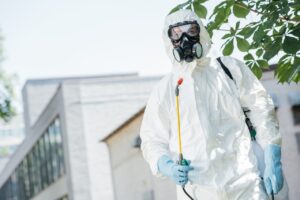
Trauma Cleanup Services — Certified, Compassionate, 24/7 Nationwide
A trauma scene — whether from suicide, a fatal or serious accident, a fall, or a workplace injury — leaves behind biological contamination that poses documented, serious health risks and requires immediate professional remediation by trained, certified specialists. Blood, bodily fluids, and tissue present at trauma scenes are classified as potentially infectious materials under OSHA’s Bloodborne Pathogen Standard (29 CFR 1910.1030), and no family member, property manager, or building employee should be asked to confront or attempt to clean a trauma scene without professional support. Zero Trace Biohazard provides OSHA-compliant, IICRC TCST-certified trauma cleanup services for residential homes, apartments, commercial properties, and workplaces across all 50 states, 24 hours a day, every day of the year. We respond with full technical expertise, regulatory compliance, and the compassion that every family deserves in a profoundly difficult moment. Call (XXX) XXX-XXXX now for immediate, confidential response.
TL;DR
Trauma cleanup costs between $1,500 and $8,000 for most residential and commercial incidents, with the range driven by scene type, contamination severity, and square footage affected (PuroClean 2025; PushLeads). Suicide cleanup averages $1,500–$5,000 for moderate scenes (SuicideCleanup.com). Accidental and workplace trauma scenes run $2,000–$8,000 depending on volume and structural penetration (PuroClean 2025). Most homeowners and renters insurance policies cover trauma cleanup when the event constitutes a sudden, unexpected covered peril (360haz; InsuredBetter). All 50 states operate crime victim compensation programs through the Office for Victims of Crime (OVC) and NACVCB — many cover suicide cleanup in qualifying situations. OSHA 29 CFR 1910.1030 (Bloodborne Pathogen Standard) governs all technician training and PPE requirements. California requires additional state licensing as a Trauma Scene Waste Management Practitioner (CDPH). Zero Trace Biohazard is IICRC TCST-certified, OSHA-compliant, and dispatches nationwide with same-day response.
- Cost Range: $1,500–$8,000+ for most trauma scenes; $1,500–$5,000 for suicide scenes (PuroClean 2025; SuicideCleanup.com)
- Scene Types: Suicide, fatal and non-fatal accident, fall, workplace injury, medical emergency, self-harm
- Certifications: OSHA 29 CFR 1910.1030, IICRC TCST (ANSI/IICRC S540), GBAC Biohazard, EPA-registered disinfectants
- Insurance: Homeowners and renters policies typically cover sudden, unexpected events; Zero Trace coordinates all claims
- Victim Compensation: Available in all 50 states through OVC/NACVCB — many states cover suicide cleanup specifically
- State Licensing: California requires Trauma Scene Waste Management Practitioner license (CDPH); additional state requirements apply in FL and others
- Timeline: 4–8 hours (single room, standard contamination); 1–3 days (multi-room or structural penetration)
- Privacy: Unmarked vehicles available; all details held in strict, complete confidence
Quick Facts Table
| Detail | Info |
| Company | Zero Trace Biohazard |
| Phone | (XXX) XXX-XXXX |
| Service Area | All 50 states, residential & commercial |
| Availability | 24/7, 365 days, same-day response |
| Trauma Cleanup Average | $2,000–$8,000 (PuroClean 2025) |
| Suicide Cleanup Average | $1,500–$5,000 moderate; higher for structural penetration |
| Accident / Fall Scene | $2,000–$8,000 depending on severity (PushLeads) |
| Certifications | OSHA 29 CFR 1910.1030, IICRC TCST, GBAC |
| Standard | ANSI/IICRC S540 Trauma and Crime Scene Cleanup |
| Disinfectant | EPA-registered, 99.99% pathogen kill rate |
| Insurance | Homeowners/renters — covered for sudden events (360haz; InsuredBetter) |
| Victim Compensation | Available in all 50 states via OVC/NACVCB |
| CA State License | Trauma Scene Waste Management Practitioner (CDPH) |
| Timeline (Single Room) | 4–8 hours |
| Timeline (Multi-Room) | 1–3 days |
| Privacy | Unmarked vehicles, full confidentiality |
What Is Trauma Cleanup and Why Does It Require Professional Response?
Trauma cleanup is the professional assessment, containment, removal, disinfection, deodorization, and licensed disposal of biological hazards generated by a traumatic event — including suicide, fatal or serious accidental injury, fall, workplace incident, or medical emergency. Unlike general cleaning, trauma scene remediation requires OSHA-certified technicians, chemical-resistant PPE, EPA-registered hospital-grade disinfectants, engineered containment systems, and licensed biohazardous waste disposal. The biological materials present — blood, bodily fluids, tissue — are formally classified as Other Potentially Infectious Materials (OPIM) under OSHA 29 CFR 1910.1030, and exposure without proper protection creates documented risk of Hepatitis B, Hepatitis C, HIV, and MRSA infection (OSHA).
The emotional dimension of trauma cleanup is equally important. No family member, friend, neighbor, or building employee should be placed in the position of cleaning a scene where someone they knew suffered or died. Attempting to clean a trauma scene without professional support compounds grief, creates risk of lasting psychological harm including PTSD, and frequently results in incomplete decontamination that leads to ongoing odor, structural damage, and unresolved health liability (Alliance Enviro; Aftermath Services; West Coast Fire and Water). Zero Trace Biohazard removes this burden entirely — handling every aspect of the process so that families and property owners can focus on healing.
Types of Trauma Scenes Zero Trace Biohazard Remediates
Suicide Cleanup
Suicide scenes represent a profound intersection of technical complexity and human sensitivity. The biological contamination present depends on the method involved and can range from moderate blood contamination in a single room to extensive spatter affecting walls, ceilings, flooring, and structural materials. Where firearm methods are involved, structural penetration by biological material into wall cavities, subfloor, and adjacent spaces is common and requires below-surface testing and material removal. Zero Trace Biohazard’s technicians are trained in trauma-informed communication and approach every suicide scene with complete compassion and discretion — families are never required to describe the scene in graphic detail or to re-enter the space before it is fully remediated. Suicide cleanup costs average $1,500–$5,000 for moderate scenes, with extended or high-severity cases reaching higher depending on structural scope (SuicideCleanup.com). Many state victim compensation programs cover suicide cleanup costs when the death is reported to law enforcement — Zero Trace assists families in accessing these programs.
Accidental Death and Injury Scene Cleanup
Fatal and serious accidental injuries — from household falls, vehicle incidents within structures, power tool accidents, and similar events — generate biological contamination identical in hazard level to that of crime scenes and require the same OSHA 29 CFR 1910.1030-compliant professional response. The emotional context is often one of sudden, unexpected loss with no warning — making the additional burden of cleanup acutely painful for surviving family members. Zero Trace Biohazard responds to accidental trauma scenes with the same 24/7 urgency and clinical precision as any other scene type, and coordinates directly with the property owner’s insurance carrier to initiate the claims process as early as possible.
Workplace and Industrial Trauma Scenes
Workplace trauma scenes — including fatal falls, machinery accidents, industrial injuries, and similar events — carry both the biological hazard requirements of any trauma scene and the additional regulatory context of OSHA workplace safety compliance. Employers who fail to properly remediate a workplace trauma scene face potential OSHA enforcement exposure in addition to standard liability. Zero Trace Biohazard provides employers, facilities managers, and workers’ compensation carriers with the certified remediation and documentation needed to demonstrate regulatory compliance and facilitate rapid return to operations with minimal business disruption.
Self-Harm Scene Cleanup
Non-fatal self-harm events that result in significant blood contamination — in a residence, care facility, or other property — require the same professional biohazard remediation protocol as any other trauma scene. Zero Trace Biohazard treats every self-harm scene with the highest level of confidentiality and compassion. We do not require property owners to disclose the identity of the person involved, and all project details are kept in complete confidence. If the person involved is still present and receiving care, we coordinate discreetly to avoid any intersection with their treatment or recovery process.
Medical Emergency Scene Cleanup
Medical emergencies — cardiac events, seizures, serious injury requiring emergency response — that result in significant blood or bodily fluid contamination in a residence or commercial property require professional biohazard remediation before the space can be safely reoccupied. Blood volumes from a serious medical emergency can be substantial, and the presence of IV line components, medical packaging, and contaminated surfaces creates a biohazard environment that standard cleaning cannot safely address. Zero Trace Biohazard responds to medical emergency scene cleanup with the same protocol and urgency as any other trauma engagement.
Health Risks at Trauma Scenes — Why Families Should Not Attempt Cleanup
The health risks associated with trauma scene biological contamination are well-documented, significant, and preventable only through proper professional remediation. Beyond the documented physical risks, the psychological impact of DIY trauma cleanup on family members and untrained workers is severe and lasting.
Bloodborne Pathogen Exposure
OSHA’s Bloodborne Pathogen Standard (29 CFR 1910.1030) identifies blood and OPIM as occupational hazards requiring specific controls because they can carry Hepatitis B virus (HBV), Hepatitis C virus (HCV), and HIV. HBV is the most resilient of the three — it can survive on dry environmental surfaces for up to seven days (CDC), meaning dried blood visible at a trauma scene remains actively infectious for nearly a week after the event. HCV can survive on surfaces for up to six weeks under certain conditions (CDC). HIV can survive for several hours in dried blood under laboratory conditions. None of these pathogens are eliminated by standard household disinfectants, which do not achieve the EPA-required 99.99% kill rate at the necessary contact time and concentration (OSHA).
Aerosol and Airborne Risks
Disturbing blood and bodily fluid contamination without proper wet methods and HEPA filtration — including by vacuuming with a standard household vacuum, using fans to air out a contaminated room, or disturbing dried blood with dry cleaning materials — generates infectious aerosols and aerosolized particles. Operating a home’s HVAC system in a contaminated space spreads these particles throughout the building. OSHA 1910.1030 requires that cleanup activities minimize aerosol generation through wet methods and appropriate respiratory protection at all times (OSHA Quick Reference Guide).
Psychological Impact on Family Members
Research and clinical experience consistently confirm that family members who attempt to clean a trauma scene suffer significantly compounded grief, elevated risk of PTSD, and long-term psychological harm compared to families who allow professional cleanup services to handle the scene (Alliance Enviro; Aftermath Services; Specialized Cleaning Solutions). The act of physically cleaning the scene of a loved one’s death or serious injury — handling contaminated materials, confronting the visual evidence of what occurred — is a form of secondary traumatization that no family should be required to undergo. Zero Trace Biohazard removes this burden entirely and compassionately, allowing families to begin healing without this additional layer of trauma.
Incomplete Remediation and Its Consequences
Incomplete trauma scene cleanup — where surface contamination is removed but porous materials remain contaminated, or where odor sources are masked rather than eliminated — creates ongoing health hazards for all future occupants, persistent odor that returns weeks or months later, structural damage from continued biological degradation, and potential legal liability for property owners who knowingly re-occupy or re-rent a contaminated property. Only complete professional remediation with post-clearance verification eliminates all three of these ongoing risks.
Regulatory Framework Governing Trauma Cleanup
OSHA Bloodborne Pathogen Standard — 29 CFR 1910.1030
OSHA’s Bloodborne Pathogen Standard is the foundational federal regulation governing all trauma scene cleanup work. It requires employers to maintain an Exposure Control Plan, provide EPA-registered disinfectants and chemical-resistant PPE to all workers with occupational exposure to blood or OPIM, offer Hepatitis B vaccination, provide post-exposure evaluation and follow-up, and train all workers before initial assignment to tasks involving blood or OPIM exposure (OSHA 29 CFR 1910.1030). OSHA has explicitly confirmed that this standard applies to biohazard remediation workers cleaning trauma scenes (OSHA interpretation, 2007). Zero Trace Biohazard maintains full compliance with every element of OSHA 1910.1030 for every technician, on every engagement, in every state.
ANSI/IICRC S540 Standard and IICRC TCST Certification
The ANSI/IICRC S540 Standard for Trauma and Crime Scene Cleanup is the nationally recognized industry consensus standard for professional trauma scene work — establishing the benchmark for scene assessment, containment, removal, disinfection, deodorization, and documentation (IICRC). The IICRC Trauma and Crime Scene Technician (TCST) certification documents technician mastery of the S540 standard and is the primary professional credential in the trauma and crime scene cleanup industry (IICRC). Zero Trace Biohazard employs IICRC TCST-certified technicians as a core operational requirement on every trauma cleanup engagement.
State-Specific Licensing — California and Beyond
California is the most prominent example of a state that imposes mandatory additional licensing on trauma scene cleanup operators. The California Department of Public Health (CDPH) requires that any person or business performing trauma scene waste management as a commercial activity must hold a Trauma Scene Waste Management Practitioner license, demonstrate a contractual relationship with a licensed medical waste transporter, and comply with specific application and renewal requirements (CDPH). Florida and several other states impose comparable state-level requirements. Zero Trace Biohazard holds all required state licenses and registrations in every jurisdiction in which it operates.
Medical Waste Transport and Disposal
All biohazardous waste generated during trauma scene cleanup — blood, fluids, tissue, and contaminated materials — must be packaged in certified OSHA 1910.1030-compliant biohazard containers, transported by a licensed medical waste transporter, and disposed of at a licensed medical waste treatment and disposal facility. Disposal of biohazardous waste in the regular waste stream is illegal under federal and all state medical waste regulations. Zero Trace Biohazard handles the complete chain of custody — collection, packaging, manifesting, transport, and disposal — and includes all waste disposal manifests in the final project documentation package.
Trauma Cleanup Cost — Full Breakdown
Cost by Scene Type
| Scene Type | Estimated Cost Range | Notes |
| Suicide — single room, moderate | $1,500–$5,000 | SuicideCleanup.com; 360haz |
| Suicide — multi-room or structural penetration | $5,000–$15,000+ | Firearm method; subfloor/wall cavity involvement |
| Accidental death / fall — single area | $2,000–$5,000 | PuroClean 2025; PushLeads |
| Accidental trauma — multi-room | $5,000–$8,000+ | Extended contamination, possible material removal |
| Workplace / industrial trauma | $3,000–$10,000+ | Size, volume, and OSHA compliance documentation |
| Self-harm — significant blood contamination | $1,500–$4,000 | Scope dependent |
| Medical emergency scene | $1,500–$4,000 | Volume and porous material penetration dependent |
| Hourly rate | $150–$250 per hour | Applied to extended or complex engagements |
Key Cost Drivers
The following factors most significantly determine the final cost of a trauma cleanup engagement and should be disclosed to Zero Trace Biohazard at first contact to ensure an accurate estimate: the type of trauma event (method of suicide is a significant driver of contamination extent); the number of rooms and total square footage affected; whether blood or fluids have penetrated porous structural materials including carpet padding, subfloor, drywall, or wall cavities; time elapsed since the event; presence of HVAC contamination; and the number of secondary contamination areas reached by blood tracking or fluid migration.
Comparison Table — Scene Severity vs. Cost and Scope
| Factor | Minor Scene | Moderate Scene | Severe / Extended |
| Estimated Cost | $1,500–$3,000 | $3,000–$8,000 | $8,000–$15,000+ |
| Rooms Affected | 1 | 1–3 | 3+ or structural |
| Structural Removal Needed | Rare | Possible | Likely |
| HVAC Contamination | Unlikely | Possible | Possible in severe cases |
| Odor Treatment Complexity | Standard | Moderate | Intensive |
| Timeline | 4–8 hours | 1–2 days | 2–3+ days |
Who Pays for Trauma Cleanup?
Homeowners and Renters Insurance
Most standard homeowners and renters insurance policies cover trauma cleanup — including suicide cleanup — when the event constitutes a sudden, unexpected covered peril under the policy (360haz; InsuredBetter). Coverage is subject to the policy’s deductible and applicable limits. Some insurers specifically include death and trauma cleanup under property damage coverage; others require an extended coverage endorsement. Policies may not cover suicide if the property owner was the policyholder who died, in which case estate funds or victim compensation programs become relevant (SuicideCleanup.com; 360haz). Zero Trace Biohazard works directly with insurance carriers, handles all claim documentation and billing, and coordinates the claim on behalf of the policyholder so families are not required to navigate this process during a time of acute grief.
State Crime Victim Compensation Programs
All 50 states operate crime victim compensation programs through the Office for Victims of Crime (OVC) and the NACVCB. Many state programs cover trauma cleanup costs for qualifying suicide survivors and families, since suicide is treated as a reportable event in most jurisdictions. Coverage amounts vary significantly by state — nationally, programs typically provide $1,000–$10,000 for cleanup costs in qualifying situations (OVC; NACVCB). The event must generally be reported to law enforcement to initiate the compensation process, and applications are time-limited in most states. Zero Trace Biohazard assists families in identifying their state’s applicable program and provides the documentation required for the application.
Workplace Injury — Employer and Workers’ Compensation
For workplace trauma scenes, the cost of cleanup is typically the employer’s responsibility and may be covered under commercial property insurance or workers’ compensation insurance, depending on policy terms and the nature of the incident. Employers have both a legal and a moral obligation to ensure the workplace is safely remediated before other employees return. Zero Trace Biohazard provides employers and workers’ compensation carriers with the certified remediation and documentation needed to demonstrate regulatory compliance.
Estate and Out-of-Pocket Payment
When insurance and victim compensation programs do not fully cover costs, the property owner, deceased’s estate, or surviving family may bear direct financial responsibility. Zero Trace Biohazard provides itemized invoices formatted for estate accounting purposes and can discuss payment arrangements on a case-by-case basis.
DIY vs. Professional Trauma Cleanup
Attempting to clean a trauma scene without professional training, certified PPE, EPA-registered disinfectants, and licensed waste disposal creates serious physical health risks, significant psychological harm, and in most U.S. states, illegal disposal of biohazardous waste.
Comparison Table — DIY vs. Zero Trace Biohazard
| Factor | DIY Attempt | Zero Trace Biohazard |
| Bloodborne pathogen risk | High — HBV survives 7 days on dry surfaces (CDC) | Eliminated — full OSHA 1910.1030-compliant PPE and protocol |
| Aerosol risk | High — household vacuums generate infectious aerosols | Eliminated — wet methods and HEPA filtration throughout |
| Pathogen kill rate | Uncertain — household products inadequate | 99.99% — EPA-registered hospital-grade disinfectants |
| Structural contamination | Undetectable without testing equipment | Full assessment with below-surface penetration testing |
| Odor elimination | Temporary masking only — odor returns | Permanent — molecular source-level elimination |
| Biohazardous waste disposal | Illegal in virtually all U.S. states | Licensed containers, manifested transport, licensed facility |
| Insurance claim support | None — may void coverage | Full documentation, direct insurer coordination |
| Victim compensation assistance | Not supported | Zero Trace assists with state program applications |
| Psychological impact | Severe — documented risk of PTSD and compounded grief | Fully managed by compassionate certified professionals |
| State licensing compliance | None — CA and other states require practitioner license | All required federal and state licenses maintained |
Grief and Support Resources for Families
Zero Trace Biohazard recognizes that trauma cleanup is never only a technical service — it occurs in the context of profound human loss. We are committed to connecting families with the support resources they need alongside our remediation services. The following organizations provide free, expert support for families navigating loss from suicide and traumatic death.
The American Foundation for Suicide Prevention (AFSP) provides survivor support resources, loss support groups, and crisis helplines at afsp.org/suicide-loss-resources. The Alliance of Hope for Suicide Loss Survivors provides online support communities, forums, and expert resources for loss survivors at allianceofhope.org. The 988 Suicide and Crisis Lifeline — reached by calling or texting 988 — provides 24/7 crisis support for anyone in distress or supporting someone in distress. HelpGuide.org offers an extensively researched guide to coping with a loved one’s death by suicide, available at helpguide.org. Our team can provide additional state and local resource referrals when we speak with any family seeking support.
The Zero Trace Trauma Cleanup Process (Step by Step)
Step 1 — Immediate Response and Compassionate Intake
Zero Trace Biohazard responds to every trauma cleanup call with immediate 24/7 dispatch and a trauma-informed communication approach. Every inquiry is handled with complete confidentiality and compassion — families are never required to describe the scene in graphic detail, and no judgment of any kind is expressed or implied. Our intake team gathers only the information needed to mobilize the right team and equipment, and our technicians arrive ready to take the full burden of the cleanup process off the family.
Step 2 — Scene Assessment and Contamination Mapping
Certified technicians conduct a comprehensive scene assessment upon arrival, mapping all visible and hidden biological contamination — including below-surface penetration testing of structural materials, HVAC pathway assessment, and documentation of all secondary contamination areas. The assessment generates the full project scope, itemized cost estimate, and insurance documentation package before any remediation work begins.
Step 3 — Site Containment and PPE Deployment
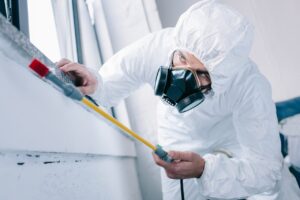
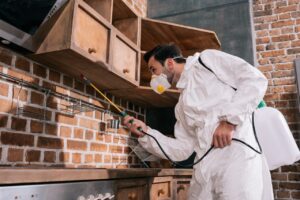
The trauma scene work zone is fully contained using polyethylene sheeting, negative air pressure HEPA units, and critical barriers at all access points. All HVAC registers within the work zone are sealed. Technicians don OSHA 1910.1030-compliant PPE — full-face respirators, chemical-resistant coveralls, and nitrile or butyl-rubber gloves — before entering the work zone.
Step 4 — Removal of Biological Material and Contaminated Contents
All biological material is removed using wet methods to suppress aerosol generation per OSHA 1910.1030 and ANSI/IICRC S540 requirements. Contaminated soft goods — carpet, padding, mattresses, upholstered furniture, bedding — are bagged in certified biohazard containers and removed from the property. Personal property items salvageable through decontamination are treated and returned; items that cannot be safely decontaminated are documented, photographed, and disposed of with the property owner’s consent.
Step 5 — Structural Material Removal Where Required
Where blood or biological fluids have penetrated structural materials — subfloor, drywall, wall cavities, baseboards — those materials are carefully removed, documented with photographs and a written removal log for insurance purposes, and packaged in RCRA-compliant biohazard containers for licensed medical waste disposal. This step is performed only when penetration testing confirms below-surface contamination that cannot be reached by surface decontamination protocols alone.
Step 6 — Deep Cleaning and Hospital-Grade Disinfection
All surfaces in the work zone undergo Zero Trace’s three-pass decontamination protocol: initial application of an EPA-registered hospital-grade disinfectant, mechanical scrubbing to disrupt biofilm and surface contamination, and a final disinfectant application confirming a 99.99% kill rate against HBV, HCV, HIV, MRSA, and all other bloodborne and airborne pathogens present. All EPA-registered products are documented by name and EPA registration number in the project file.
Step 7 — Molecular Odor Elimination
Odor from blood and bodily fluids is eliminated at the molecular level using ozone treatment (in unoccupied spaces), hydroxyl generators, and thermal fogging with EPA-registered deodorizing agents — after all contaminated materials have been physically removed. Surface deodorizers are never used in lieu of source removal. Permanent odor resolution requires that the contamination source be eliminated first; Zero Trace’s protocol ensures this sequencing without exception.
Step 8 — Final Inspection, Clearance, and Documentation
Post-remediation inspection confirms that all biological contamination has been eliminated and odor has been permanently resolved. Zero Trace Biohazard delivers a complete documentation package: scene assessment report, work log, materials removed log with photographic documentation, waste disposal manifests, EPA-registered disinfectant product data sheets, and a signed completion certificate. This package is formatted for homeowners and renters insurance claim submission, victim compensation program applications, employer and workers’ compensation documentation, landlord liability protection, and future property disclosure requirements.
Is This Service Right for You?
Best For:
- Families who have lost a loved one to suicide and need compassionate, confidential, fully managed professional remediation before re-entering the home
- Families dealing with a fatal or serious accidental injury at home or in a vehicle within a structure who need immediate, discreet professional response
- Employers and facilities managers whose workplace has been the site of a fatal or serious traumatic injury requiring OSHA-compliant remediation and documentation
- Property owners and landlords whose tenant has been the victim of a trauma event and who need certified remediation before re-occupancy
- Care facilities, group homes, and assisted living operators that require immediate professional trauma response for the safety of other residents and staff
- Estate executors and attorneys managing a property where a traumatic death has occurred and who need remediation certification for estate and disclosure purposes
Not the Right Fit:
- Unattended death or decomposition scenes where the body was not discovered promptly — these require our dedicated Unattended Death Cleanup service
- Crime scenes involving homicide or assault — these are served under our Crime Scene Cleanup service, though protocols are highly comparable
- General cleaning, mold remediation, asbestos, or chemical hazard services (see our dedicated service pages)
FAQ Section
How much does trauma cleanup cost? Trauma cleanup costs range from $1,500 to $8,000+ for most residential and commercial scenes, depending on the type of event, contamination severity, and square footage affected (PuroClean 2025; PushLeads). Suicide cleanup averages $1,500–$5,000 for moderate scenes, with higher costs where structural material removal is required (SuicideCleanup.com). Accidental and workplace trauma scenes typically run $2,000–$8,000. Call Zero Trace Biohazard at (XXX) XXX-XXXX for a free on-site assessment and itemized estimate.
Does homeowners insurance cover trauma or suicide cleanup? In many cases, yes. Most standard homeowners and renters insurance policies cover trauma cleanup — including suicide cleanup — when the event constitutes a sudden, unexpected covered peril (360haz; InsuredBetter). Coverage is subject to deductibles and policy limits, and some policies may not cover suicide when the policyholder is the deceased. Zero Trace Biohazard works directly with insurance carriers, handles all claim documentation and billing, and can coordinate the claim on behalf of the policyholder. Call (XXX) XXX-XXXX for immediate insurance coordination.
Will state victim compensation programs pay for trauma or suicide cleanup? All 50 states operate crime victim compensation programs through the Office for Victims of Crime (OVC) and the NACVCB, and many cover suicide cleanup costs in qualifying situations. The death must generally be reported to law enforcement to qualify, and applications are time-limited in most states. Zero Trace Biohazard assists families in identifying the applicable program in their state and provides all required application documentation — call (XXX) XXX-XXXX for state-specific guidance.
Why should families not attempt to clean a trauma scene themselves? Attempting to clean a trauma scene exposes family members to Hepatitis B (which survives on dry surfaces for up to seven days per CDC), Hepatitis C, and HIV — none of which are eliminated by household cleaning products. Standard vacuums generate infectious aerosols from dried blood. Disposal of biohazardous waste in the regular waste stream is illegal in virtually all U.S. states. Beyond physical risks, research confirms that family members who attempt trauma scene cleanup experience significantly higher rates of PTSD and compounded grief than those who use professional services (Alliance Enviro; Aftermath Services). Zero Trace Biohazard removes this burden entirely.
How long does trauma cleanup take? A single-room trauma scene with standard blood contamination typically takes 4–8 hours from containment to final documentation. Multi-room scenes or those with structural material penetration take 1–3 days. Scenes involving firearm-method suicides or extensive fluid migration into structural materials may require additional time for demolition, material removal, and odor treatment. Zero Trace Biohazard provides a timeline estimate as part of the initial scene assessment before any work begins.
What certifications should a trauma cleanup company have? A qualified trauma cleanup company must employ IICRC Trauma and Crime Scene Technician (TCST)-certified workers trained to the ANSI/IICRC S540 standard, maintain full OSHA 29 CFR 1910.1030 (Bloodborne Pathogen Standard) compliance, hold all required state-specific licenses including California’s Trauma Scene Waste Management Practitioner license (CDPH) where applicable, and use only EPA-registered hospital-grade disinfectants (IICRC; OSHA; CDPH). Zero Trace Biohazard holds all required federal and state certifications and licenses nationwide.
Does trauma cleanup include odor removal? Yes. Zero Trace Biohazard’s trauma cleanup service includes complete molecular odor elimination as a standard phase of every engagement. After all contaminated materials are physically removed, we deploy ozone treatment, hydroxyl generators, and thermal fogging to eliminate odor at the molecular level. Surface deodorizers are never used as a substitute for source removal — permanent odor resolution requires that the contamination source be eliminated first, and our protocol ensures this sequencing without exception.
Will my neighbors or anyone else know what happened at my property? No. Zero Trace Biohazard operates with absolute discretion on every trauma cleanup engagement. Unmarked vehicles are available on request. Our technicians never discuss the nature of any service call with neighbors, building management, or any third party not directly involved in the remediation. All project details, client identity, and the nature of the incident are held in complete confidence. Families are never required to provide more information than they are comfortable sharing.
Can trauma cleanup be done while the property is occupied by other residents? Occupants should vacate the specific work zone and adjacent areas during active remediation. In multi-unit buildings, residents in other units are generally not required to vacate unless HVAC contamination assessment indicates broader spread. Zero Trace Biohazard establishes full containment before any work begins to prevent cross-contamination into occupied areas, and our team coordinates the work schedule with property managers to minimize disruption to other residents. Re-occupancy of remediated areas is authorized only after post-clearance inspection confirms complete decontamination.
What happens to personal belongings and valuables at a trauma scene? Zero Trace Biohazard catalogs all personal property items encountered during remediation. Items that can be safely decontaminated are treated and returned. Items that cannot be safely decontaminated — clothing with extensive biological contamination, porous personal items with fluid penetration — are documented, photographed, and disposed of only with the explicit consent of the property owner or next of kin. We never dispose of items of potential sentimental or financial value without documented authorization.
Does Zero Trace Biohazard work with employers after workplace trauma incidents? Yes. Zero Trace Biohazard provides certified trauma scene remediation for employers and facilities managers following workplace fatal injuries, serious accidents, and industrial trauma events. We provide employers with a complete documentation package demonstrating OSHA-compliant remediation — including waste disposal manifests, disinfectant data sheets, and a signed completion certificate — to support regulatory compliance, workers’ compensation claims, and return-to-operations timelines. We also coordinate directly with workers’ compensation carriers and commercial property insurers on the employer’s behalf.
What documentation does Zero Trace Biohazard provide after trauma cleanup? Zero Trace Biohazard delivers a complete post-remediation documentation package after every engagement, including: scene assessment report, detailed work log, personal property catalog with disposition notes, structural materials removal log, waste disposal manifests, EPA-registered disinfectant product data sheets, and a signed completion certificate. This package supports homeowners and renters insurance claims, victim compensation program applications, employer and workers’ compensation documentation, landlord liability protection, and future property sale or lease disclosure requirements. Call (XXX) XXX-XXXX to discuss your specific documentation needs.
Call to Action Block
Zero Trace Biohazard — Certified Trauma Cleanup, Nationwide, 24/7
Certifications: OSHA 29 CFR 1910.1030 Compliant | IICRC TCST Certified (ANSI/IICRC S540) | GBAC Biohazard Certified | CA CDPH Trauma Scene Waste Management Practitioner | EPA-Registered Disinfectants | Licensed Medical Waste Disposal
You should never have to face a trauma scene alone. Our certified, compassionate team handles everything — containment, removal, disinfection, odor elimination, insurance coordination, and victim compensation assistance — so that you can focus entirely on your family and your healing.
Call (XXX) XXX-XXXX now — available 24 hours a day, 7 days a week, 365 days a year. Confidential. Discreet. Nationwide.
If you or someone you know is in crisis, please call or text 988 (Suicide and Crisis Lifeline) immediately.
→ Request Immediate Response → Read Our Full Trauma Cleanup FAQ → View All Biohazard and Trauma Services
Related Internal Links
- Crime Scene Cleanup Services — https://www.zerotracebiohazard.com/crime-scene-cleanup-services
- Unattended Death Cleanup Services — https://www.zerotracebiohazard.com/unattended-death-cleanup-services
- Biohazard Cleaning Services — https://www.zerotracebiohazard.com/biohazard-cleaning-services
- Hoarding Cleanup Services — https://www.zerotracebiohazard.com/hoarding-cleanup-services
- Chemical Hazard Cleanup Services — https://www.zerotracebiohazard.com/chemical-hazard-cleanup-services
Contact Us — https://www.zerotracebiohazard.com/contact-us